
KATHERINE BRADFORD:COMMUNAL TABLE
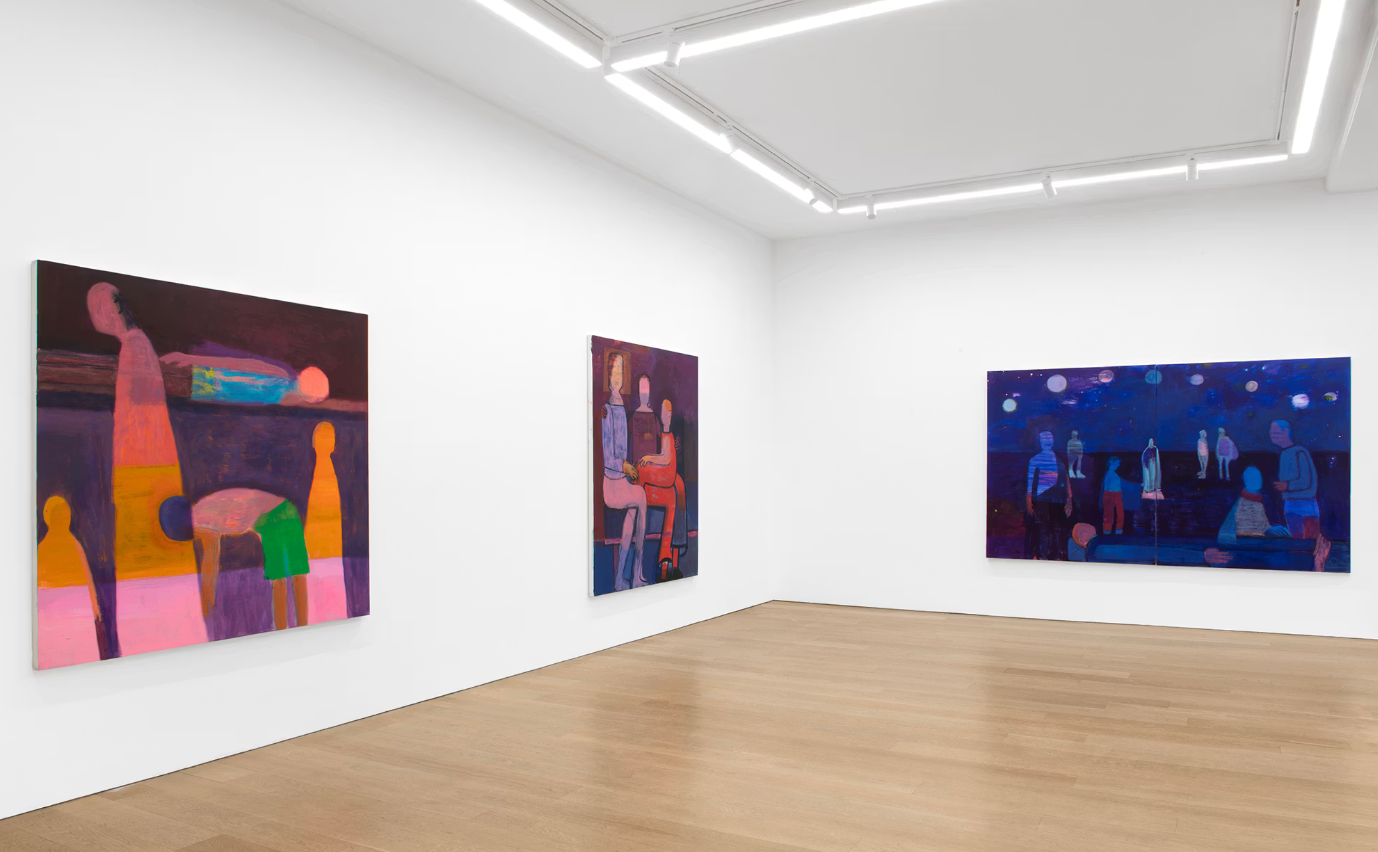
CANADA is pleased to present Communal Table, Katherine Bradford’s seventh solo show with the gallery.
October 23 – December 13, 2025
Communal Table expands Bradford’s pictorial vocabulary by combining figuration with the structure and freedom of abstract painting. To see Bradford pushing against boundaries in her sixth decade of art making is thrilling. Figures hover in states of becoming and falling apart. They drift, converse, embrace or simply exist in tension or harmony with their surroundings. In the show’s titular work, big blocks of color fit together like soft jigsaw puzzle pieces, tipped up onto the surface of the painting, presenting the top and bottom without hierarchy. Shrouds of atmospheric color envelop figures with moody purples and blues. Bradford’s technique gives some of her figures a haloing effect, as if they are radiating energy. She has gone moon crazy: some paintings have eight or more, several sport multicolored stripes. Communal Table is both an apt title and a fitting metaphor for these paintings, as people join together at tables to socialize, eat, work, daydream and study.
Bradford teases a sense of allegory with her imagery. In Gifting Bowl, three multicolored hands attached to disembodied arms dip into a transparent bowl, economically rendered with a single yellow line. The bowl is curiously empty and the act of taking is done in a gently automatic way, as if the giving and receiving happen in a fugue state. A woman holds a book to her chest and observes. The ambiguity that Bradford achieves never feels rhetorical or tricky, rather rooted in a state of bemusement.
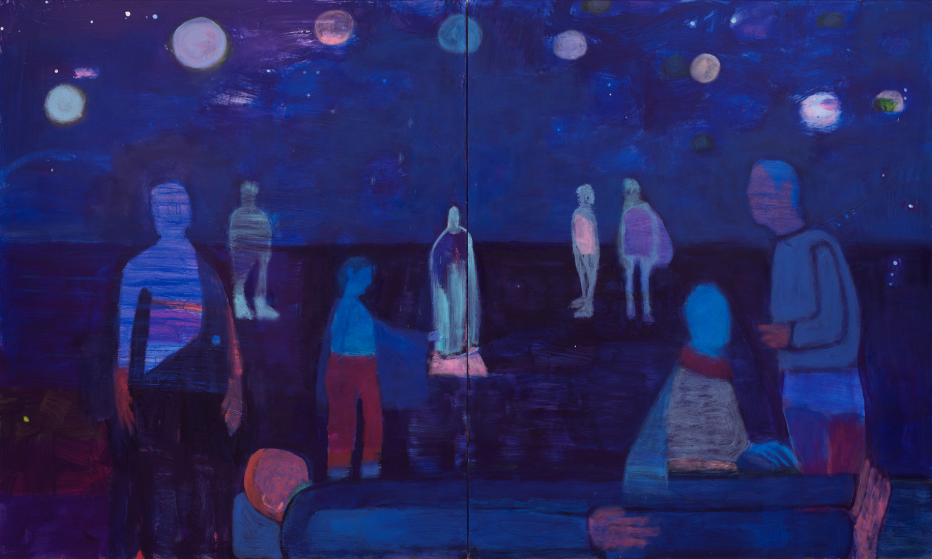
American modernist painters have long been a touchstone for Bradford. Marsden Hartley is particularly important to her. Both artists share a deep relationship with Maine. Many of the paintings in the show were made in Bradford’s studio, in a former shoe factory on the Androscoggin River, a building like the one Hartley worked in as a child. Both embody a similar sense of longing, and a notable “fitting out” of contemporary art, despite being important, even central, figures in the painting and art of their times. Bradford’s paintings feel investigative; she works towards an ineffable, if slightly unwieldy, grace.
In the project room Bradford presents a series of portrait sized works suffused with bright colors that contrast with the moodier tones in some of the larger works. Bradford notes that her palette choice stems from a desire to “bring some light and warmth to New York as winter closes in.” The stripped-down figures are scruffily painted. High yellows, bright greens and reds simultaneously make up her subjects’ smocks, scarves and tunics while embodying their material reality.