
DUO EXHIBITION: CAMILLA ENGSTRÖM & JULIUS NORDVINTER
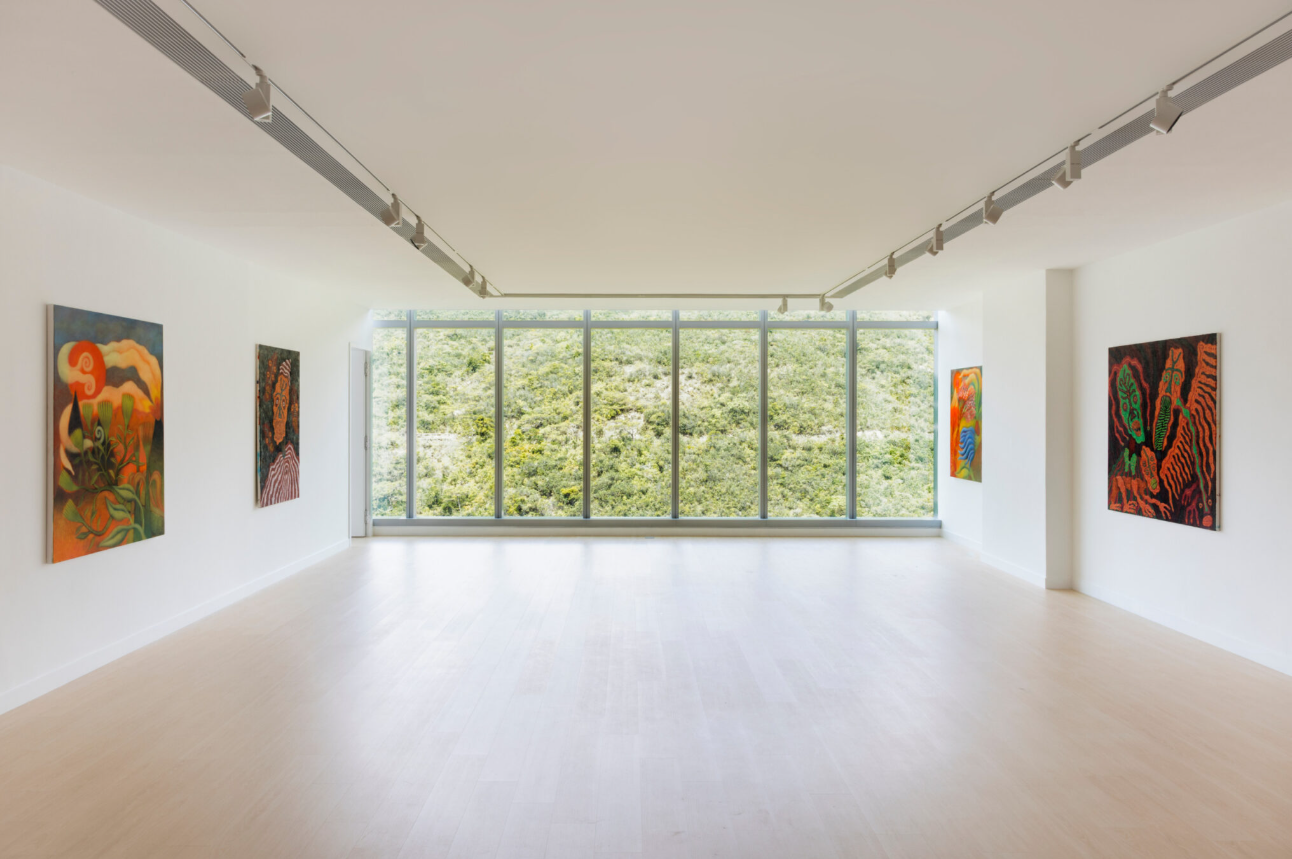
CARL KOSTYÁL is pleased to present a duo exhibition by Camilla Engström (b. 1989, Örebro) and Julius Nordvinter (b. 2003, Gothenburg) at the gallery’s Hong Kong space in Landmark South.
March 22 – April 25, 2026
The exhibition marks Julius Nordvinter’s debut presentation in Asia and Camilla Engström’s return to the region, where she has established a strong presence in recent years. Engström has exhibited widely across Asia with Carl Kostyál, including Jing Art Fair, Beijing (2023), Art021 Shanghai (2024) and most recently the group exhibition ‘The Cloak of Dreams’ at SWCAC Museum, Shenzhen (2025).
“Camilla Engström’s luminous landscapes and Julius Nordvinter’s psychologically charged portraits approach painting from different directions yet share a common lineage. Both draw on the imaginative terrain of Nordic folklore, where landscape, myth and the inner life often collapse into one another.
Engström’s paintings depict environments that feel both recognisable and strangely displaced. Oversized flowers, tree stumps and geological forms occupy the foreground like actors entering a scene, illuminated by a warm horizon. Having lived between Sweden, Shanghai and Los Angeles, the Chinese–Swedish artist constructs landscapes informed by very different visual worlds: Scandinavian traditions of landscape painting, dense contemporary urban environments and the expansive light of the American West. The resulting terrains do not belong to a single geography. They function instead as landscapes of the mind.
Across this new body of work Engström builds each composition upon a ground of Indian yellow, allowing light to permeate the entire surface of the canvas. Vegetation and topography seem to glow from within. Nature becomes both subject and atmosphere.
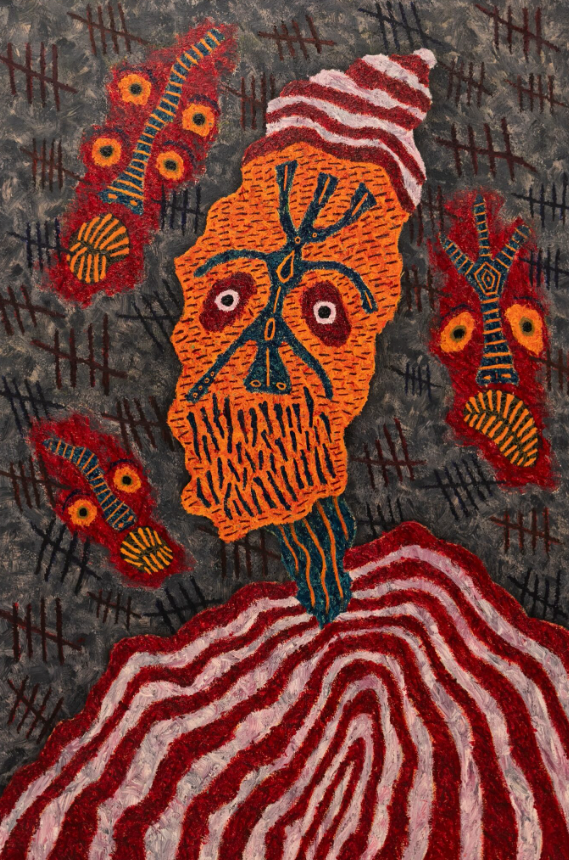
Nordvinter’s paintings turn inward. His canvases are populated by figures caught somewhere between confrontation and introspection. Faces echo across the background, gestures remain unresolved, and the characters appear suspended within an ambiguous psychological space. In ‘Portrait of Man Without Shovel’, the background is composed of lines marking days one by one- an image that suggests time passing inside an internal enclosure.
Both artists echo a long Nordic pictorial tradition in which landscape operates as a stage for mythic or psychological drama. In the work of artists such as Ivar Arosenius (1878 – 1898, Sweden) and Theodor Kittelsen (1857 – 1914, Norway), forests and mountains were populated by creatures that were at once playful, unsettling and deeply embedded in folklore. Nature in these works is never neutral.
Similar tensions run throughout the exhibition. Nordvinter’s ‘Poseidon’s Doomsday Dog’ depicts an encounter that oscillates between embrace and struggle. Engström’s landscapes carry their own quiet dissonance: flowers and plants grow to improbable scale, their beauty accompanied by a subtle sense of intrusion.
This distortion of scale recalls early Nordic religious painting, where biblical scenes were often reimagined through local landscapes. In these interpretations, unfamiliar elements were replaced with recognisable ones: an elk might stand in for a camel and vegetation could grow to absurd proportions. A rose might appear as large as a man.
For both artists, painting functions as a means of working through emotional states that resist language. In Nordvinter’s work these tensions surface through the figure.
In Engström’s landscapes they dissolve into colour, light, flora and fauna. In ‘Golden Inlet’, the only explicitly human element in her works for the exhibition appears: a lactating breast emerging from the landscape itself, at once maternal and cosmic.
When a more expressionist approach to landscape painting emerged in Sweden in the early twentieth century, the artist Karl Nordström (1855 – 1923, Sweden) wrote:
“To depict our nature, it is not enough to simply open your eyes to it. The painter must also know how to close them at times; he must be able to dream about what he has seen.”
Engström and Nordvinter operate precisely within this space between observation and imagination.”
– Sara Walker