Hauser & Wirth is pleased to announce Possible Matter an exhibition by Cristina Iglesias, in New York.
November 5, 2026 – January 23, 2027
Iglesias brings two strands of an extraordinary practice into captivating dialogue, moving between expansion and erosion, formation and dissolution, the exhibition considers the interplay between natural processes and human invention. At the center of the exhibition is ‘Dome’ (2026), Iglesias’s newest immersive work, following ‘Aurora Borealis Star Dome’ (2026), a major public commission she recently completed for the Princess Estelle Sculpture Park in Stockholm, Sweden.
Measuring five meters (16 feet) across, ‘Dome’ consists of branch-like cast-aluminum arms that gradually merge into a geometric glass cupola. At its base, the aluminum structure bears the imprints of roots, living organisms and imagined biological forms; these patterns progressively transition into a crystalline geometry as the sculpture ascends, retaining the fractal patterns found in the natural world. Responding to the shifting daylight from the gallery’s soaring fifth-floor skylight, the glass elements within the work cast an array of shimmering, colored beams across the room, altering the surrounding space as the light moves throughout the day.
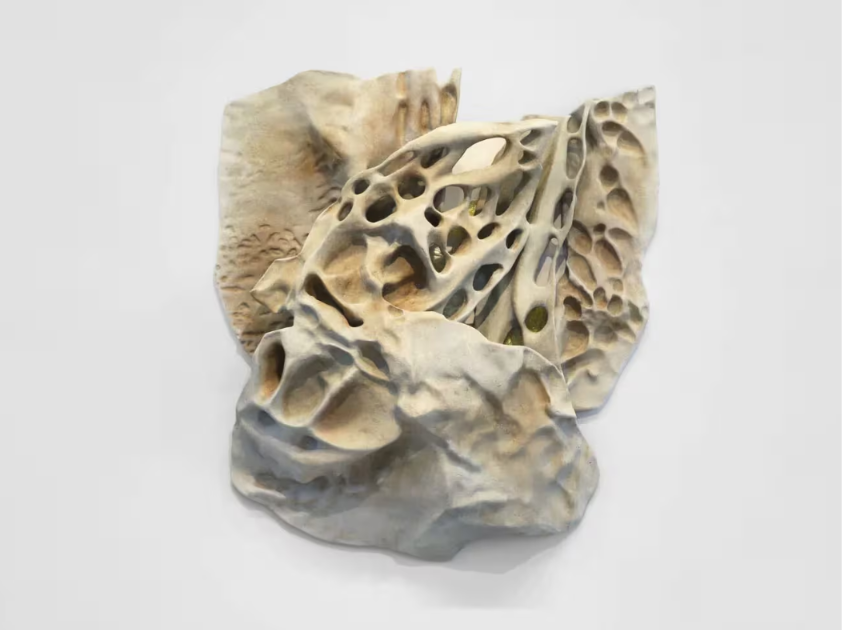
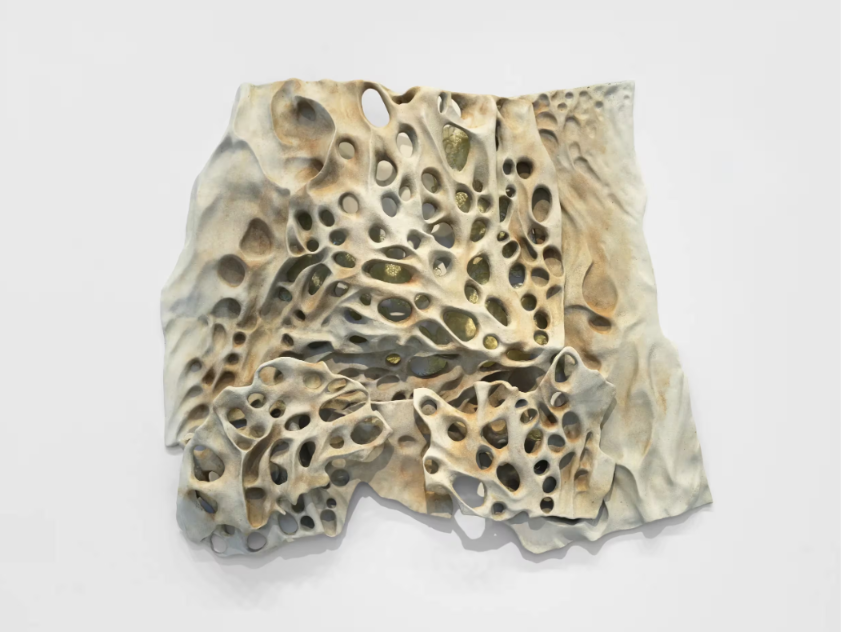
Four wall-mounted sculptures, each titled ‘Possible Matter’ (2026), unite elements from two significant bodies of Iglesias’s work: the organic, cast-aluminum volumes of her ‘Entwined’ series, initiated in 2018 and concentrated on rhizomatic growth, and the explorations of erosion in her ‘Littoral’ works, developed since 2022 from patterns found along the Basque shoreline. The intricate, undulating forms of the new sculptures, cast in aluminum and transparent resin and painted to match the surrounding walls, will appear to emerge from the architecture itself, their surfaces and openings evoking processes of erosion, accumulation and transformation over vast expanses of time.
The works in ‘Possible Matter’ bring Iglesias’s enduring exploration of the relationship between landscape and architecture, and our place within it, into sharp focus. Drawing on patterns found in rocks, water and vegetation, she has developed a singular approach to casting, assembling and reworking imprints and textures from nature, to create fantastical new forms and invented environments. While these works evoke timescales far beyond human experience, their physical presence anchors us in the here and now, drawing our attention to the spaces we inhabit.