
AMOL K PATIL: THE SHADOW OF LUSTRE
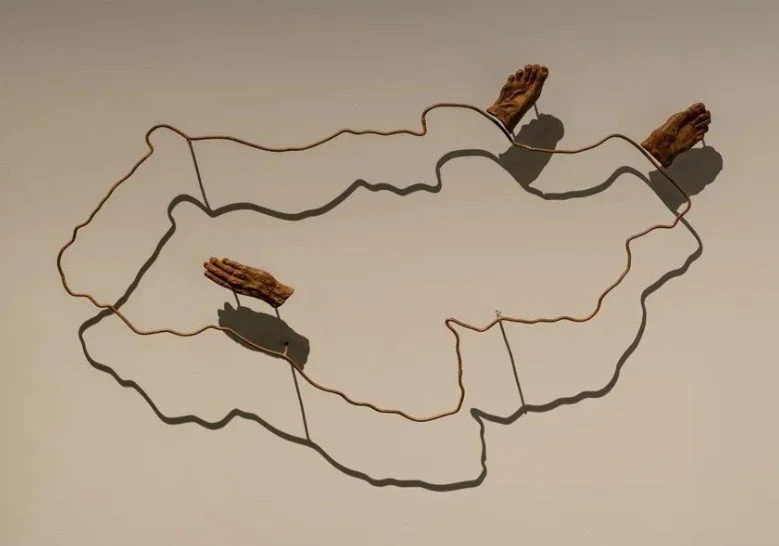
GALERIE PETER KILCHMANN is proud to present The Shadow of Lustre, Amol K Patil’s first solo exhibition in Switzerland. Bringing together sculpture, painting, drawing, video, and immersive installation, the exhibition unfolds as a powerful meditation on labor, migration, and visibility—illuminated through Patil’s distinctive poetic use of light and darkness.
February 27 – May 23, 2026
Developed in collaboration with Röda Sten Konsthall, Gothenburg, this new chapter of The Shadow of Lustre focuses on the lived experiences of Dalit communities who migrated from rural India to the working-class neighborhoods of Mumbai. Patil draws from the architecture and social life of the city’s historic chawls, transforming fragments of bodies, movement, sound, and material memory into works of striking emotional and political resonance.
Amol K Patil (1987) lives and works between Mumbai, India, and Amsterdam, Netherlands. His work has been presented at leading international institutions and exhibitions, including Documenta Fifteen (Kassel, Germany), the Berlin Biennale (Berlin, Germany), Gwangju Biennale (Gwangju, South Korea), Röda Sten Konsthall (Gothenburg, Sweden), Hayward Gallery (London, England), De Pont Museum (Tilburg, Netherlands), Kochi-Muziris Biennale (Kochi, India), and SITE Santa Fe International (Santa Fe, USA), among others. His practice stands out for its rare ability to merge conceptual rigor with lived history, performance, and collective memory.
The Shadow of Lustre positions Patil as one of the most compelling voices in contemporary art today—an artist who makes visible what is too often left in the shadows.
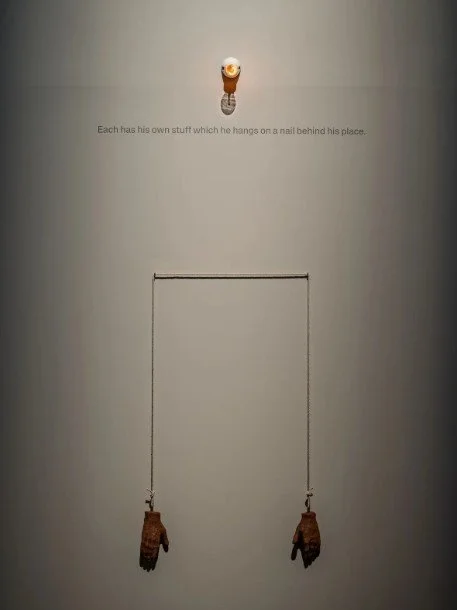
This is a new chapter of the exhibition that focuses on the experiences of Dalits, members of the lowest caste in India, who moved from villages to cities and settled in the working-class neighborhoods of the artist's hometown of Mumbai.
‘’The idea of the exhibition is based on seeing and experiencing the traces of human history, lives and conversations of different generations behind wall cracks, through layers of paint, across skin and touch.’’ Amol K Patil
The first exhibition space is dedicated to the series The Shadow of Lustre, 2025 which unfold across stagelike constructions: Eight paintings, executed in ink on water-based paint on MDF, eighteen bronze sculptures, on video projection and one video installation showing parts of the human body —hands, feet, arms, torso — and traces of their labor. This body of work is grounded in the Mumbai’s mass housing complexes called “chawls” and the stories told by various individuals from the book One Hundred Years and One Hundred Voices. Dense housing structures with long corridors lined by small rooms, primarily inhabited by mill workers and working-class families who migrated to the city in search of stable livelihoods and a future for the next generation. These spaces are not merely residences but social environments where lives unfold collectively.
With little privacy, domestic life spills into shared corridors; bodies, voices, and gestures intermingle. The walls bear layers of colors from different generations; the corners harbor secrets, and the kitchen still carries the aroma of freshly ground spices.
Who Is Invited to the City? (2025), a series of twelve paintings (acrylic on canvas), accompanied by a video work of the same title, is on view in the second gallery space. First shown at the Gwangju Biennale, the video unfolds in nocturnal darkness, lit only by handheld torches carried by young figures walking together through the night. The torches illuminate bare feet, jeans, hands, and fragments of bodies—but never faces. Crickets fill the soundscape, accompanied by a voice-over reflecting on light, vision, distance, hunger, and longing for a city that seems to belong to others. In search of light, the working class has travelled vast miles to reach the cities, but as they approach, they face constant struggle and the darkness of endless roads. Sounds have accompanied them during their long journeys and, this work, is used as a metaphor for their lively conversations describing life in the cities.