WOOSUNG LEE: WILL THERE BE AN ANSWER?
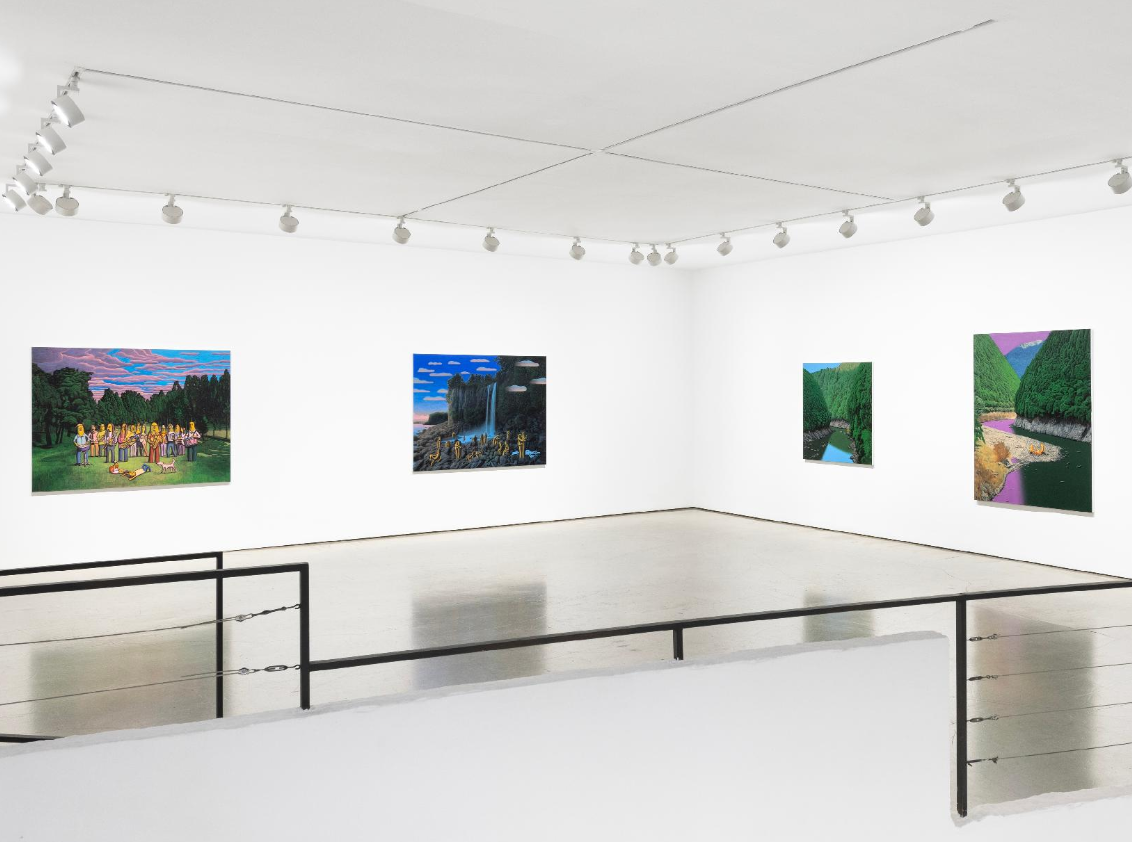
GALLERY HYUNDAI presents Will There Be an Answer? , its first solo exhibition with Woosung Lee. The artist works across drawing, painting, and animation to explore the relationship between everyday life and art, experimenting with the meaning of drawing and the expressive possibilities of painting.
March 18–April 26, 2026
Rooted in his practice of translating everyday life into painting, Lee's work borrows from visual traditions such as painting from life, minhwa (Korean folk painting), genre painting, and Minjung Art. Through these references, he warmly captures the figures and sentiments of contemporary life, establishing a distinctive position within Korean figurative painting. Through scenes drawn from everyday life, Lee has unfolded narratives of youth, solidarity, humor, travel, family, and queer romance. His subjects range from the people and places around him, such as friends, family members, and neighborhood restaurants, to ordinary objects and even broader social events. While the artist has for some time focused primarily on figures drawn from his surroundings, this exhibition turns its attention toward landscape, a subject that encompasses layered experiences of time and perception. The exhibition presents over forty works, including a large-scale hanging painting, as well as a sound work composed of recordings made in different sites.
Over the past fifteen years, Lee has focused on the “present” of the time and place in which we live. In the early 2010s, he expressed the anxieties, contradictions, and divisions of his twenties through striking images, such as burning duck boats or figures rowing across seas of fire, producing works with a much more intense atmosphere than his recent paintings. Following his first solo exhibition, Bul Bul Bul (2012), Lee began translating the people and moments he encountered in daily life into paintings that avoid both excessive heaviness and lightness. In Returning Entering Descending Devouring (2013), he expressed fragmented and divided emotions with humor, and from Pulling from the Front, Pushing from Behind (2015) onward, he actively incorporated people, objects, and landscapes from his surroundings into his work. During this period, he also developed large-scale hanging paintings on fabric. In My Dear (2017), Lee created monumental works ranging from two to nearly ten meters in length. Later, in Come Sit with Me (2023), he simplified the backgrounds into monochrome fields and brought the figures into close view, heightening the subtle expressions and silhouettes of his subjects. He also introduced cartoon-like characters drawn with deceptively simple lines in the self-portrait series I Am Still Working (2023), presenting figures filled with melancholy and worry that reflect his own presence just beyond the frame. The “present” Lee seeks to capture is not a fixed or fragmented moment that slips into the past and fades into memory. Like an expression that remains unforgettable for a lifetime, the “present” he constructs refers instead to a beautiful moment that persists across the flow of past, present, and future. In 2023, Lee wrote in an exhibition catalogue: “I will return here again to encounter this beauty. I am grateful that I can paint it with my own hands.”
Lee's landscapes move beyond simple representation. Although they begin with places the artist encountered in everyday life, layers of time and sensation overlap and collide within them, bringing together past and present, as well as personal and collective experiences and memories. Through this process, the works evoke a paradoxical and ironic sense of beauty. The works in the exhibition feature a wide range of locations, from specific sites such as Hangang Bridge, Jongno 3-ga Station, Ttukseom Hangang Park, and Gyeongpo Beach, to urban spaces like alleyways and parking lots, as well as natural settings including rice fields, farmland, the sea, valleys, and waterfalls. Lee begins each work with scenes he photographed or recorded in places he encountered, then reconstructs the image by layering memory, sensation, and imagination. Grounded in reality and rendered with careful detail, these landscapes incorporate surreal elements: seas and rivers, skies and clouds, and light appear in unexpected ways, while cartoon-like figures emerge and overlap across the scene. The resulting images blend observed reality with sensation, memory, and dream, inviting viewers to enter a threshold between these realms, a present moment that seems almost eternal.
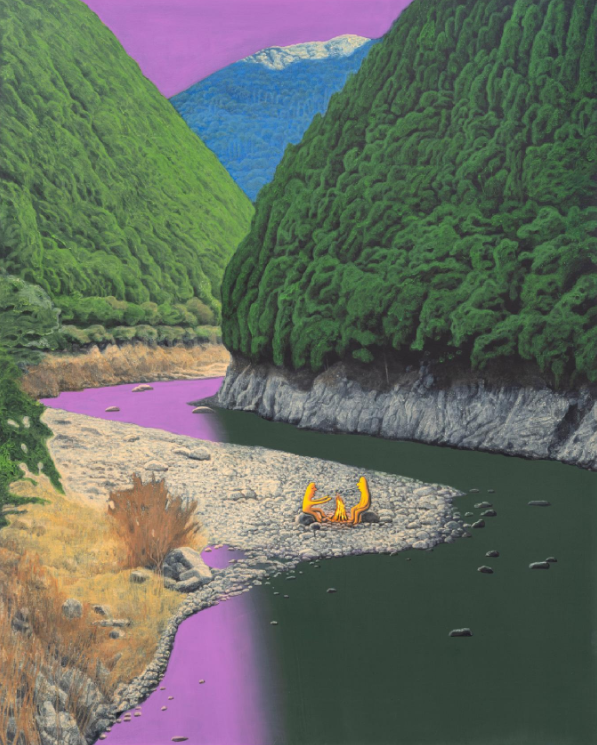
Lee's shift from figures to landscapes does not signal a departure into a new world so much as an expansion of the “present” that has long occupied his attention. If his earlier portraits captured faces and silhouettes shaped through layered experiences, realities, and relationships with others, the landscapes similarly function as expressions of fleeting moments he perceives in the world, encompassing equally profound emotions. The exhibition title Will There Be an Answer? asks a question that may seem directed at another person, but it is not limited to a single individual. It can also refer to the self in the present, the self in another time, and to places where many layers of time and memory gather, along with the people connected to them. Ultimately, it points to the interconnected “I” and “we” that bind all of these elements together. In an artist's note written while preparing this exhibition, Lee reflects: “From that day on, I looked at photographs of landscapes and began painting them one by one. They are landscapes that remind me of who we were then, and landscapes that connect to who I am now.” Before these landscapes, quietly alive with poetic movement, the artist and perhaps we as well find ourselves asking a question: Will there be an answer?
"Would I Know If I Asked You?" is the first solo exhibition jointly presented by Lee Woo-sung and Gallery Hyundai. Under the theme of "Life and Art," the artist has experimented with the meaning of the act of drawing and the expressive possibilities of painting by utilizing various media such as drawing, painting, and animation. Practicing the painting of everyday life, his work borrows styles from plein air painting, folk painting, genre painting, and people's art to intimately capture the appearance and sentiments of "us" in contemporary society, establishing a unique position within Korean figurative painting. Through diverse scenes of daily life—ranging from surrounding people and places like friends, family, and neighborhood restaurants to objects and social events—he has unfolded narratives of youth, solidarity, humor, travel, family, and queer romance on the canvas. Having focused intensively on depicting surrounding "people" for some time, the artist turns his attention in this exhibition to "landscapes" that encompass multi-layered time and sensations. He presents approximately 40 works, including sound works recorded while traversing various landscapes, as well as large-scale hanging scrolls and canvas works.