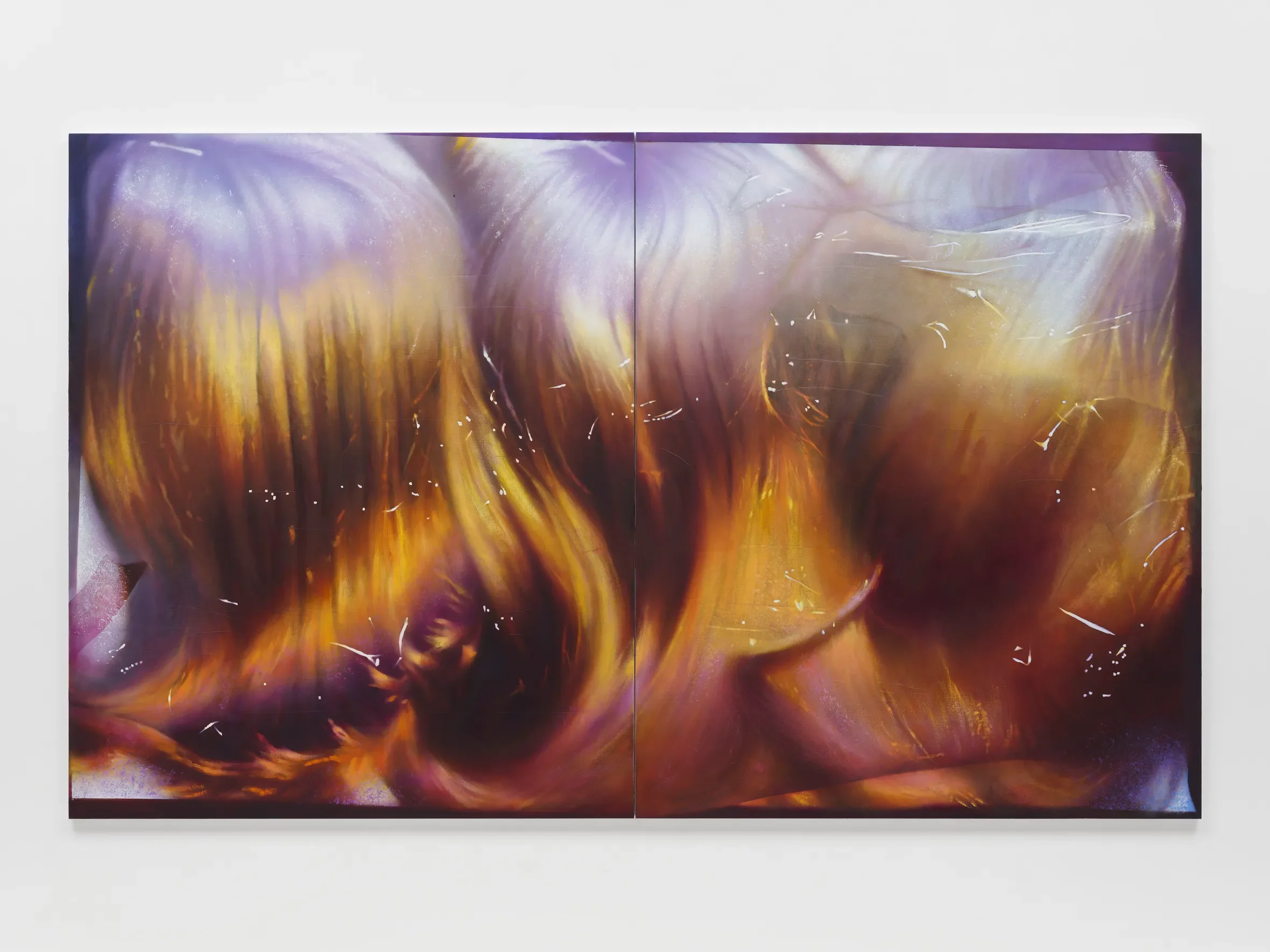
Louise Giovanelli. Efflorescence, 2026
White Cube is pleased to present In the Light of False Suns an exhibition by Louise Giovanelli.
November 20, 2026 – January 16, 2027
‘In the Light of False Suns’, Louise Giovanelli’s exhibition of new paintings at White Cube Mason’s Yard, revisits subjects long central to the artist’s practice, casting them here beneath a borrowed light. The exhibition takes its title from parhelia, or ‘false suns’, an atmospheric optical phenomenon in which sunlight refracted through ice crystals produces bright spots on either side of the sun. Illusory and dependent on the true sun, they are ‘companions of light rather than its origin’, as Giovanelli puts it.
Giovanelli conceives of her recurring preoccupation with the curtain and the female screen idol as a form of cathexis, the psychoanalytic process whereby psychic or emotional energy is invested in a person, object or idea. In fusing the two motifs, Ad Astra draws upon the desires and ideals long associated with drapery and female beauty throughout Western painting. As Giovanelli observes, ‘the curtain and the female figure charge one another’, each acquiring something of the other’s glamour, sensuality and theatrical promise.
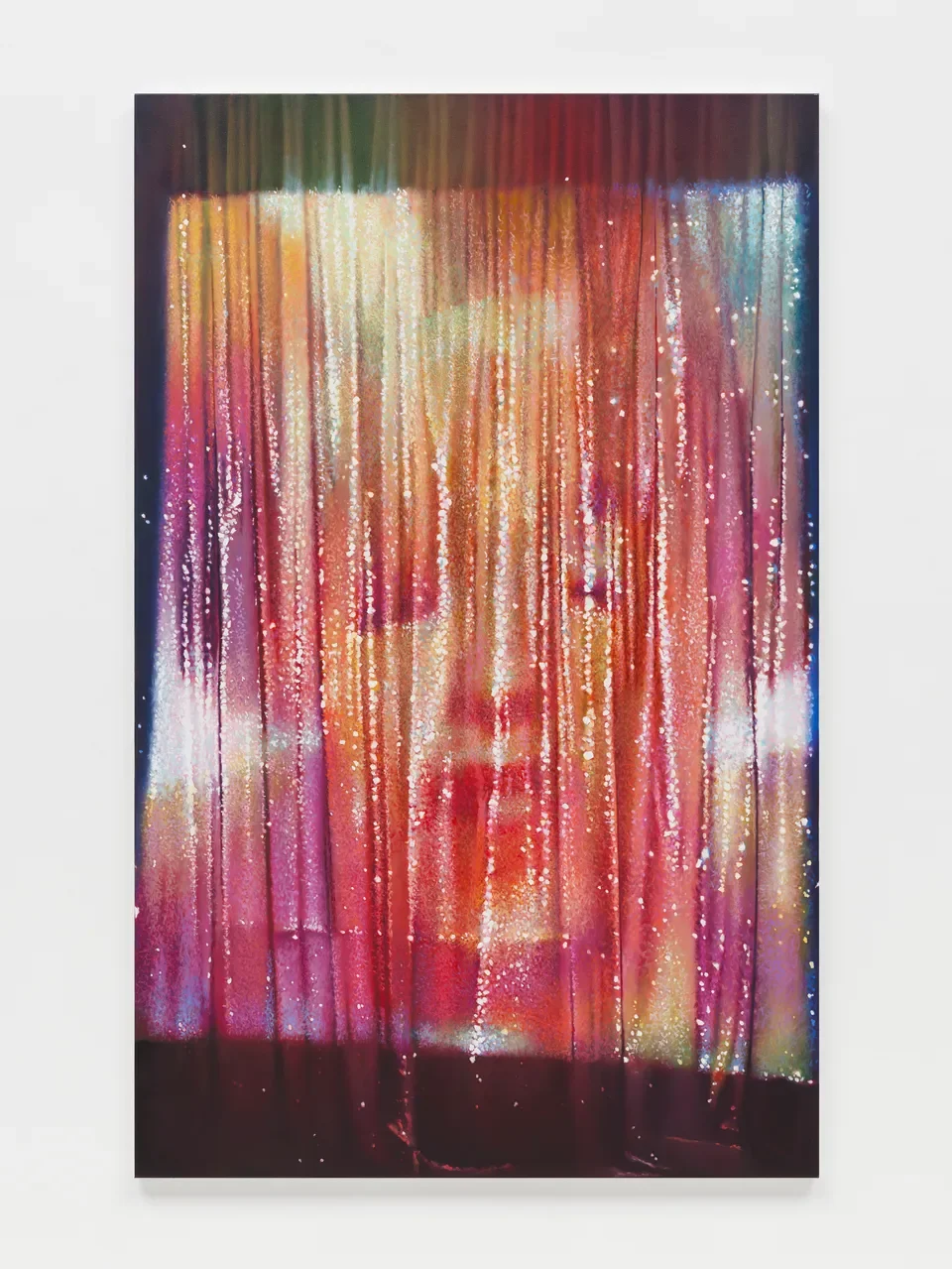
Louise Giovanelli. Cathexis, 2026
The passage between bodily and cosmic scale takes a visceral turn in Giovanelli’s large-scale diptych of a carcass, Aphros (2026), based on photographs taken in a slaughterhouse. Seen at such close quarters, the marbling of flesh and fat slips its moorings, assuming by turns the appearance of a turbulent seascape, rugged mountainous terrain or a luminous, galactic sky, conferring a stark, elemental grandeur upon raw flesh. Set among the exhibition’s images of cinematic beauty, theatrical drapery and hair, the carcass brings into view a darker aspect of the artist’s preoccupation with the feminine, one informed by the pagan conception of womanhood expounded in Camille Paglia’s Sexual Personae (1990).
In two new paintings of a kiss, Savium and Astrobleme (both 2026), Giovanelli returns once more to a fleeting cinematic moment, extending her earlier painting series entitled ‘Harmony’ (2024). Here, the meeting of two mouths offers a rare suggestion of human connection within the exhibition, yet the figures are cropped tightly and crowded so close against the picture plane that the viewer is denied any sense of the scene beyond their embrace. As the writer Catherine Millet observes of the works, it is ‘as if the kiss were caught in the crack of a half-open door’.
Press release courtesy of White Cube.