GREGORY HODGE: RECALL
NINO MIER presents "Recall", Gregory Hodge's second solo exhibition, in which the artist focuses on two distinct guiding threads within his artistic practice.
April 10 - May 7, 2026
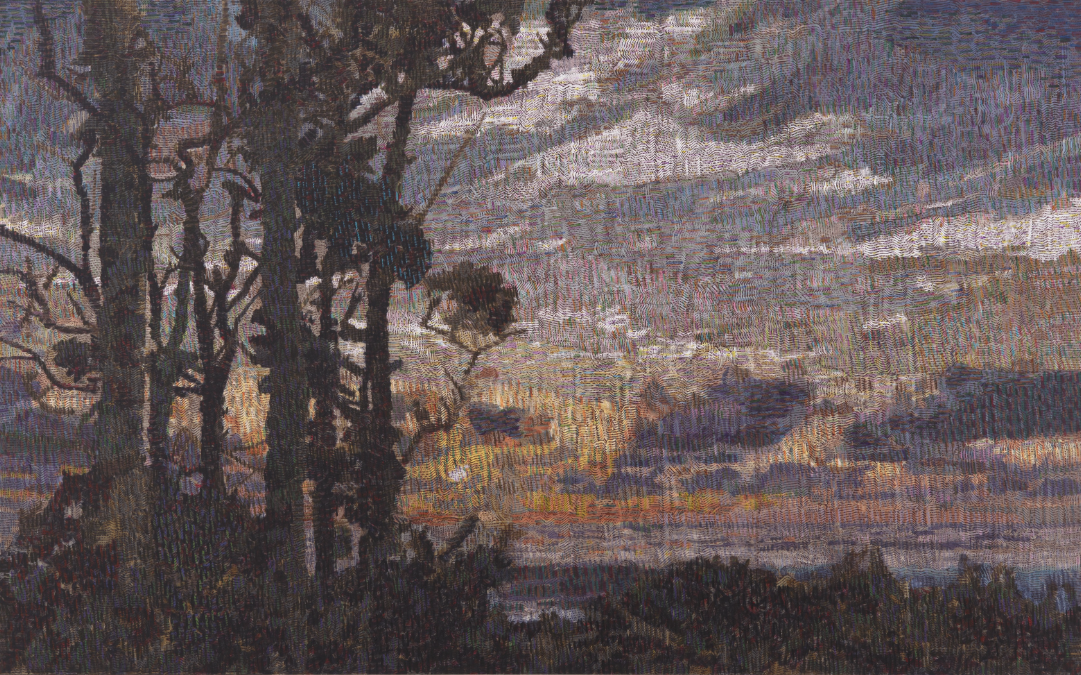
This new body of work deliberately narrows its scope to monumental landscapes and more intimate still lifes. This choice was made with the architecture and proportions of the gallery’s Tribeca space in mind. The clean, rectangular layout of the space allows Hodge to craft an enveloping, first-person experience. Towering images of trees, oceans, forests, and sunsets surround the viewer, transforming the gallery into an immersive environment.
Recall marks the first time Hodge has devoted an entire exhibition to a cohesive series of large-scale landscape paintings. These works deliberately detach from their original geographic sources. Although rooted in photographs the artist captured across his native Australia and his current home in Paris, France, Hodge seeks to liberate the scenes from any specific sense of place. By omitting interiors and architectural elements, the landscapes remain anonymous and universal: free from the descriptive anchors that buildings and rooms inevitably introduce.
The forest paintings draw inspiration from France, particularly the artist’s frequent walks through the Bois de Vincennes, Paris’s largest public park, conveniently located between his home and studio. Moving through the exhibition feels like a rapid journey through changing seasons. The coastal scenes, by contrast, emerge from memories of Australia. These are internalized landscapes, reconstructed through recollection and shaped by the personal history Hodge shares with them. In translating these memories into paint, a quiet nostalgia surfaces: both for the places themselves and for the long tradition of landscape painting.
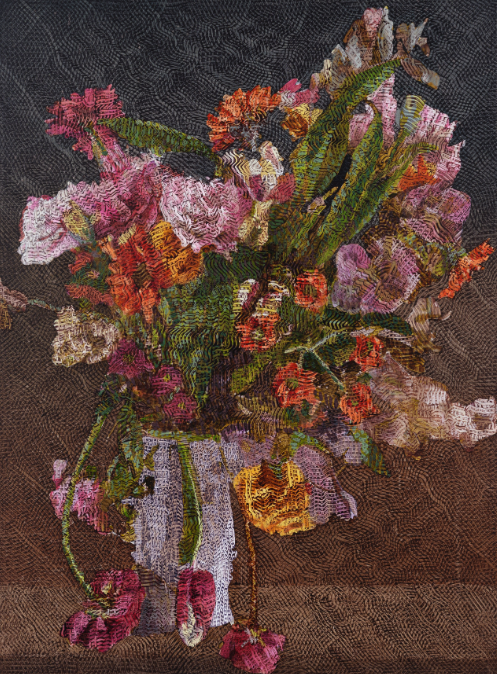
The still lifes are deeply anchored in art history. Created from floral arrangements the artist composes in his studio and set against dark, theatrical backgrounds, these works dialogue with the Dutch Golden Age tradition, exploring questions of staging, light and shadow, and illusion. Yet they also extend far beyond homage to only that particular part of painting history. Hodge’s works resonate with the legacies of (Neo-)Impressionism and (Post-)Expressionism alike. His use of color and mark-making echoes the optical mixing pioneered by Georges Seurat and, later, Paul Signac. Viewed up close, the tension and vibration of discrete color units create a shimmering, almost woven surface that dissolves into abstraction before coalescing into coherent imagery from a distance.
Seurat’s belief in the eye’s ability to blend individual marks into luminous new tones finds a powerful echo in Hodge’s work. Similar perceptual effects recall Monet’s broken brushwork, while the underlying fascination with color relationships links to the artist’s longstanding interest in threads and tapestries. Like Van Gogh, who carried skeins of colored wool to match against the vivid landscapes of southern France, Hodge is captivated by unexpected color pairings and the principles of color theory. As Josef Albers demonstrated in his Interaction of Color, hue is always relational. Hodge exploits this by combining violets and greens to conjure deep blacks, or by introducing artificial turquoise into tree trunks: colors that, in isolation, might seem unnatural, yet feel entirely convincing within the logic of his paintings.