
GREGOR HILDEBRANDT: BLUE IN MEMORIAM
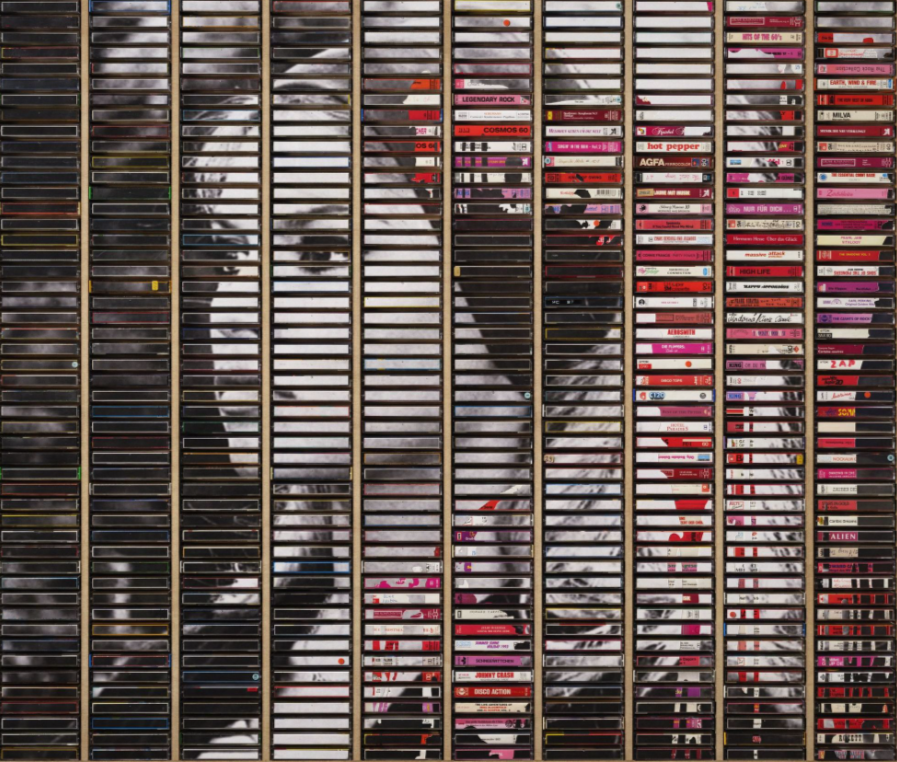
PERROTIN is pleased to present Gregor Hildebrandt’s latest exhibition inspired by the interior windows of the Kaiser Wilhelm Memorial Church, one of West Berlin’s most famous landmarks.
January 16 - February 18, 2026
This work transposes the motifs of its stained windows into an installation of small vinyl record paintings that covers the entire exhibition space, creating an immersive experience for the viewer. It started with a gift: a vinyl record of Johann Sebastian Bach's cantata, its cover featuring the blue glass tiles of Berlin's Kaiser Wilhelm Memorial Church. Every ray of light passing through those small windows is drenched in calming blue, allowing visitors to fully immerse themselves in the space. The tiles form a fragmented night sky—stars, clouds, and a sense of quiet vastness. Being inside the church is a physical as much as an emotional experience.
Built in 1891 and largely destroyed during World War II, the church was preserved in ruins after the war, while a new nave, tower, chapel, and vestibule were constructed around it. Berliners call the church ruins "the hollow tooth" because of its distinctive shape, which rises toward the Berlin sky. The new complex is defined by walls made entirely of the aforementioned blue glass tiles. The artist responsible for these glass walls is the Frenchman Gabriel Loire.
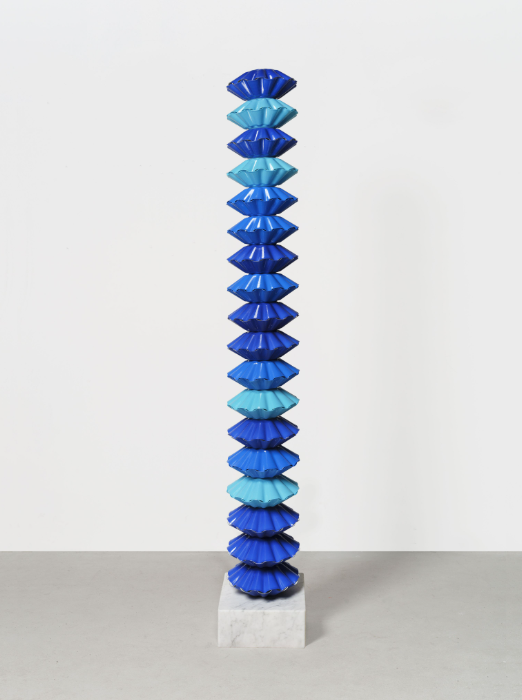
Blue in Memoriam is a study of space, light, and memory—and, in a way, a meditation on sound and its absence. The work consists of nearly 3,000 tiles made from more than 8000 vinyl records that Hildebrandt pressed specifically for this project. Hildebrandt’s oeuvre is filled with works that obscure, store, or disguise sound: audio tapes unspooled and fixed onto canvas, recordings transformed into sculptural material, magnetic tape stretched into beams that physically interrupt a gallery.
Enveloping the room entirely in vinyl tiles, the installation creates an environment that is both immersive and reflective—an echo of sacred architecture transposed into a contemporary context. The blue light radiating from the tiles evokes the sublime quality of entering a church, yet the material insistence of the vinyl roots the experience in the physical and the present. It is a work that invites visitors to linger, to observe how the space alters their perception, and perhaps to see their surroundings differently after bathing in its blue light.
Hildebrandt’s work turns music into architecture, weaving together cultural references from different eras and genres. It binds the private to the public and transforms memory and experiences into something capable of transcending both space and time.