NICK DOYLE: COLLECTIVE HALLUCINATIONS
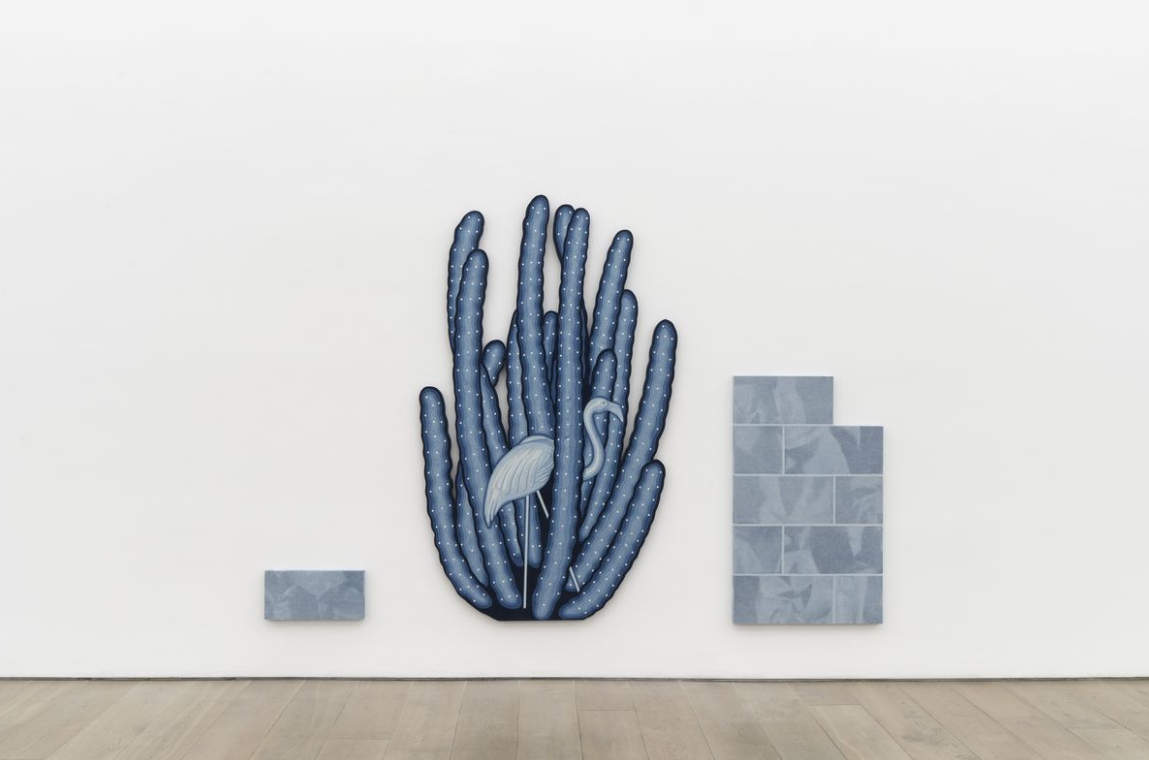
PERROTIN is pleased to present Collective Hallucinations, an exhibition of new work by Nick Doyle featuring a suite of wallmounted collages and an immersive installation of a psychic parlor that marks his first experiment with artificial intelligence.
April 24 – May 30, 2026
In both bodies of work, the Brooklyn-based artist mines the fraught relationship between land and technology, progress and destruction.
With Collective Hallucinations, Doyle furthers his ongoing interrogation of denim, a material that simultaneously evokes associations of Americana, capitalism, and masculinity. Here, the artist heads homeward, tailoring his signature fabric into largerthan-life metonyms of the wild American West. Aviators, bricks, car keys, cacti: these symbols are as simple as they are loaded, conjuring the sights of some long, desultory drive toward the setting sun. What, we’re left to wonder, awaits us at the end of this trip?
Born in Southern California, Doyle is well acquainted with the myths of the West, from manifest destiny to the counterculture’s new-left dream of social revolution to the glitter and glam of Hollywood. If these myths ever held the promise of a better life, they’ve long since curdled into something sour. The land is bought up, burnt up, dried up; the revolution was never televised—or actualized; Hollywood is imploding like a dying star. A sense of disillusionment colors Doyle’s images, almost literally. If you didn’t clock the denim, you might think they were all in shadow, perpetually under the cloud of late capitalism. Here, “Collective Hallucinations” doesn’t refer to visions of UFOs or saints, but a different illusion altogether: the American dream.
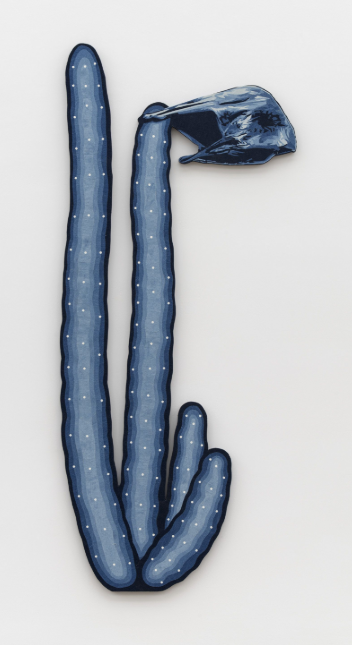
Alongside Doyle’s standalone symbols are two more elaborate pieces which reimagine a pair of mountainscapes shot by Ansel Adams—albeit with a catch. Imbued in the old, famous photographer’s scenes was all the optimism and potential energy of the Progressive Era. Even then, western pictures like his evoked visions of economic opportunity through, and in communion with, the land. Now, those same images feel more like Doyle’s interpretations, which are literally locked away—one behind a chain link fence, the other boarded up with bricks. Once again, Eden has become a cautionary tale.
But Doyle is looking back to look forward. From the Transcontinental Railroad to Silicon Valley, western growth and technological advancement have always been linked. Now, the new frontier is a digital one, and speculative efforts to stake claim are arriving with the same intensity as the California Gold Rush. The centerpiece of Collective Hallucinations, a denim-clad installation called Mirror, Mirror, prompts us to consider what hangs in the balance.