OLI EPP: DIRTY LAUNDRY
PERROTIN is pleased to present Dirty Laundry with gallery artist, Oli Epp.
May 30 - August 15, 2026
Oli Epp’s paintings have always delighted in contradiction: the glossy surface and the anxious undercurrent, childlike honesty and adult wounds.
In Dirty Laundry, Epp continues his exploration of ‘Unrealism’: a contemporary surrealism shaped by deception, misdirection, and the instability of images in an age when reality itself feels staged. He has described these works as a confrontation with the inner confessions and turmoils of the past year. A year of mixed messages, ticklish revelations and triumphs. Like any good soap opera, there are call backs, false clues, dramatic pauses and close-ups. Epp keeps the appetite of recent shows - but changes the temperature. The feast was the night before.
Now comes the washing up. The aftertaste. The works are funny - sometimes viciously so. The title, Dirty Laundry, carries its own comic threat. Laundry is domestic, repetitive, and ordinary. It is what piles up when life happens. But to ‘air one’s dirty laundry’ is taboo. It implies scandal, secrecy, and exposure: an inventory of embarrassments on the line.
The exhibition revolves around a protagonist painting - Fool’s Gold (Prospector). Epp renders himself not literally, but as a figure searching for truth with the misplaced optimism of someone digging for gold.
The painting is about seeking clarity when there is none. Searching for answers while following a bad scent. To dig, in this context, is both noble and degrading. It is the most autobiographical work. Even the skunk was inspired by a drawing Epp’s mother made in art school - an unexpectedly tender inheritance. It is also an animal with an unusual defence mechanism.
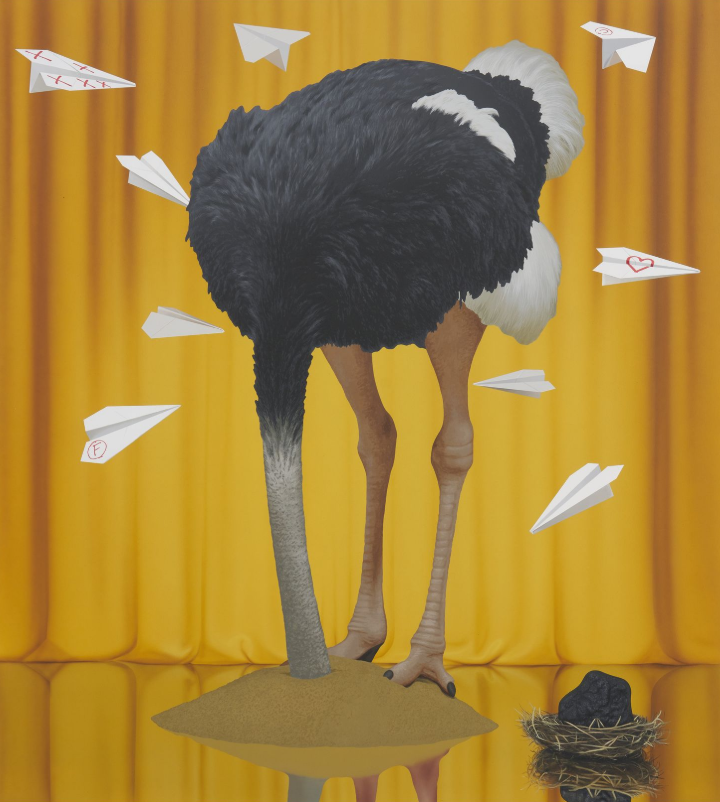
Epp has always understood that comedy is a formal device. That a joke lets the knife in. The paintings remain seductive, immaculate, and humorous - but here, the joke has a wound beneath it. In Sticks n’ Stones, he approaches the familiar childhood rhyme through the adult experience. The phrase promises resilience - words will never hurt me - while quietly admitting the opposite. Words do hurt. The painting holds the feeling of being made ridiculous, suspecting yourself as the punchline. In the foreground, the ostrich becomes a symbol of avoidance - running, hiding, laying low, burying its head in a pile of sand.
The paper aeroplanes carry the debris of a life: kisses from a lover or an “F” exam grade in French.
Throughout the exhibition, his vocabulary of absence, distortion and charged pop-culture mash ups becomes sharper and more intimate. In Holy Water, Elvis - the King - is brought to his knees: an idol both bound and headless, caught in an act of penance and communion. The paintings each similarly gather their charge from an unstable set of sources: tragic pop culture mythology, YouTube videos, eBay listings, to the uncanny close-cropped hair of Domenico Gnoli. From fallen icons to wounded animals, Lucky Strike depicts a fire horse with a matchstick mane like a nervous system set ablaze. It is a creature of temper and timing, animated by the Lunar New Year. A teenage foal growing into itself - both lucky and injured. Red, in many countries, carries associations of good fortune and celebration - alongside the horseshoe necklace and four-leaf clover at his hooves. However, if this is a war horse, it was bred for the wrong battle: camp, lazy - too beautiful for violence and too wounded for an easy surrender. Its coy expression was inspired by Princess Diana’s fluttering eyes in televised interviews.
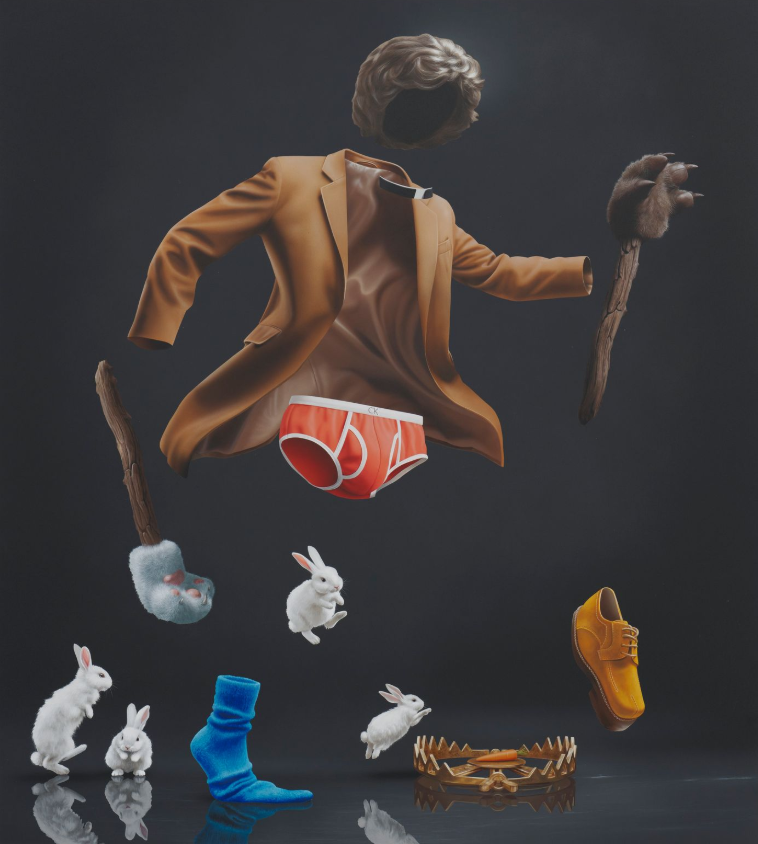
In Father Figure, a man leads a parade of white bunnies into a bear trap. He is both Pied Piper and escapee; conductor and fugitive. One foot wears only a sock; the other is dressed in World War Two Espionage Shoes, with soles designed to leave footprints pointing the wrong way. Purposefully deceptive. This painting is about trickery and attachment with Looney Tunes physics. The title matters. A father figure is someone trusted to guide, protect, introduce, and endorse. Discovering untruthfulness in such a figure restages the relationship.
The exhibition’s emotional register shifts with Madonna, the most tender and quietly moving work in the show. Made in response to Epp’s fear of losing his mother last year, the painting gives form to a kind of anticipatory grief: the terror of absence. She is a tethered Madonna, mother, Tooth Fairy, ghost. Her buoyancy comes from an exaggerated, inflated bust: a surreal comic and fragile distortion. Around her waist, a rope pulls her back towards the earth - an attempt to keep her here.
The paintings know the risk of being personal. They know that to air dirty laundry is to implicate oneself, too. Together they form an exhibition about the private dramas that become mythology. They remain formally lush. Epp’s surfaces are polished with unnerving control: laboured brush work, graphic gradients, razor-edged silhouettes, colours bright enough to bruise. Dirty Laundry offers something even sharper still: the pleasure of exposure without the fantasy of resolution.