SIGRID SANDSTRÖM: SQUALL
Perrotin is pleased to present Squall, Sigrid Sandström’s first solo exhibition in London.
March 26–May 23, 2026
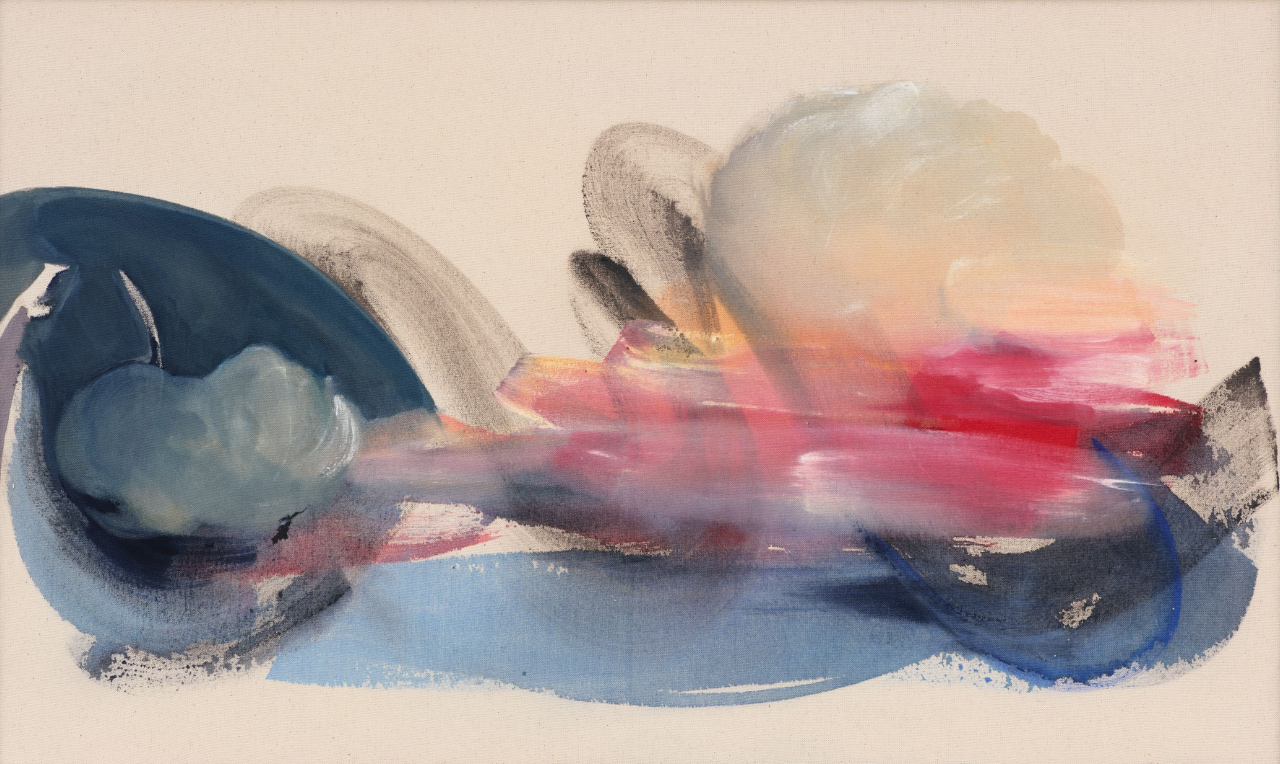
Bringing together a new body of paintings, the artist explores expansive, atmospheric abstractions that evoke shifting skies, turbulence, and fragile states of equilibrium. Titled after a term that suggests both sudden meteorological change and piercing sound, the exhibition reflects Sandström’s ongoing engagement with gesture, movement, and perception, while subtly addressing humanity’s relationship to the natural world in an era of climatic uncertainty.
It would be misleading to describe Sigrid Sandström’s new body of paintings as abstracted landscapes — for one thing, they do not appear to feature anything we might identify as land. Rather, if these works, with their swooping brush strokes and misty fields of colour, suggest a realm beyond that of pure paint, then surely it is the high enveloping sky. This is a place humanity can briefly visit, born up on steel wings in a blaze of fossil fuels, but can never truly inhabit. To look up to the heavens from the Earth is to be reminded of how limited we are, how finite. It is also to dream, perhaps, of how our finitude might be overcome.
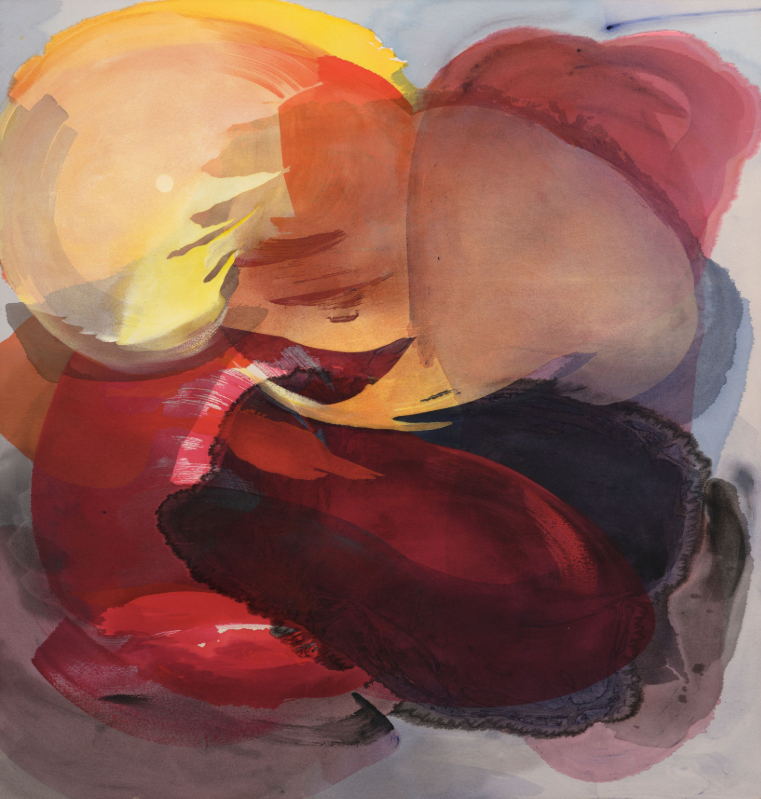
The title of Sandström’s exhibition, Squall, suggests both a meteorological phenomenon (a sudden gust of wind, or localised storm) and a sonic event (the loud, sharp crying of a bird, or a human infant). In her Gale paintings, what might be clouds or sulphurous vapour trails churn and torque across an extraordinary sequence of seven canvases, their translucent colours braiding and unbraiding, their shifting, diaphanous forms always threatening to thicken into something dark and dense, or else diffuse into nothingness. Looking at them, we might imagine the sound they’d make tearing across the open sky, a ragged yowl of protest against the world above them, or below. And yet, for all the kineticism of the Gale paintings— their palpable sense of fierce energies unleashed — when seen together they also have a rhythmic horizontality that imbues them with harmony, even a strange kind of serenity.