JUDY GLANTZMAN: PLAYING WITH DOLLS
P·P·O·W is pleased to present Playing with Dolls, Judy Glantzman’s first solo exhibition with the gallery.
February 6 - March 14, 2026
A fixture of the 1980s East Village art scene and a dedicated art educator of over 30 years, Glantzman approaches her practice as an open and continuous engagement with the unconscious. Through paintings and ceramic works made between 2000 and 2025, the exhibition chronicles Glantzman’s lifelong dedication to channeling one’s inner impulses without judgement. Bursting with a cacophony of color and expression, the resulting imagery is both a marvelous and terrifying reflection of our time.
Glantzman’s heroically scaled works immerse viewers in dichotomous physiological realties where inner voices speak to the chaotic and irrational heart of human existence. Often taking years to complete, her zealous and frenetic accumulations of diversely rendered self-portraits and disembodied heads, hands, and feet are created through a continuous process of layering, scraping, destroying, and reworking her surfaces. Glantzman generates emotionally raw iconographies by pulling from a multitude of art historical references, ranging from ancient Greek theatre to religious paintings of miracles. Across these works, hermetic and personal symbols bore out from the center of her canvases or are inscribed within triangular, haloed, cruciform, or totemic configurations.
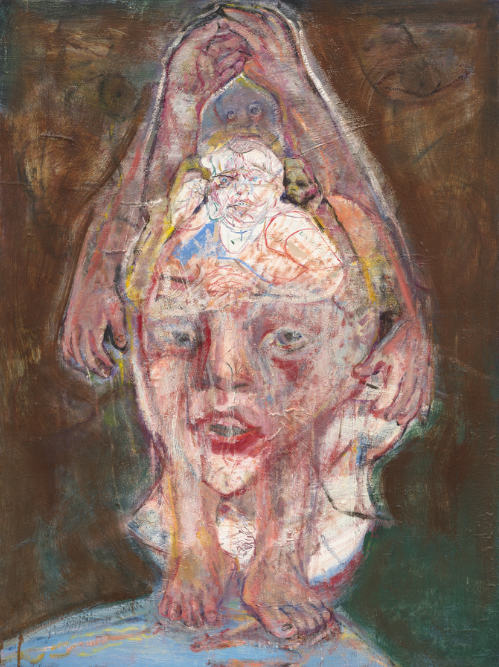
Works such as Angel, 2000, from her iconic series of white paintings, were created in single sittings using a wet-on-wet technique that Glantzman developed following the death of her father and birth of her daughter. Lathering her canvas in thick white paint before inscribing it with a central female figure, she writes that, “In these paintings, the figure is emerging from the white as well as being swallowed back into it. The whole body of the painting is the figure, the paint its skin.”
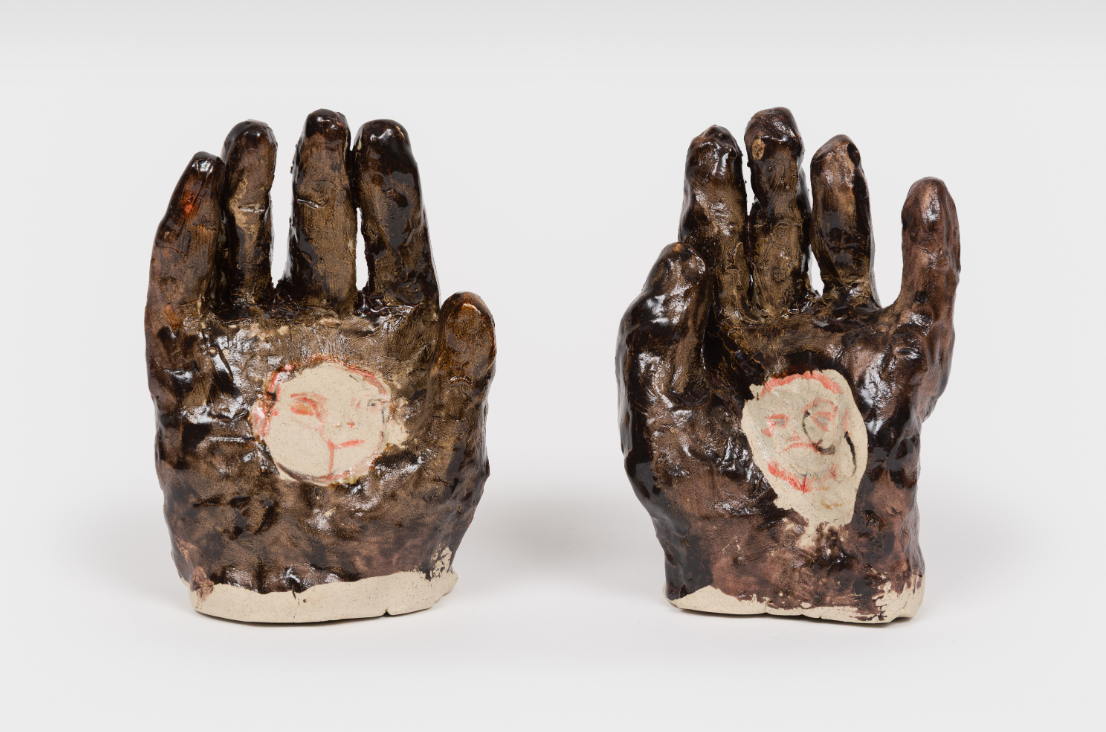
Playing with Dolls will also include an operatic installation of hand built ceramic heads and hands. Blurring the line between painting and sculpture, the works appear to have leapt from the two-dimensional constraints of Glantzman’s painterly accumulations. Forming a silent choreography of outstretched hands and hundreds of faces, the installation expresses the insanity of our lives while celebrating artistic freedom in its purest form.