
MATTHEW KRISHANU: FALLING INTO PLACE
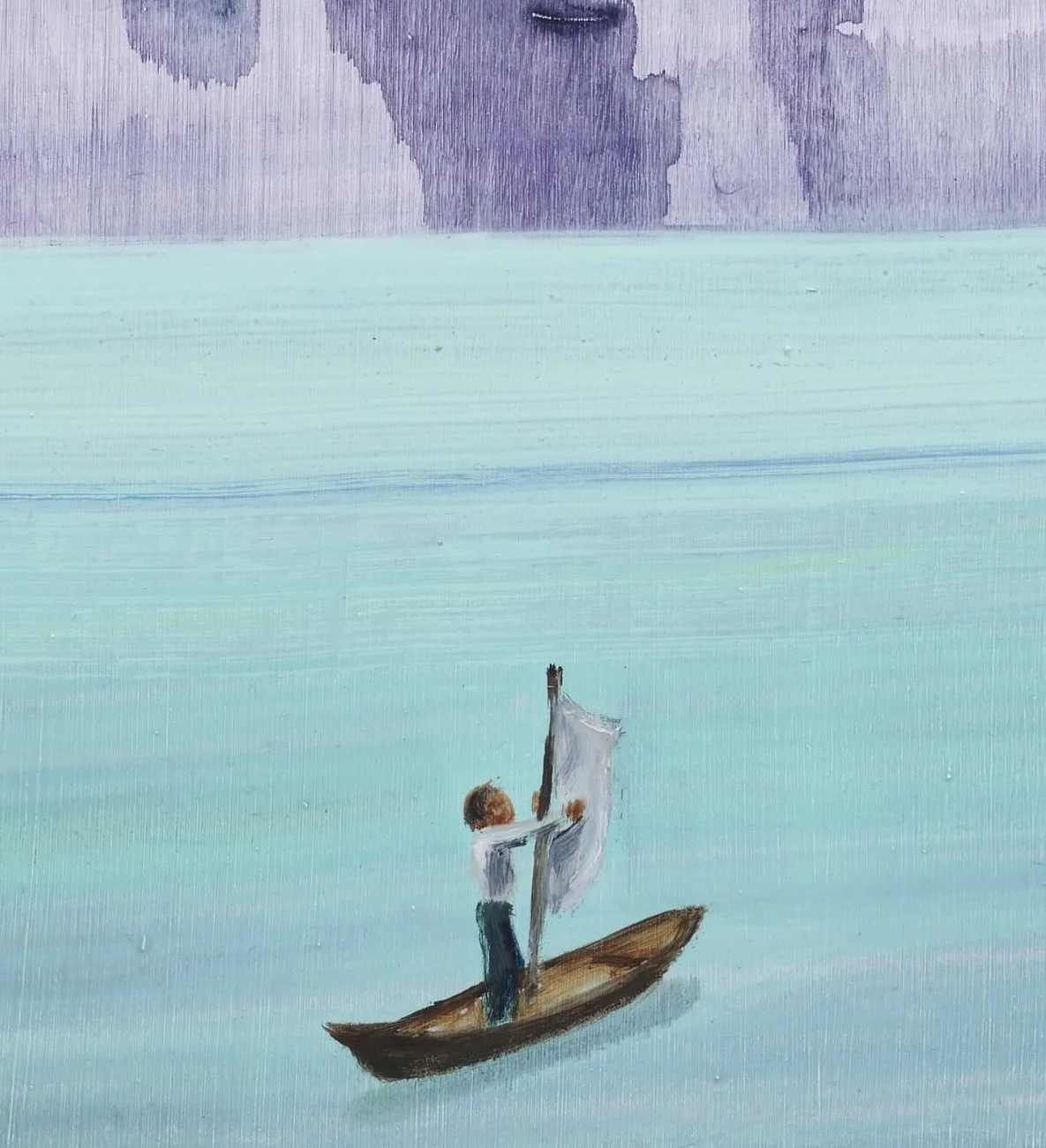
SALON 94 is pleased to present Falling into place, a solo exhibition by Matthew Krishanu, whose paintings are reconstituted memories of his childhood in Dhaka, informed by reflection, family photos, and imagination.
January 13 - February 21, 2026
Matthew Krishanu’s depictions of childhood attest to how painterly freedom can be captured in both subject matter and form. The artist’s recent paintings feature the banyan tree, revered across cultures, and especially in South Asia, as a locus of spiritual significance and enlightenment. Beneath drooping leaves, the massive trunk sends out aerial and adventitious roots that can spread indefinitely.
Rendering this ancient and mystical vegetation Krishanu remains faithful to its ethereal beauty and gargantuan size, scaling the human figures far smaller than the mahogany trunks and branches. Using acrylic and oil paint, Krishanu varies the weight of his brushstrokes, forming thick, dark outlines that frame and anchor the tree, lending it tangible weight and presence against a pale blue sky.
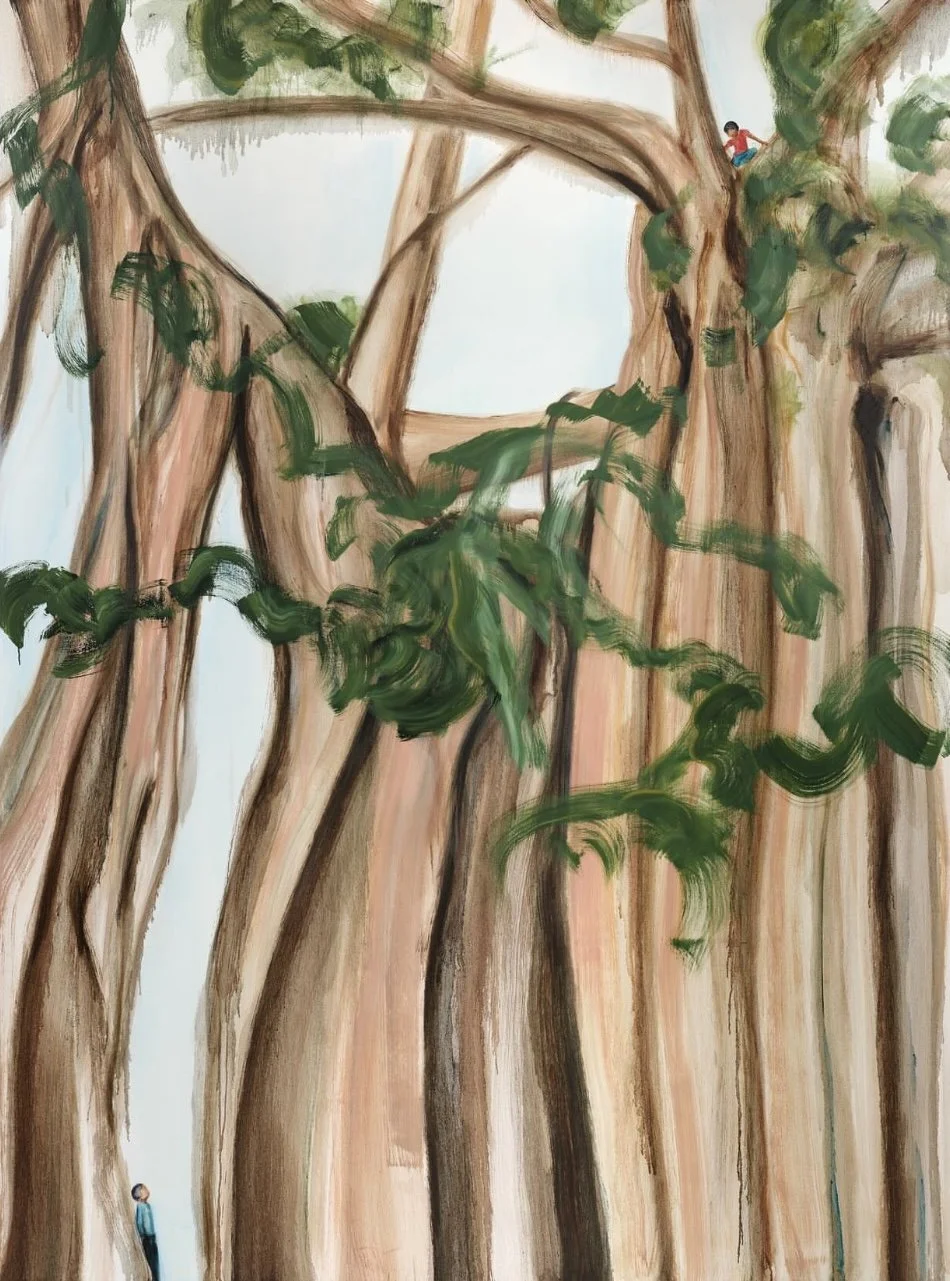
In Lattice, Krishanu relegates leaves to a more minor position, with the branches here acting as a literal support for the boy seated deep in thought, recalling the playground structures of Krishanu’s earlier paintings. He exists, as all figures do in Krishanu’s paintings, in a world apart—one constructed through strokes and washes, layered with intent and experimentation. These are places that exist, drawn from the well of life, yet they do not share its plane.
All of this is possible, in Krishanu’s deft hands, through painting: its long history, its laborious processes, and, above all, its ability to convey sensation and assert presence in real, material terms. Bold in their palettes and stripped of extraneous detail, Krishanu’s paintings distill the fundamentals of the medium from a sizable repertoire of artistic referents—from ancient Buddhist frescoes in the Ajanta Caves, to the moody backgrounds of El Greco, the populist modernism of Amrita Sher-Gill, and the character studies of Alice Neel—all articulated in a voice distinctively his own.