
MARIKO MORI: RADIANCE
SEAN KELLY is delighted to present Radiance, an exhibition of new work by internationally acclaimed artist Mariko Mori.
October 31 – December 20, 2025
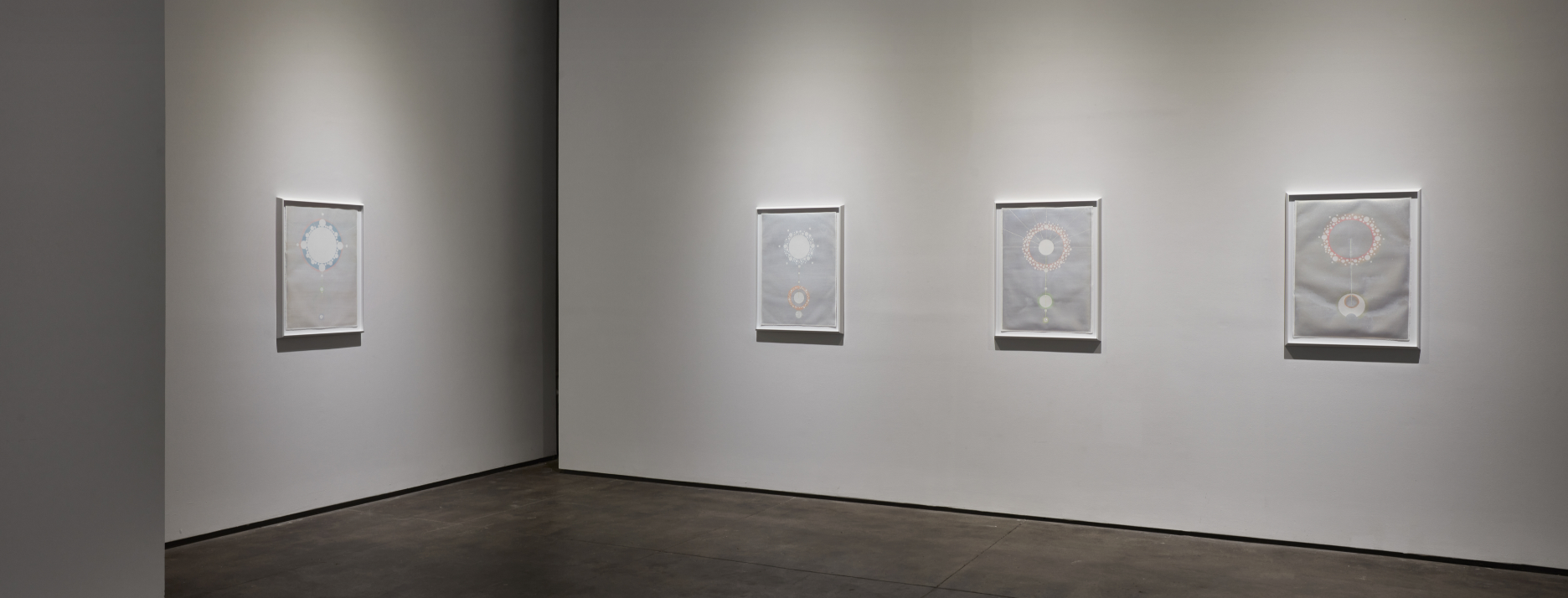
In the front gallery, Mori presents poetic works on silk and paper that extend the meditative quality of the series. Their refined execution and contemplative scale invite close looking, offering an intimate counterpart to the monumental stones and shrine. Together, these works create a rhythm of immersion and reflection that anchors the exhibition.
Radiance is rooted in Mori’s extensive research into Japan’s stone cultures from the Jomon (14,000–300 BCE) and Yayoi (300 BCE–300 CE) periods through the Kofun (250–538 CE) and Asuka eras (538–710 CE). Informed by site visits to sacred geological formations across the Japanese archipelago, including the storied rocks of Okinoshima Island and the shrines of Izumo and Awaji, Mori focuses on these ancestral sites through a contemporary lens.
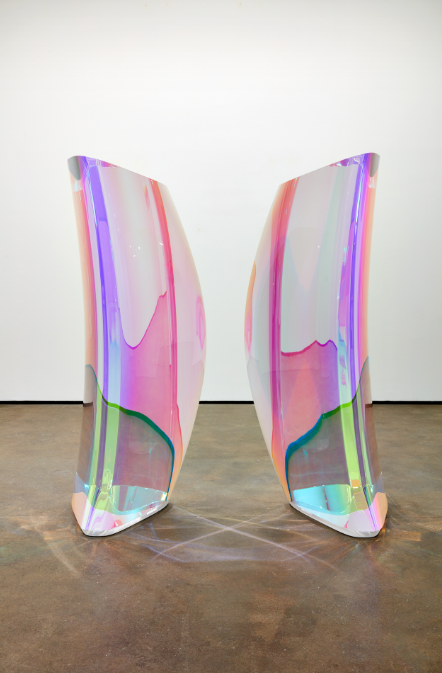
Mori’s Love sculpture is rooted in Japan’s earliest creation myths, drawing inspiration from the Kojiki, the oldest surviving creation text. In these legends, the first deities exist without gender or pairing—pure, singular forces of creation. Over time, gods began to appear as couples, culminating with Izanagi and Izanami, the divine pair who, according to legend, gave birth to the islands of Japan.
In her research across archaeological and sacred sites dating from the Kofun period (5th–7th centuries CE), Mori observed that many ancient iwakura, stones believed to be dwelling places or landing sites of spirits, appear in pairs. Sometimes joined, sometimes resting side by side, these “couple stones” were often understood as symbols of fertility and renewal. Their significance deepened during the Yayoi period, when the advent of rice cultivation brought heightened reverence for nature deities who governed rain and fertility, forces essential to communal survival and growth.
Mori’s Love reinterprets this symbolic pairing as a meditation on the essential bonds that sustain life. The title refers not only to romantic love, but also to the universal qualities of compassion, respect, and interconnection that bind all living beings to one another and to the natural world. Through the simplicity and enduring solidity of stone, Mori invites viewers to reflect on the act of coupling, between humans and as a fundamental principle of existence, a reminder that creation, harmony, and renewal arise through connection.
Also in the main gallery, Mori has installed an environment that recreates the spiritual experience of entering shrines in Japan. Presented entirely in white, the installation evokes a space of purity and transcendence. A soft breeze gently moves through the silk veils wrapping the inner sanctum, infusing the work with an almost imperceptible sense of movement and breath.
Within this meditative environment are two additional stone works, Kamitate Stone I and Oshito Stone III, their luminous surfaces resonating with the surrounding architecture. Together, the shrine and sculptures form the heart of the exhibition, offering a space of stillness and reflection that connects historic belief systems with Mori’s futuristic vision.