GROUP EXHIBITION: HORROR
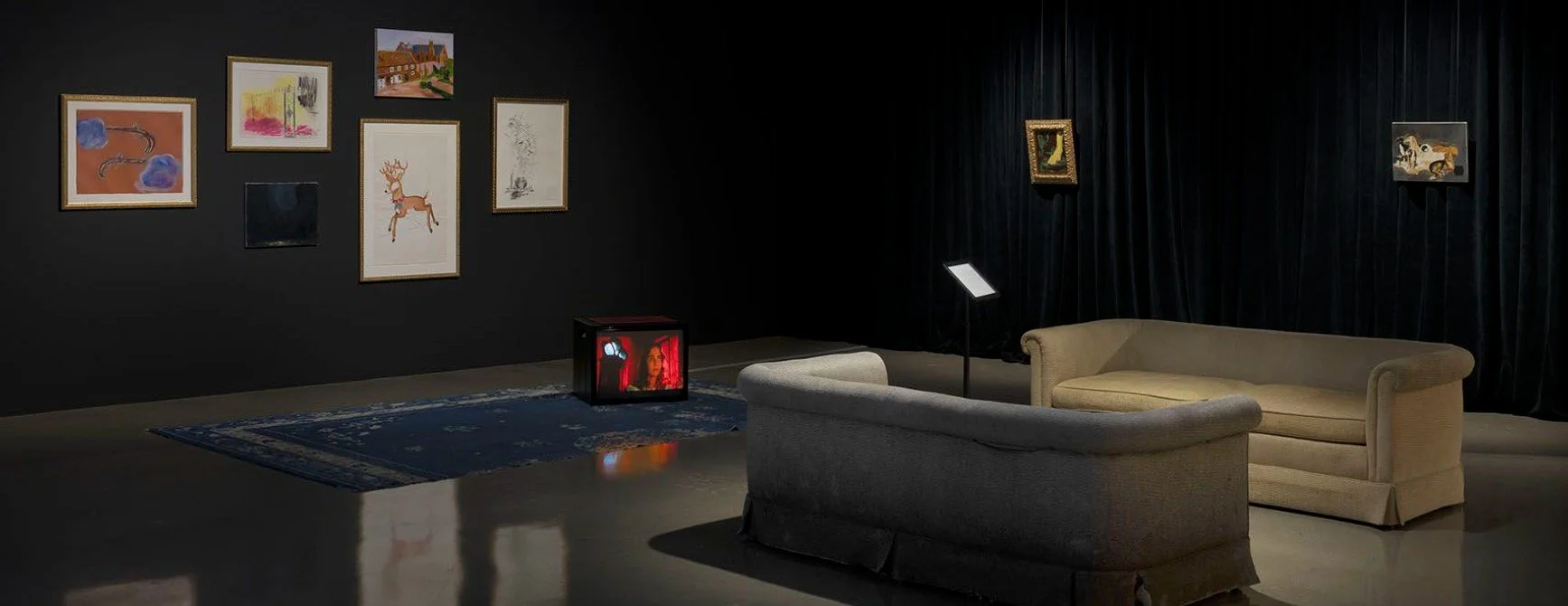
SPRÜTH MAGERS is pleased to present Horror, a group exhibition.
November 21, 2025-February 14, 2026
Rooted in the shadows of trauma, repression, and social unrest, horror channels our deepest anxieties and weaves fictions that probe the intersection of societal collapse and psychological unease. In conceiving this exhibition, Jill Mulleady was inspired by the long history of horror in film and literature, as well as by Mike Kelley's 1993 group exhibition and publication, The Uncanny, a curatorial statement which explored the complex interplay of recognition, memory, and repression. Over thirty years on, Horror takes Kelley's project as a touchstone, moving beyond the psychological discomfort of the uncanny toward the explicit shock of horror.
The concept of the uncanny, as articulated by Sigmund Freud and later explored by artists such as Mike Kelley, centers on the unsettling psychological tension created when the familiar is revealed to be disturbingly strange - a repressed domesticity surfacing in unsettling form.
However, when we shift the critical focus from the intellectual discomfort of the uncanny to the visceral, aesthetic shock of horror, the artistic mechanism changes from one of subtle recognition to one of necessary confrontation. Horror in art is not merely the grotesque; it is the deliberate application of fear and repulsion to unlock deeper psycho-social truths.
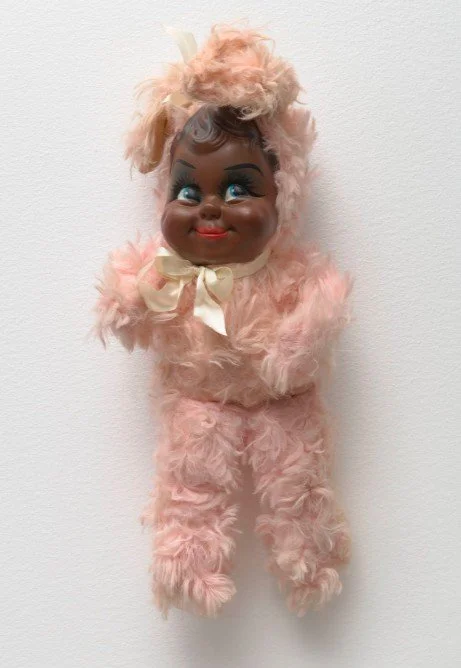
The central mechanism of horror in art is the distortion of the familiar. Just as Kelley in The Uncanny juxtaposed realist figurative sculptures with collections of commonplace objects (the "Harems"), horror takes the things we inherently trust - the human form, domestic spaces, children's toys, or the natural world - and renders them repulsive. Horror finds its true power in betrayal.
The body as a site of transformation, mimicry, and vulnerability is central to the practices of artists such as Cindy Sherman, Tyler Mitchell, Sondra Perry, and Precious Okoyomon. When hyper-realistic human sculpture is covered in viscera or contorted by internal psychological trauma (as seen in the work of Paul Thek or the choreographies of Anne Imhof), the work immediately bypasses intellectual apprehension. The resulting visceral dread forces the viewer to deal with the subject on a primal, physiological level, making the artwork a direct site of confrontation with mortality and decay. It transforms the object of comfort into an object of abjection.
This concept of the abject finds its strongest theoretical mooring in the work of Julia Kristeva, who in Powers of Horror defines it not simply as the disgusting, but as that which has been violently cast out of the symbolic order - the primordial system of rejections that constructs the boundaries of the self. The abject is the "fraught boundary": the corpse, bodily waste, or the repressed memory of the maternal body. It is the inescapable horror of what disturbs our fundamental identity, system, and order.
Art that employs horror, therefore, functions as a controlled space to reintroduce this fundamental threat.
By forcing the viewer into confrontation with the abject, the artwork tests the very limits of the subject. The grotesque rendering of the body - the use of viscera and decay-acts as a reminder of the body's ultimate chaos and dissolution, bypassing intellectual distance entirely. This corporeal dissolution is visibly manifested in the raw, organic materials used by Carol Rama, the systematic fragmentation of the human form in the sculptures and wall works of Tetsumi Kudo and Andra Ursuta, the fluid, kinetic, and often repulsive machinery of Mire Lee, and the radical performance, films, and recordings of Antonin Artaud and Mike Kelley. This is why horror is so crucial: it challenges the cleanliness of the "I" that has been separated from the "not-l," making the aesthetic experience a visceral, momentary regression to a point before the subject was fully defined.