GROUP EXHIBITION: BEYOND CONTEXT
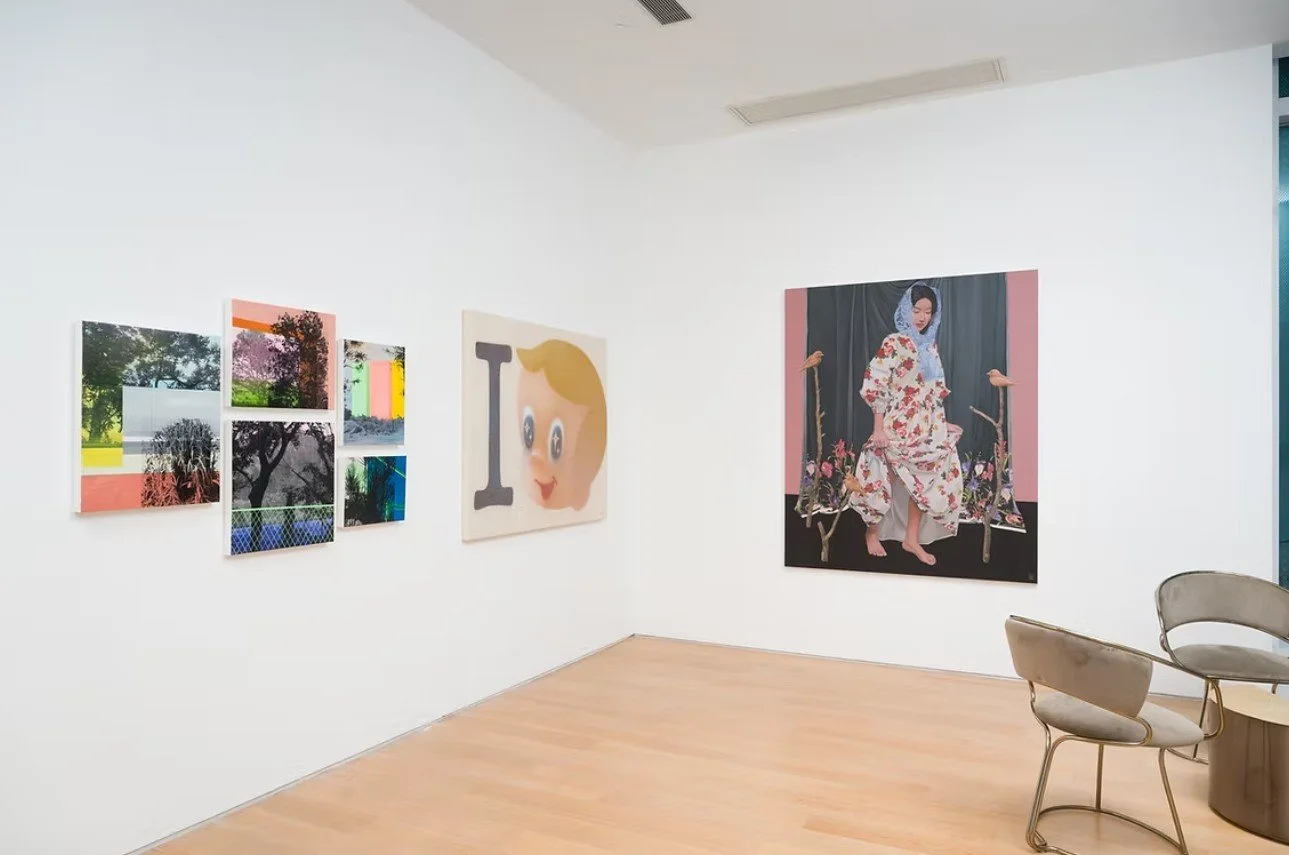
TANG CONTEMPORARY ART is proud to present the exhibition “Beyond Context”, curated by Michela Sena. The group show features works by artists from Southeast Asia: Bjorn Calleja, Entang Wiharso, Gongkan, Heri Dono, Kitti Narod, Kim Lim, Kim Oliveros, Ryol, Luis Lorenzana, Nice Buenaventura, Patricia Perez Eustaquio, Pow Martinez, Rodel Tapaya, Shannah Orencio, Sophie-Yen Bretez, Tos Suntos, TRNZ, and Zean Cabangis.
February 2 – March 19, 2026
This exhibition proposes a critical reconfiguration of how artistic practices from Southeast Asia are approached, not through geography or cultural taxonomy, but through generational epistemologies, understood as historically situated modes of artistic thought, responsibility, and self-positioning. The differences articulated within the exhibition are not spatial but temporal; not regional but methodological. Generation here functions as an analytical tool rather than a demographic marker, revealing shifts in how art negotiates power, subjectivity, and meaning.
Artists from Southeast Asia should no longer be framed within corrective narratives, nor positioned as supplementary to Western art histories. Such frameworks presuppose asymmetry and dependency, obscuring the fact that these practices have long operated within fully autonomous systems of thought. Their work does not emerge in response to an external canon, but from internally coherent intellectual traditions and conceptual lineages. Recognition, in this context, is not an act of inclusion but an acknowledgment of an already constituted international presence.
Within this framework, artists of an earlier generation, like Heri Dono and Entang Wiharso, articulate positions in which the artwork functions as a public agent. Their practices are characterized by an explicit engagement with political imaginaries, collective memory, and social structures. The emphasis on community, ideology, and power reflects a historical moment in which artistic agency was inseparable from public discourse, and in which representation served as a critical instrument for addressing systemic violence, authoritarianism, and social transformation. Politics, here, operates as an external field to be confronted, decoded, and reconfigured through symbolic and allegorical strategies.
The practices of the younger generation presented in the exhibition occupy a markedly different conceptual terrain. Rather than positioning the artwork as a mediator between art and society, these artists, Ryol, TRNZ, Gongkan (just to name a few), locate inquiry within the subject itself, within psychological states, affective economies, and the mechanisms of introspection. This shift does not signal political disengagement, but rather a relocation of critique from external systems to internalized structures of experience. Power is no longer addressed solely as an institutional force, but as something inscribed within perception, desire, memory, and the self.
Parallel to this introspective turn is an intensified focus on the autonomy of aesthetic language. Particularly in the works of Nice Buenaventura, Luis Lorenzana, and Shannah Orencio, form, materiality, repetition, abstraction, and the internal logic of visual systems become primary sites of investigation. Meaning is generated not through representation, but through the construction of formal relationships and perceptual conditions. The artwork asserts itself as a “selfcontained” field of operations, resistant to narrative reduction and symbolic instrumentalization.
What emerges from this generational tension is not a linear evolution nor a rupture, but a multiplicity of coexisting temporalities. The exhibition refuses synthesis, foregrounding instead a field of practices that operate according to distinct yet equally rigorous conceptual regimes. Southeast Asia is not presented as a coherent cultural entity, nor as an identity to be decoded, but as a contingent site from which diverse artistic positions emerge and intersect.
By abandoning explanatory and contextualizing lenses, the exhibition invites a mode of engagement grounded in attentiveness rather than interpretation. The viewer is asked not to locate the work within a cultural narrative, but to confront it as a complex proposition, one that operates within a shared, international present shaped by heterogeneous histories, generations, and intellectual trajectories.
True recognition, in this sense, lies in suspending the impulse to translate. It resides in allowing the work to assert its own conditions of intelligibility, standing in its full density and opacity, neither exoticized nor instrumentalized, but understood as an active force within contemporary artistic discourse.
Bjorn Calleja crafts a surreal realm where the familiar intertwines with the grotesque. His playful manipulation of exaggerated forms transforms everyday moments into a whimsical theater of the absurd. Each work invites viewers to explore themes of identity and existence, challenging societal expectations with humor and depth.
Entang Wiharso creates striking visual narratives that meld Javanese myth with contemporary issues. His bold use of unconventional materials amplifies themes of power, love, and identity, presenting a layered critique of modern existence. Each large-scale piece becomes a dynamic dialogue, inviting viewers to confront the complexities of the human condition.
Gongkan immerses viewers in a surrealistic realm where time and space intertwine. His work features peculiar portals and human figures, rendered in a graphic flatness that contrasts with the soft color palette. While serenity pervades his pieces, sharp black lines occasionally disrupt the calm, highlighting the complexities of alternate realities. Gongkan invites us to reflect on different visions of the present and reinterpret past narratives, creating a rich tapestry of emotional landscapes.
Heri Dono constructs a fantastical world where dichotomies collide to reveal deeper truths. His art humorously juxtaposes reality with imagination, politics with fiction, crafting narratives that reflect Indonesia’s evolving socio-political landscape. Drawing from his experiences during periods of oppression and reform, Dono’s satirical illustrations address themes of power, offering critical reflections on social issues.
Kitti Narod paints a vibrant tapestry of joy and optimism, inviting viewers into a harmonious utopia where daily life and human relationships thrive. Through his warm and gentle portrayals, he emphasizes the beauty of ordinary moments, encouraging us to appreciate the simple pleasures often overlooked in an age marked by social division.
Kim Lim weaves a rich narrative of identity and emotion in her paintings, exploring the psychological depths of human experience. As an art advocate, she dedicates her practice to healing and empowering women, capturing the duality of strength and vulnerability in her work. Lim’s enchanting yet unrelenting art merges fairy-tale aesthetics with stark realities, using beauty as a conduit for profound truths. Her symbolic compositions compel viewers to confront the world with courage and clarity, transforming art into a mirror reflecting uncomfortable realities.
Kim Oliveros crafts a distinctive visual language that delves into the realms of emotional transmutation and intuitive expression. His practice, shaped since the late 2000s, merges gestural abstraction with a focus on materiality, exploring the complexities of human consciousness and transformative experiences. Oliveros's artistic style is characterized by layered compositions rich in textural depth, using techniques like gestural brushing and palette knife work to create a tactile, three-dimensional quality.
Laksamana Ryo, also known as Ryol, is a Yogyakarta-based artist who specializes in pop culture visual art. Originally aspiring to be a musician, Ryol’s childhood experiences, influenced by his parents and Sunday cartoon programs, shaped his artistic vision. This background instilled in him a sense of freedom and responsibility in his creative endeavors. Ryol’s vibrant and engaging works reflect his passionate embrace of pop culture, translating his love for music and animation into visual storytelling that resonates deeply with contemporary audiences.
Luis Lorenza is a self-taught artist and illustrator who infuses pop surrealism into his unique works. After graduating with a degree in public administration, he pursued art, participating in over twenty group and solo exhibitions across Hong Kong, Germany, and the United States. Lorenza’s creativity has garnered recognition, making him a finalist for prestigious awards, including the Philip Morris Philippine Art Awards. His ability to blend whimsical elements with socio-political commentary defines his compelling aesthetic, capturing the imagination and challenging viewers to engage with deeper meanings in contemporary life.
Nice Buenaventura is a multidisciplinary visual artist whose work navigates the intersections of ethical inquiry, aesthetic experimentation, and vernacular knowledge systems. Based in Manila, she employs drawing, painting, installation, and new media to address complex cultural and historical tensions within the tropical and postcolonial Philippines.
Patricia Perez Eustaquio is a versatile artist known for her explorations across diverse media, including painting, drawing, sculpture, and design. Her work delves into the integrity of appearances and the vanity of objects, merging images of decay, detritus, and craftsmanship.
Pow Martinez is a Filipino artist celebrated for his expressionistic painting style, where bold colors collide with demonic, mutant-like characters to compose vivid canvases. His works resemble beautiful nightmares, merging the mundanities of everyday life with elements of pop culture, resulting in darkly humorous reflections on society’s overconsumption.
Rodel Tapaya intricately weaves folk narratives and contemporary reality within the realms of memory and history. His diverse practice spans large acrylic canvases, under-glass painting, traditional crafts, diorama, and drawing, filtering his observations through indigenous folktales and pre-colonial historical research.
Shannah Orencio is a contemporary visual artist whose intricate botanical imagery explores the intersections of nature, memory, and the domestic sphere. A graduate of the University of the Philippines, she transforms everyday flora and vintage heirlooms into symbols of growth and emotional sanctuary.
Sophie-Yen Bretez is a self-taught artist in Paris, known for her dream-like surrealist figuration that addresses complex emotional states like recovery. Her characters inhabit semi-open spaces under warm sunsets, blurring the lines of safety during vulnerability.
Tos Suntos merges Thai cultural elements with contemporary motifs like monsters and pop culture. Gaining recognition through commissions such as the Adidas Headquarters, Suntos draws from his childhood fascination with sci-fi and retro aesthetics, creating vibrant works that reflect modern culture and personal memories.
TRNZ is a visual artist whose journey began in advertising before shifting focus to fine arts. Inspired by 90s Japanese animation, he engages in a multimedia practice that recontextualizes tangible elements, placing them in unconventional settings where absurdity defies logic. His work explores the instability of everyday life through misarrangement and repetition, crafting scenes where familiar objects take on new meanings.
Zean Cabangis is a contemporary artist who combines photography and painting to explore the interconnections within the mundane. Through his unique process, he transfers images from photographs taken during aimless bike rides onto canvas, reflecting on the question, “Where am I going?” This intentional lack of destination connects his physical body to the imagery he creates.