GROUP EXHIBITION: THE WAYFARER IN MOTION
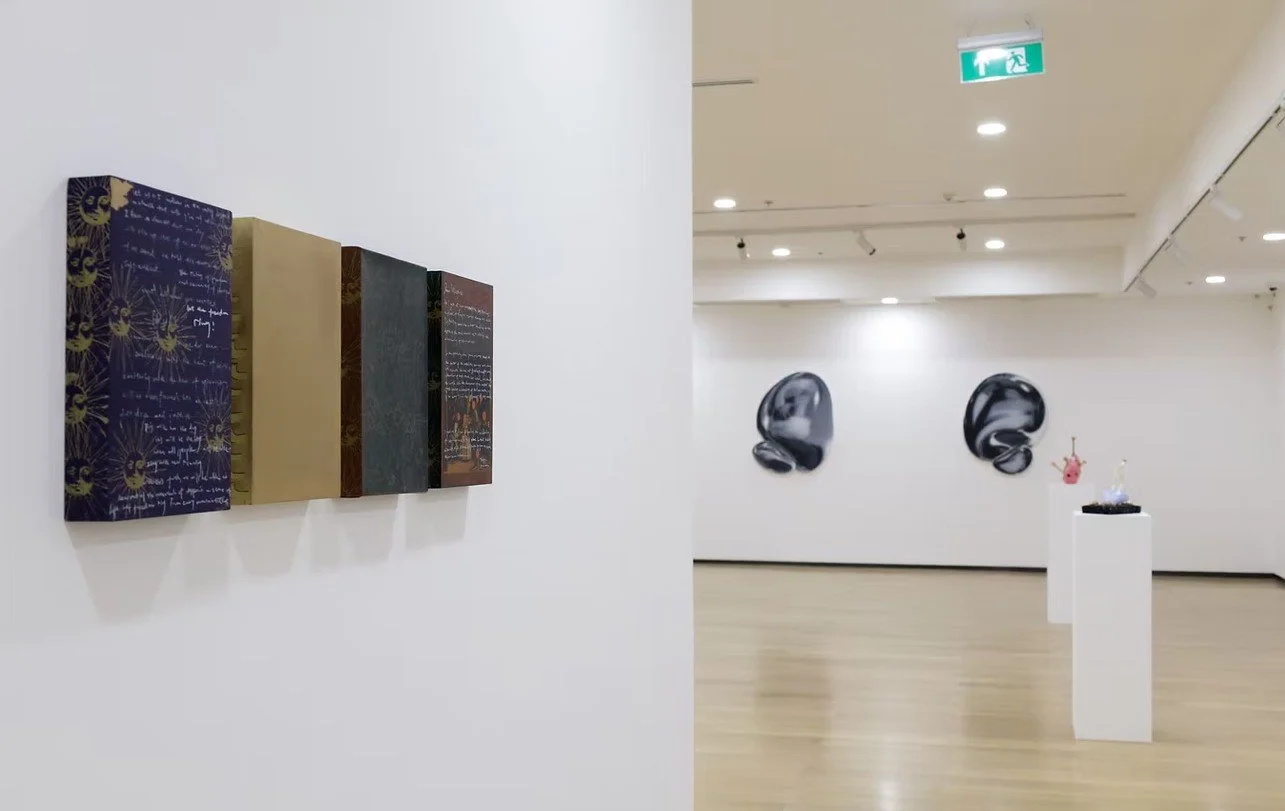
TANG CONTEMPORARY ART is proud to present a new group of artworks, The Wayfarer in Motion.
November 29, 2025 - January 11, 2026
Humanity today resides within a torrent of information, capital, and digital currents. Familiar coordinates dissolve, stable forms are reconstructed, and individuals are cast into an ever-shifting, boundless field. It is as if we are in the midst of a vast and invisible migration, where the ground beneath us is no longer solid, but a quicksand of trends, fragmented identities, and fleeting points of attention. As the weight of existence lightens, what replaces it is a heightened sense of presence, one that signals a silent yet profound transformation in our connection to the real world.
This exhibition invites viewers on a journey of self-exploration that traverses both time and space. The five artists use images as vehicles for spiritual migration, attempting to reveal resilient forms of existence within the fluid and alienating landscapes of change. The nomadic subject has no fixed coordinates; in the ceaseless movement of the body and the constant breaking of boundaries, the subject must confront vulnerability and clarify its authentic self. The exhibition seeks to explore the question of “how to be in the world”: how can individuals, through artistic practice, find orientation and affirm their existence amid alienating internal and external terrains?
Pocono Zhao Yu employs the method of “archaeological notes,” juxtaposing symbolic images and text. Different cultural genes “hybridize,” generating new identities at the “interstices” and “boundaries.” Zhao Yu has long researched the “Sun God” as a core symbol carrying the cultural evolution of both East and West, sun worship represents humanity’s most primal impulse to journey: where the sun rises, humans explore the world and pursue inner desire. Its significance, evolving from a collective totem to a reflection of individual spirit, illustrates how humanity’s outward exploration ultimately returns to the self.
Aphisit Sidsunthia’s works question the notion of “completeness” by embracing the inevitable imperfections and ambiguities of existence. By challenging color theory and employing both manual and digital techniques to collage, remove, and distort images, the artist emphasizes “love” as an event that reshapes being. Fragments of subconscious memory are retrieved and overlapped with geometric forms, opening windows to alternate realities. These fragments become ghosts of resurrected past events, crossing through societal norms and time, suspended between the virtual and the real.
Gabriel Cheah’s Still Kind series highlights active choice within given environments, never abandoning the pursuit of inner light even during moments of heaviness or self-doubt. The artist embraces vulnerability and transforms it into an attitude of “self-will” and gentle resistance, thus defining the essence of selfhood and freedom.
Verapat Sitipol and Duairak Padungvichean’s works present natural landscapes brimming with joy and vitality. Sitipol’s paintings attempt to capture the energy of nature rather than merely its appearance, absorbing and transforming the external world to explore a more authentic and poetic mode of “dwelling.” Forest and mountain scenes, depicted with vibrant brushstrokes, resemble musical scores of natural symphonies, opening possibilities for interpreting musicality beyond painting. These lines recreate both the existence and disappearance of the landscape, capturing the fleeting reality and fragility of dynamic scenery.
Padungvichean’s dreamlike desert landscapes serve as metaphors for both external and internal worlds. The wondrous creatures in her works embark on unknown journeys in search of meaning. This non-purposeful migratory poetics evokes a nomadic attitude toward the land, not to possess, but to continually seek direction in unfamiliar environments, an “in-the-world” experience that redraws the map of the self through movement.
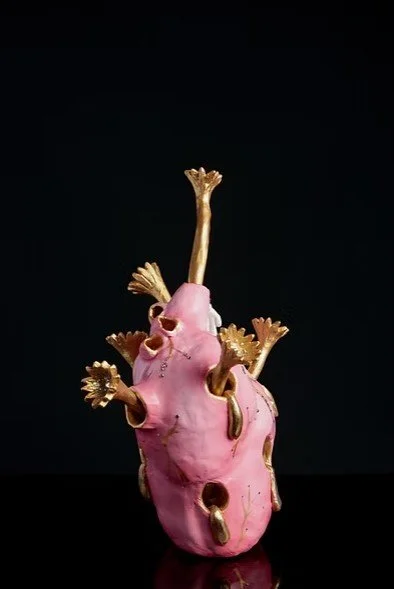
“On this desperate land returned to its primordial innocence, he, the traveler lost in an ancient world, rediscovered his connections.” From the symbol of the Sun God to the ghosts of hidden memories, from inner seekers to shifting terrains, the five artists reassemble memories in the gaps between history and the present, reconstructing narratives where nature and civilization converge. The “self” is shaped, tested, and deepened through encounters with different cultural symbols, others, and predicaments, within this nomadic journey of interwoven inner and outer worlds.