SHIGEO OTAKE: AGORAPHILIA
WHITE CUBE is pleased to present Agoraphilia, Shigeo Otake, exhibition with the gallery in Hong Kong.
July 10 – August 29, 2026
Shigeo Otake (b. 1955, Kobe, Japan) is a painter of otherworldly creatures and ‘fungal grotesqueries’, whose recent work has been informed, in part, by his personal studies of parasitic life and the morphology of Cordyceps.1 The artist’s fascination with the social organisation of non-human life has inspired a distinctive approach to figuration – the scenes he conjures feature all manner of seen and unseen creatures, from the terrestrial to the supernatural. Creating work that is surreal and fantastical in equal measure, in Otake’s hands, the canvas becomes phantasmagorical theatre in which the drama of human, animal and vegetal actors plays out.
For his first solo exhibition in Hong Kong, Otake presents a new body of works in egg tempera, painting on wooden board, and one fresco transfer. The primary medium of Renaissance artists, tempera was reputed for its lustrous and water-resistant finish – a consequence of binding powdered pigments with egg yolk. Otake’s interest in these specialised techniques began during his formative years as a student at Kyoto City University of Arts, whose faculty schooled him in the Early Italian Renaissance period. Directly inspired by these foundational experiences in higher education, Otake’s early years as a painter involved developing his skill in oil and mural painting, a practice later enriched by his travels across Europe, during which time he encountered first-hand those masterpieces he had long revered.
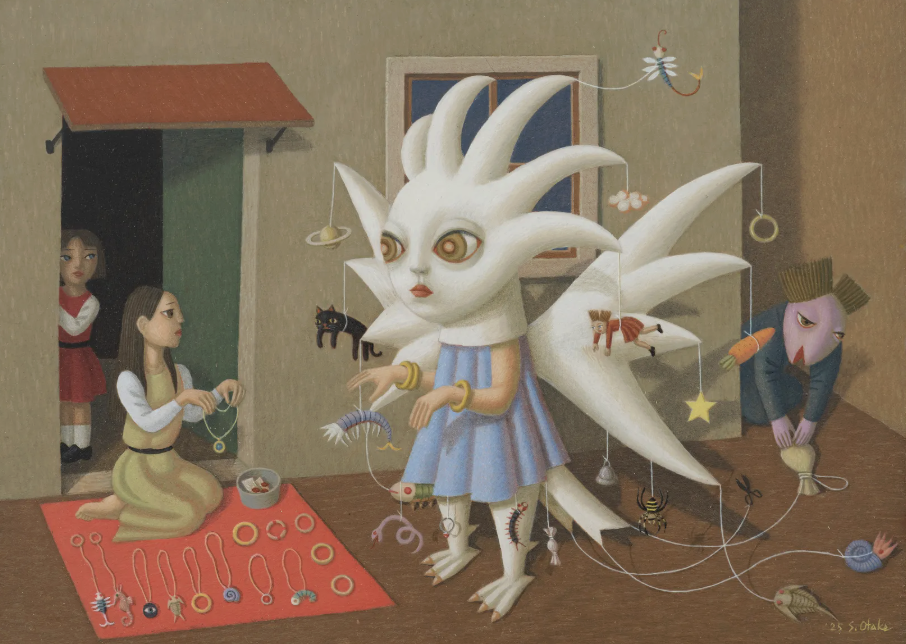
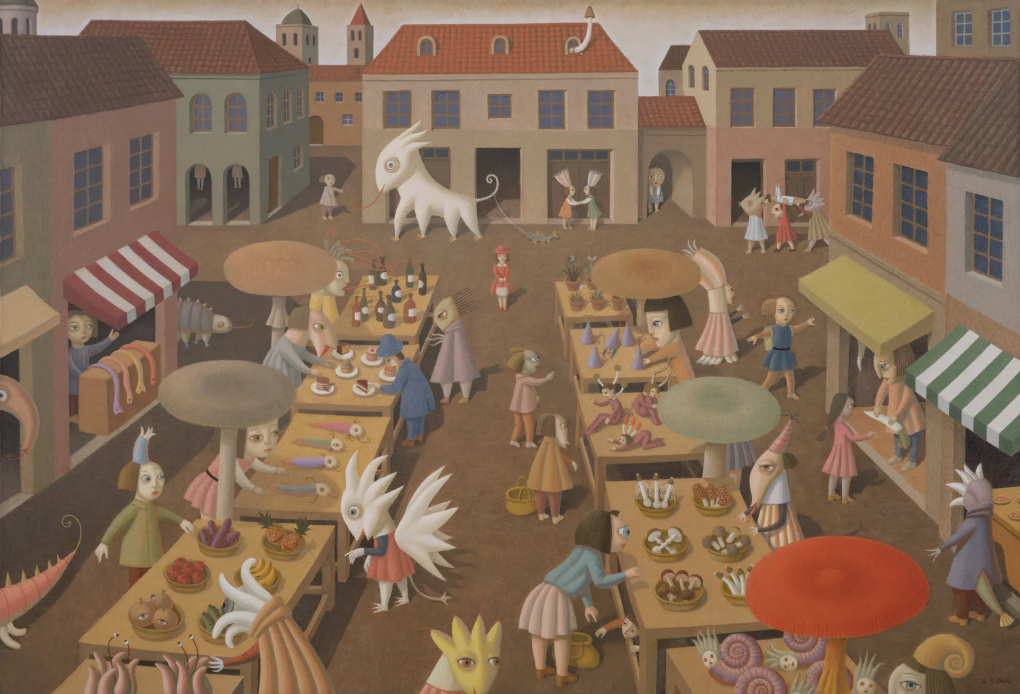
Everyday events take on strange new life in the paintings of ‘Agoraphilia’, visual feasts brimming with detail that reveal the presence of worlds within worlds. As the exhibition title suggests, Otake was particularly drawn to the agora as both site of action and conceptual framework. The Greek word for ‘assembly’, the agora was the marketplace of ancient times where the city’s people would gather and intermix, irrespective of their background or stature. As a venue for the exchange of goods and gossip, the agora served as the commercial locus for the flow of trade capital but was equally a place where belief structures and value registers came to bear. Painting the marketplace and its many textures, Otake engages with systems of circulation, the logic of consumerism and the dynamics of reciprocity. The heightened delirium of these scenes also doubles as an allegory for contemporary metropolitan society, and contemplate the sometimes-confused, sometimes-painful anxieties and absurdities of the hyper-capitalist city.