
WANGSHUI: NIGHT SIGNAL
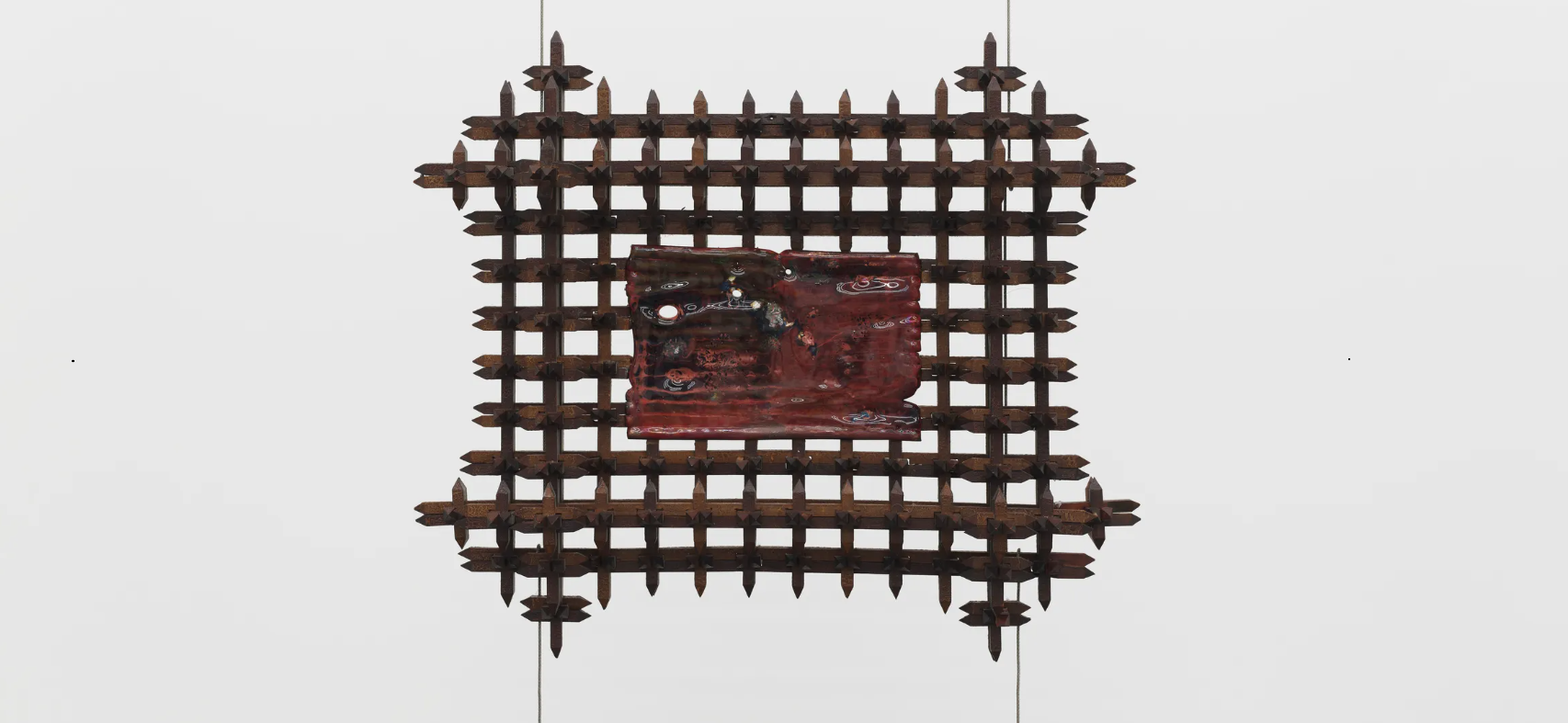
WHITE CUBE presents “Night Signal,” a solo exhibition by WangShui.
February 11 – March 29, 2026
In this exhibition, the artist presents a new body of work where dreaming forms the conceptual ground from which questions of consciousness, perception and technology emerge. Rather than approaching painting as a purely representational, planar image, WangShui treats it as a suspended and relational field, one that only coheres through its intersections with light, movement and coexisting sensory systems. Taking the dream as a generative system – one that reorganises sensation, memory and meaning – the exhibition draws parallels between the structures of dreaming and machine learning, both of which operate through feedback, pattern recognition, and iterative transformation.
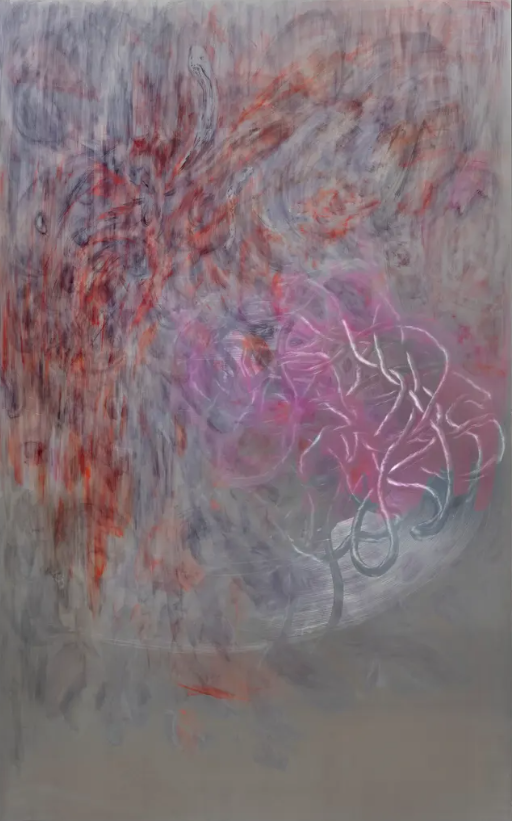
WangShui’s process merges machine vision with embodied gesture. The aluminium panel supports of ‘Night Signal’ recall the interfaces of touchscreens and sensors, absorbing and reflecting light as viewers move through the space. Digital tools and algorithmic structures are used alongside sandpaper and dental instruments to inscribe the aluminium – extending, rather than replacing, the intuition of the hand. This labour-intensive process generates a heightened physical attunement to sound, vibration, and resistance.
Through the layering of translucent inks and oils, the artist approaches the surface alchemically, drawing the image out through touch. Hand-etched into shallow relief, the panels shift between image and atmosphere, responding to daylight and artificial illumination. Diaphanous layers of pigment hover across these etched grounds, producing an artistic register that is neither fully sculptural nor conventionally painterly. Here, painting functions less as depiction than as a responsive field – one that reveals perception to be unstable and open to continual recalibration.
WangShui’s research into dream interpretation was further informed by a trip to the Ecuadorian Amazon rainforest in spring 2025. There, the artist encountered Indigenous communities that conducted ‘morning dream councils’, where dreams are interpreted collectively and used to guide decisions around hunting, travel, alliances and conflict avoidance. This experience prompted the question: what can our dreams show us about our current predicaments?
Here, WangShui posits a view of both painting and consciousness as relational models, whose meanings emerge through encounter rather than isolation. If machine learning offers new models for understanding perception, dreaming emerges here as its ancestral counterpart: a self-training system through which humans have long rehearsed simulation and pattern recognition. Yet accessing this knowledge requires attentiveness to frequency, pitch and pace.