CANDICE LIN: G/HOSTI
WHITECHAPEL GALLERY presents a new commission from artist Candice Lin (b. 1979, Concord, Massachusetts, US) featuring an absorbing and disorientating labyrinth.
October 08, 2025 – March 01, 2026
Candice Lin works across a variety of disciplines and media, including installation, sculpture, painting and video, to create multisensorial environments that tell stories about the historic roots of contemporary political circumstances.
Visitors to g/hosti are plunged into a circular labyrinth made from curved, painted cardboard panels that depict a fantastical world populated by animals and other creatures. The structure towers above head height, while cut-out sections and undulating edges offer glimpses of spaces beyond. Visitors move through the visually lush landscape of brushstrokes and textures as if entering the layers of a painting. Along the way they encounter watchful wolves, tender mice and playing cats – the bright colours, patterns, animal imagery and cardboard materials evoking childhood and play. Yet sinister and sometimes startling images lurk in the detail – including human cadavers that peek out from the shrubbery – creating a relentless environment that threatens to engulf the viewer.
Lin lives in Los Angeles, California, where she developed the work during a period of profound upheaval – notably the inauguration of Donald Trump’s second presidency and the devastating wildfires in her community of Altadena, which coincided in January 2025. Lin is an Associate Professor of Art at UCLA where she continues to witness the ongoing police repression and disciplining of the student protest movement. All these experiences inform the sense of disorientation evoked in the installation.
‘The idea of being lost inside of a painting that is also a labyrinth comes out of many different experiences of the last year and a half: witnessing the genocide in Gaza live-streamed to our phones and the dissonant feelings of grief, shock, guilt at my complicity as an American, and a feeling of smallness and helplessness in the face of such overwhelming inhumane horror. It came from the bureaucratic, disciplinary and insidious way the University that I work for also dealt with the student encampment and the student protest movement through police brutality and the surreal implementation of ‘free speech zones’ and other absurd policies. This has been mirrored in the larger society with Trump’s fascist crackdowns, funding cuts, deportations and denials of due process. It has made me think about nested circles within circles – microcosmos within macrocosmos, endlessly unfolding. There is something profoundly surreal and disorienting about going through the motions of daily life while witnessing and feeling the weight of one’s embeddedness within a nation bent on the destruction of others, and the punishment and removal of those that dare to speak out for those others.’ Candice Lin
These ideas are developed further in a series of stop-motion films displayed on phone-sized screens placed throughout the labyrinth. The hand-drawn animations feature mythological animals, groups of people marching, a person caring for another person who is dying and an ‘ouroboros’, an ancient alchemical symbol showing a snake devouring its own tail. Lin relates this symbol to cyclical time and repeated history. She also considers it a metaphor for the interconnectedness of different scales of loss and destruction – from the personal to the planetary.
‘The animations are on phone-sized screens because I am thinking about the phone as a vector for performative witnessing, the way medieval European pilgrims visiting holy sites would hold up a piece of glass or mirror to the saint’s relics to absorb the aura of the relic, to ‘remember’ the experience of pilgrimage. I have always been haunted by the idea of a fragment of glass becoming a material witness that holds the non-verbal testimony of having seen or felt the aura of an experience. In an era like today where we both film and watch the relentless barrage of images (of genocide, of starvation, of cats dancing, of police violence, of gourmet food, etc.) there is a kind of cognitive dissonance and feeling of being overwhelmed by excess. We do not have a sense of distance or time to process or understand the system we are living within. We are living it, inside of it, shaping and being shaped by it in real time.’ Candice Lin
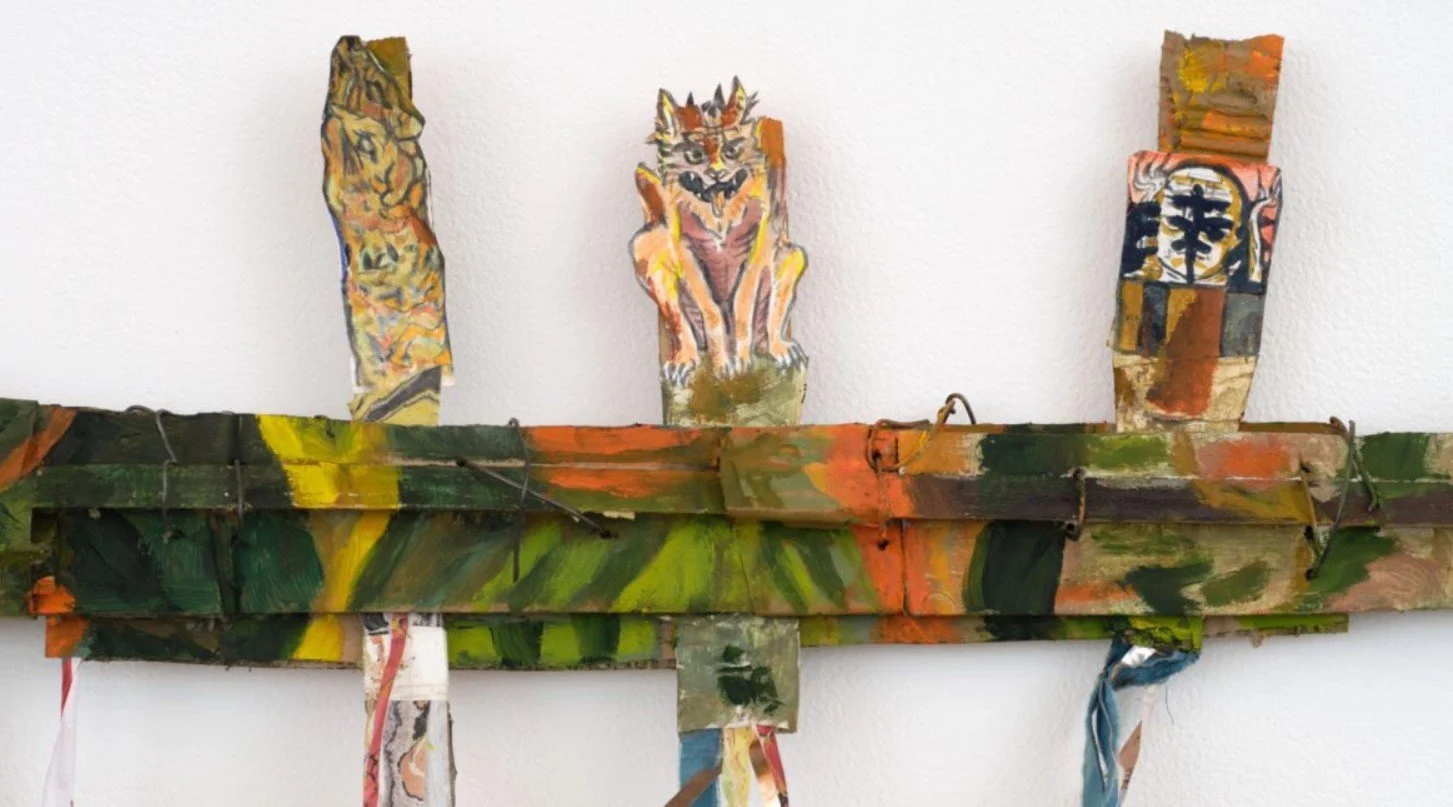
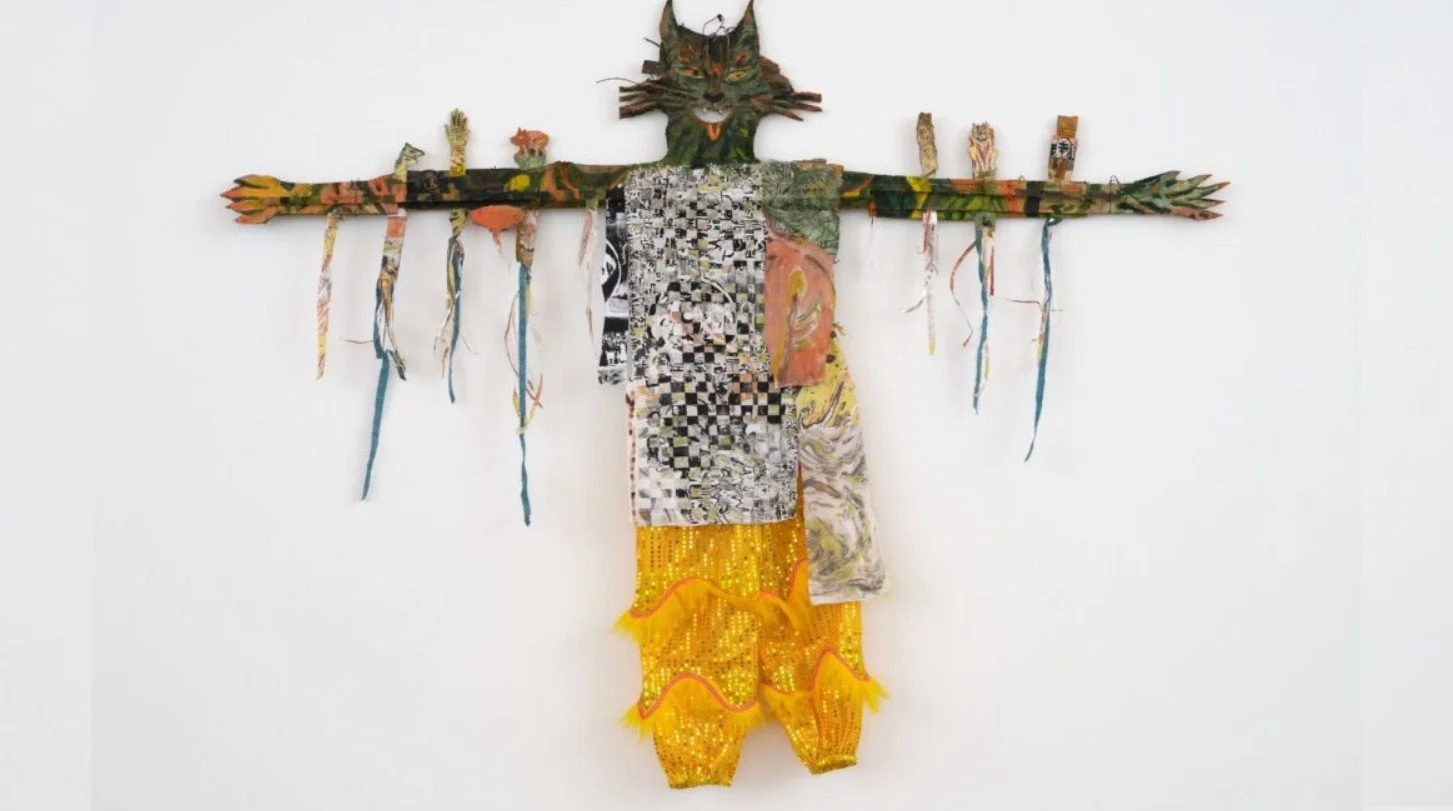
Lin’s eclectic historic and cultural references are also reflected in a group of sculptural works on display. Among these, a humanoid cat hangs in a crucified position from the ceiling with creatures emerging from boils on its outstretched arms.
The final element of the exhibition is a fairy-tale-like text inscribed in graphite around the outer circumference of the room. Often using visceral metaphors, the text explores Lin’s preoccupations with a haunting or uncanny loss of perspective she observes in the contemporary world. It also unlocks the meaning of the exhibition title ‘g/hosti’, which references ghosts, but also contains the roots of the words ‘guest’, ‘host’, ‘hostile’ and the Old English word ‘gæst’ meaning ‘stranger’.
A fully-illustrated publication accompanies the exhibition and will be published in November 2025. It features writing by Lin, a creative text by novelist and critic Lucy Ives and an interview with the artist.