Hauser & Wirth is pleased to present Zeng Fanzhi´s last solo exhibition, in New York.
November 5, 2026 – January 16, 2027
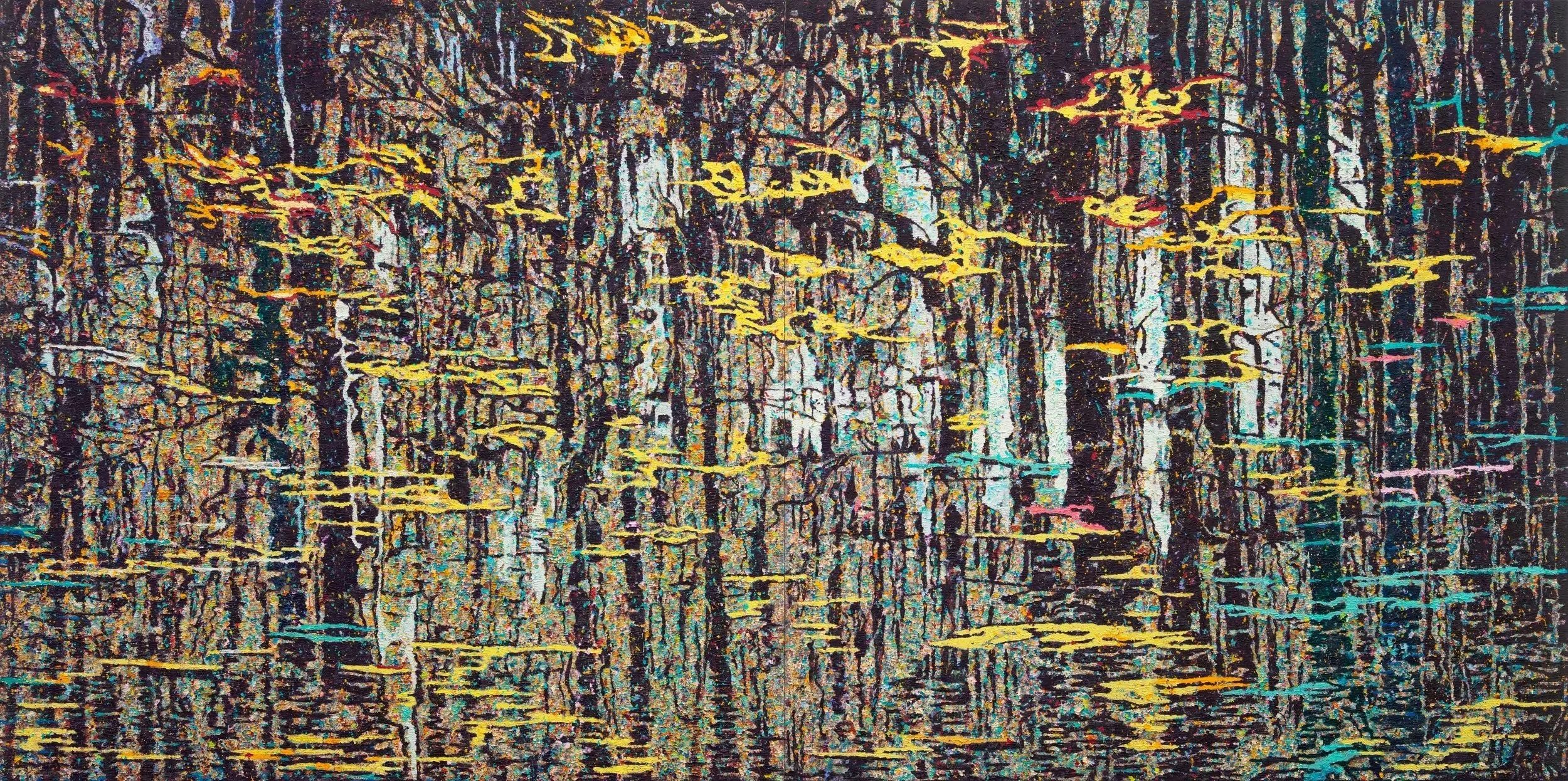
Informed by many years of research into color theory and the paint-layering techniques pioneered by the Impressionists and Post-Impressionists, Zeng’s latest paintings employ the principle of ‘mélange optique,’ or ‘optical mixing,’ in which hues are layered and placed alongside one another alla prima on the canvas rather than blended on the palette. Seen from a distance, these coalesce into images of landscapes and geological formations; observed up close, that legibility dissolves into mesmerizingly complex fields of pure pigment.
Zeng’s dramatic optical effects are the result of a highly kinetic process: working wet-on-wet, Zeng uses multiple paint brushes at once, creating twin marks that are directed yet deliberate in their loss of total control. Each new tier of oil paint disrupts the ones still actively drying beneath it. His decision to deliberately undermine his own authority over the final image—a process that distances his hand from what it lays down—results in the defining dynamism of his art’s physical surfaces.
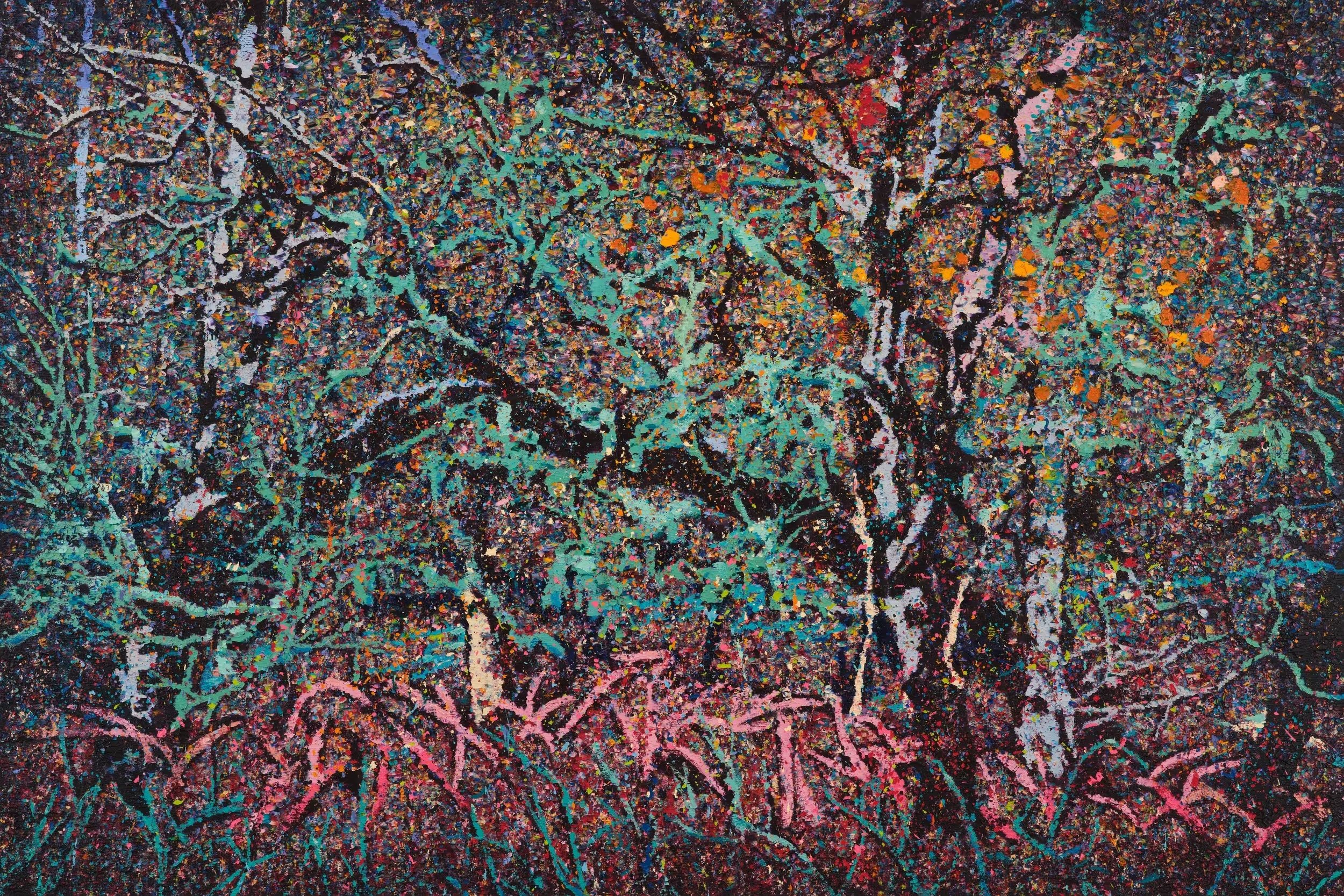
In these works, Zeng’s visions evoke unfamiliar worlds beyond any fixed sense of time or place, appearing both futuristic and prehistoric. Jagged formations evoke the rugged terrain of an uncharted planet, where rock formations, trees, bodies of water and enigmatic alien presences appear within the landscape. Beyond them, pitch-black horizons open onto the infinite expanse of the universe. Across these imagined geological strata, radiant swaths of turquoise, yellow and deep crimson appear like crystalline fossils or fragments of bioluminescent matter.
The new sculpture on view extends these ideas and techniques into three dimensions: a blue onyx obelisk-like object suggests both abstract form and an artifact from another as-yet untraversed place. Although constructed from naturally occurring gemstone, this blue and cream banded quartz stabile strikes the viewer as something excavated from the imagined planets depicted in Zeng’s paintings. Like those canvases, it occupies an ineffable realm between image and matter. The artist’s oscillation between landscape, abstraction and imagined archaeology invite reflection on time, memory and humanity’s place within a vastly larger continuum.