White cube is pleased to present When the Surface Thinks, an exhibition by Zhang Yunyao, in Hong Kong.
October 30– December 18, 2026
Zhang works primarily with graphite pencil on white felt, an industrially produced textile that diverges from the paper and canvas of the Western academic tradition. Where oil allows for overpainting, felt traps the dark carbon media in its fibres, so that each of Zhang’s freehand marks cannot be revised. The process is accordingly laborious, requiring hundreds of hours of sustained attention. Layer by layer the composition is built, yet in absorbing light and embedding graphite, the material’s surface remains flat while its image feels weightless, free of the textural deposits oil paint would leave.
One of three series represented in the exhibition, ‘Connector’ (2022–present), and the visual puzzles that constitute them, foregrounds Zhang’s fascination with the idea of symmetry. In ‘Connector’, abstract forms proliferate from a central axis as if by the reflection of mirrors, producing mesmeric images that conjure endlessly regenerating forms in a moment of flux. The work of symmetry in the regeneration of forms, as Zhang appears to suggest, is both organic and machinic; Connector VIII (2025), for example, recalls cells dividing under a microscope or a scan mapping brain activity, while Connector XI (2026) echoes industrial engineering models or the diagram of a celestial wormhole.
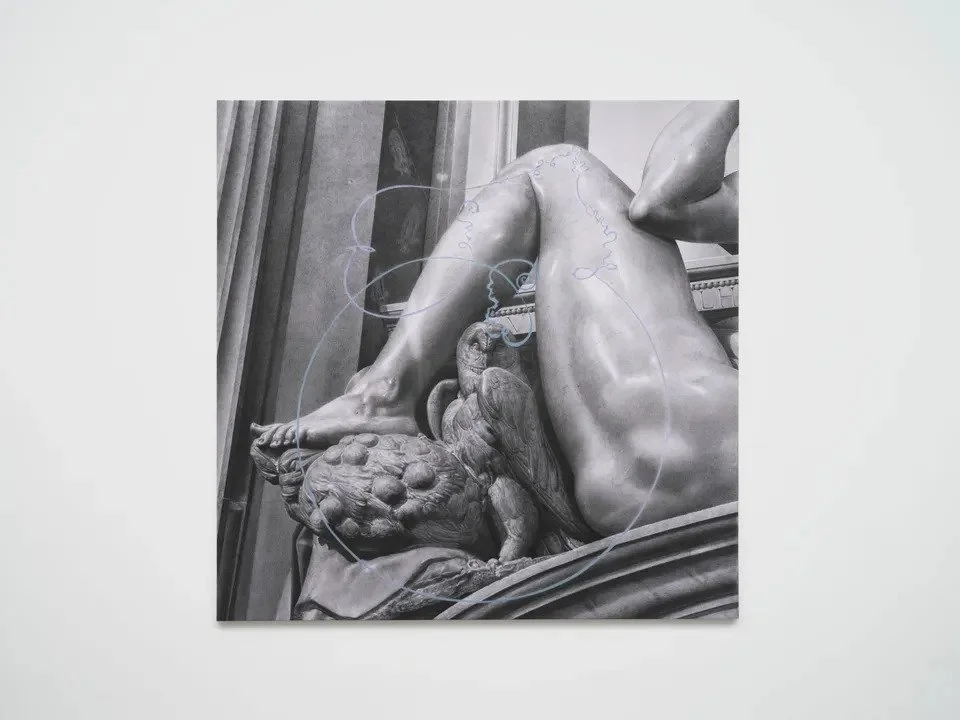
Each work comprises a group of six to eight small panels isolating only the brows, eyes and noses of the artefacts, stripped of other identifying features that would help historically and geographically locate them. Cropping, in this instance, is Zhang’s way of gesturing to a new concept of anonymity emerging in contemporary society – one shaped by global events or technological advance, from the face masks worn during the pandemic to the facial recognition function of mass surveillance. At the same time, the antiquity of the original sources implies that humanity’s concern with anonymity is a longstanding one, integrally related to how we perceive, represent and, following Valéry, know ourselves.
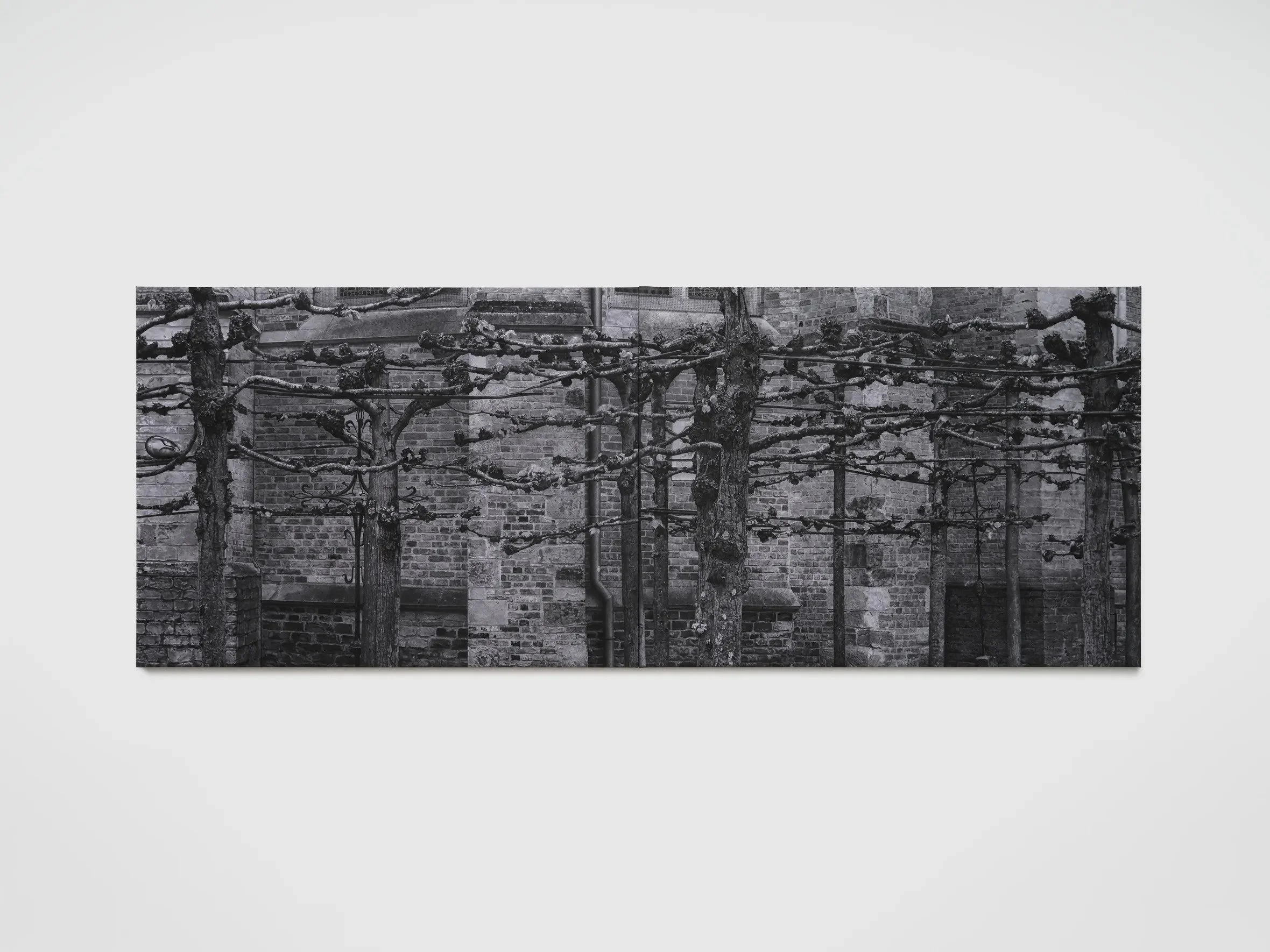
The enigmatic, panoramic work When the Surface Thinks (2026) also draws from a place in the real world, in this case taking inspiration from the courtyard of a convent in Bruges, Belgium. Furthering the symmetry of his ‘Connector’ series, Zhang employs the visual device to prismatic effect, the convent wall and interlocking trees tessellating across the composition, with each brick and pollarded trunk forging a new link in the chain. Showcasing Zhang’s skilful handling of gradation and subtle tonal shifts, the exhibition exercises the perceptual faculties of the viewer, proposing new ways in which the painted or drawn image may be conceived.