Nino Mier Gallery is pleased to present To New York and Back Again, Albert Irvin’s second solo exhibition, in New York.
October 29 – December 16, 2026
In 1968, with the support of an Arts Council Travel Award, Albert Irvin paid an extended visit to American shores, meeting artists including Jack Tworkov and Robert Rauschenberg. The pilgrimage brought him into direct contact with a movement that had already exerted a profound influence on his development: American Abstract Expressionism had come “knocking at the door” of British artists throughout the preceding decade, first appearing in a lone room at the Tate’s 1956 exhibition Modern Art in the United States and then more comprehensively in the 1959 exhibition The New American Painting. It was the latter encounter that finally convinced Irvin to abandon figuration. What he found in the American painters was not a style or sensibility to imitate—theirs were too heterogeneous to copy—but a new conception of what painting might accomplish.
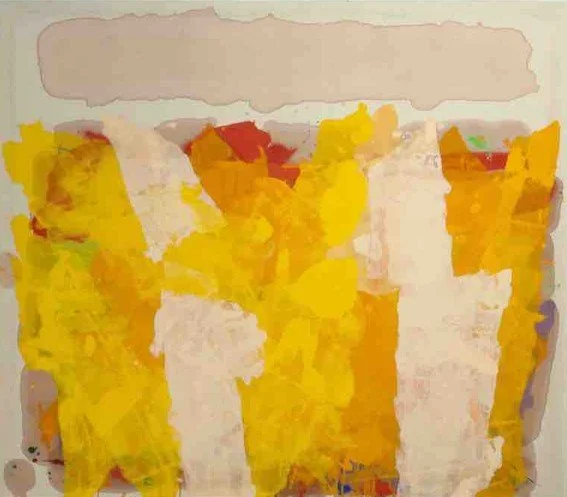
Irvin’s subject, by his own description, is “the experience of being in the world.” All of his paintings are organized around this theme. In one sense, this means that his paintings are informed by his journeys through the physical world. He was inspired by the Abstract Expressionist idea that you could traverse a surface with a loaded brush as a metaphor for a traversal through an urban landscape. In Irvin’s paintings, each mark recorded both his literal movement within the space of the canvas and the essence of a journey taken through the world he lived in. The paintings’ titles reflect this: from earlier titles which descriptively refer to an abstracted sense of movement (Wanderer (1968), Strike (1968)), to those allusively referring to street names near his studio in Stepney Green (Rampart (1976) and Cephas 1976)).
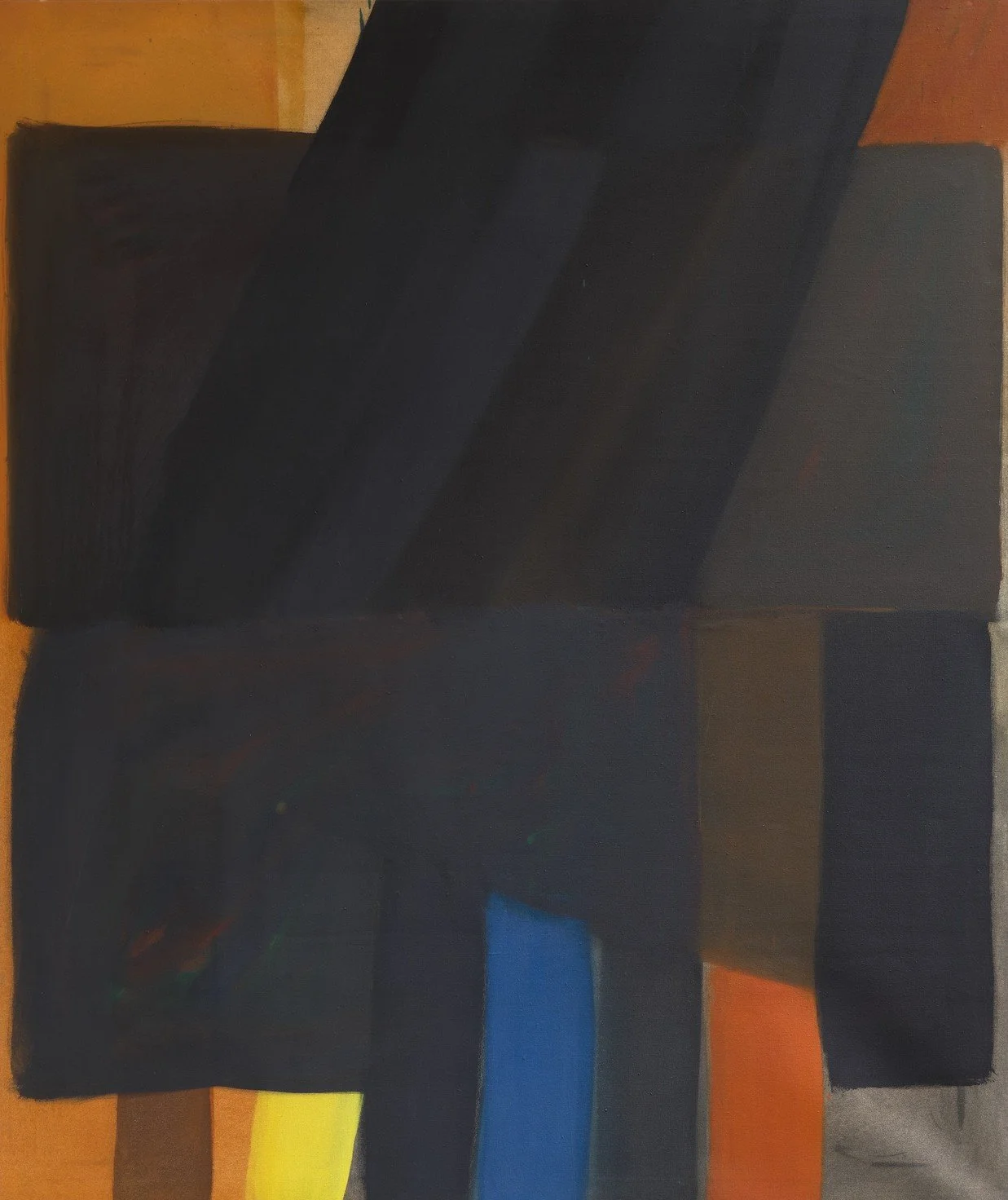
In earlier paintings like Wanderer and Strike, Irvin’s exploration of the emotional possibilities of abstraction finds expression in the interplay of complementary color and form. Composed during a brief period in the second half of the 1960s, when Irvin was deeply invested in the possibilities of black paint, in these paintings large zones of black paint are striped by smaller zones of saturated color. The effect is of balance through asymmetry and disparity: an uneven distribution of elements across the canvas that orchestrates the paintings’ emotive tension.
One feels in all of these works the immediate presence of the artist’s activity. For Irvin, the mark was ultimately an index of his human presence: the trace of a stroke, a gesture, a decision, and all the chance those movements entail. His paintings retain this aleatory quality, a sense of play through which the activity of painting becomes a record of his own presence in the world. Behind each mark is a great energy—a vitalist impulse that unites the pieces on view. Jackson Pollock famously described painting as “energy made visible”; Irvin’s ambition was to dispose his paintings with as much energy as he could possibly invest in them, finding in color, gesture, shape, and structure some way of expressing what he called “an inextinguishable life force.” To New York and Back Again captures this vital force at a decisive point in Irvin’s development, when a mature abstract language and a new material vocabulary converged in paintings of extraordinary physical and emotional vitality.