NOT VITAL: PORTRAITS
ALMINE RECH Shanghai is pleased to present ‘Portraits’, Not Vital's second solo exhibition with the gallery.
March 20 — May 16, 2026
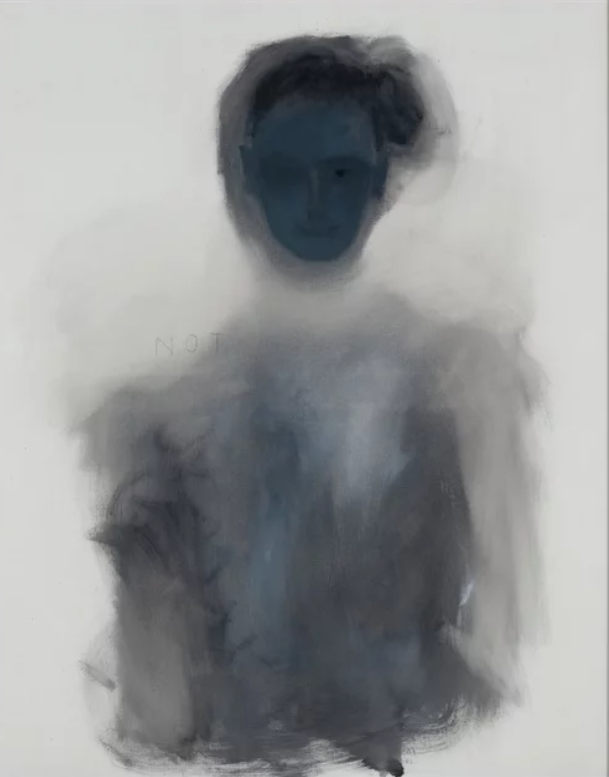
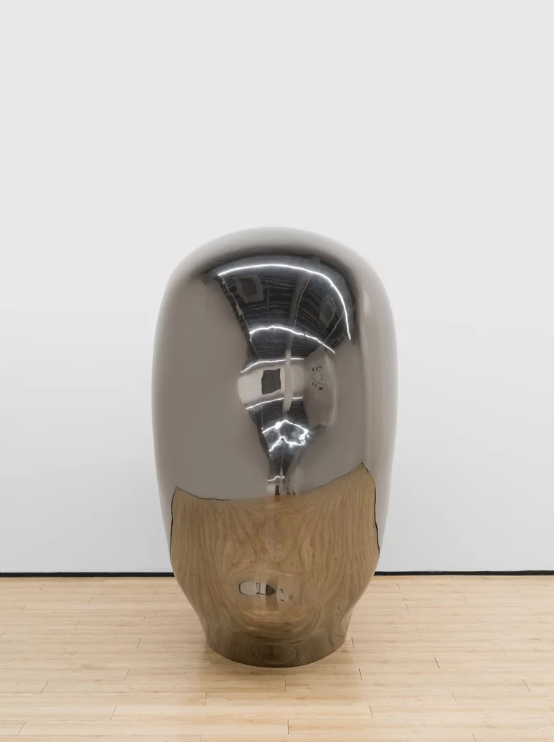
In Not Vital’s artistic practice, the concept of portraiture is a mode of viewing that is in a constant state of adjustment. Whether in painting or sculpture, figures never appear as complete or stable forms. These figures are compressed into limited visual cues by means of blurring, abstraction, fragmentation, or distortion, so that recognition is not possible. Consequently, the portrait no longer serves to identify the subject but rather it guides the viewer’s gaze in a cycle of approach, pause and reassessment.
The paintings in the exhibition date back to the artist’s working period in Beijing in 2008. The predominantly monochrome palette of this phase is influenced by the prolonged smog that characterized the city’s atmosphere at the time, as well as the artist’s upbringing in the Engadin valley in Switzerland—a landscape long defined by fog, snow, rock and shadow. In these works, contours, facial features and expressions are reduced to a minimum. Clear backgrounds or spatial markers are absent, and figures are often placed within neutral or indeterminate settings.
The faces in these paintings often appear to be suspended between light and shadow, as if shrouded by humidity, mist, or diffused light. The figures appear indirectly: their identity is conveyed through sensations of climate, mood and duration. In Cixi (2010) and Man (2011), the figures’ expressions remain in an unformed state; they neither actively return the viewer’s gaze nor fully recede into the background, but instead linger within a delayed and asymmetrical viewing relationship. Drooling (2012) takes this further. The face is almost overwhelmed by the action itself, with the mouth exaggerated yet detached from any clear emotion or narrative. The presence of saliva—a physiological instant—interrupts expectations of representation, unfolding perception through discomfort, hesitation and pause. The figure is no longer understood through expression, but encountered through a moment that is difficult to ignore and equally difficult to explain.
Alongside Doyle’s standalone symbols are two more elaborate pieces which reimagine a pair of mountainscapes shot by Ansel Adams—albeit with a catch. Imbued in the old, famous photographer’s scenes was all the optimism and potential energy of the Progressive Era. Even then, western pictures like his evoked visions of economic opportunity through, and in communion with, the land. Now, those same images feel more like Doyle’s interpretations, which are literally locked away—one behind a chain link fence, the other boarded up with bricks. Once again, Eden has become a cautionary tale.
But Doyle is looking back to look forward. From the Transcontinental Railroad to Silicon Valley, western growth and technological advancement have always been linked. Now, the new frontier is a digital one, and speculative efforts to stake claim are arriving with the same intensity as the California Gold Rush. The centerpiece of Collective Hallucinations, a denim-clad installation called Mirror, Mirror, prompts us to consider what hangs in the balance.