PIERRE SOULAGES AND HANS HARTUNG: AFIINITÉS ÉLECTIVES
PERROTIN is pleased to present the exhibition of Pierre Soulages and Hans Hartung called Affinités électives
April 25 – May 30, 2026
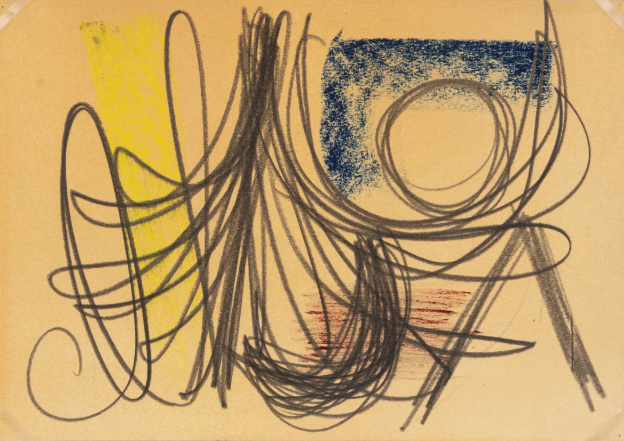
“We were outsiders”: this is how Pierre Soulages (1919–2022) described his generation of postwar artists in a filmed interview about his friendship with Hans Hartung (1904–1989), which Perrotin screens here for the very first time. This video from the Fondation Hartung-Bergman, along with an array of archival documents (including letters, photos, and notebooks), constitutes the starting point of this exhibition. Parallels between the two painters are explored through a selection of artworks, and tools that have rarely if ever left their studios. Soulages and Hartung were stimulated by the Mediterranean atmosphere and built spaces for art (in Sète and Antibes, respectively) where they renewed their creativity and engaged in increasingly radical experiments. They continued to talk, support and inspire each other, and to exchange gifts, such as the magnificent Brou De Noix (walnut stain piece) that Soulages gave to Hartung in 1948 (receiving two drawings in return), which is lent to the gallery for this occasion. The sustained interest that Pierre Soulages has always shown in Hans Hartung’s pastels underlies the decision to present them in Room 5.
The two painters shared many concerns, although this has not always been understood. In the 1940s and 1950s, encouraged by bold women gallerists such as Lydia Conti and Myriam Prévot, they became known for a vocabulary of lines and shapes free from geometrical canons. They were soon identified as the leaders of a new abstract school, but their work also encountered hostility. In 1955, Waldemar George took a reactionary stance toward their art: “Hartung and Soulages seem to operate in the infernal circle of satanic and apocalyptic art.” Both painters explored notions of the sacred and interiority, while having a complex relationship to the American scene. In addition to observing their relationship to chiaroscuro and to light emanating from darkness, viewers will discover their lesser-known use of blue in the 1980s in this exhibition.
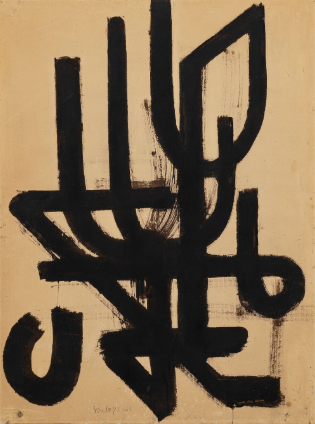
The destiny of the two painters is marked by a fifteen-year age gap and different backgrounds. Of German origin, Hartung fought the Nazis and became a French citizen after Liberation; hailing from Aveyron in the south of France, Soulages was a young man with a committed, rebellious character. There are also some clear contrasts alongside their affinities. Hartung’s explosive, centrifugal, gestural approach differs from the sustained, measured structuring in the paintings of Soulages. This exhibition relates some of the echoes, parallels, and differences that construct the relationship between the two friends. It serves as a surprising and fruitful first step in preparation for the eightieth anniversary of the artists’ meeting at the Salon des Surindépendants, which will be celebrated in 2027 at the Musée Soulages in Rodez and the Fondation Hartung-Bergman in Antibes.