
Hauser & Wirth is pleased to present Cindy Sherman, a solo exhibition by Cindy Sherman, in London.
October 13 – December 23, 2026
Cindy Sherman found a starting point for this new series within the pages of a giveaway magazine from a highend store in the Hamptons, filled with smooth, airbrushed images of a well-known model of Sherman’s own generation, dripping in jewelry. Marking a sophisticated evolution in her engagement with fashion imagery, the artist began working with lengths of fabric as both styling and backdrop at once, establishing the series’ unmistakable visual language. At Chanel’s invitation, Sherman incorporated fabric and jewelry by the fashion house into some of the works, including remarkable tweeds woven with materials like strips of leather, gold thread and sequins. Sherman’s dialogue with Chanel dates back to her Ominous Landscapes series (2010 – 2012), in which her characters wore archival garments and accessories.
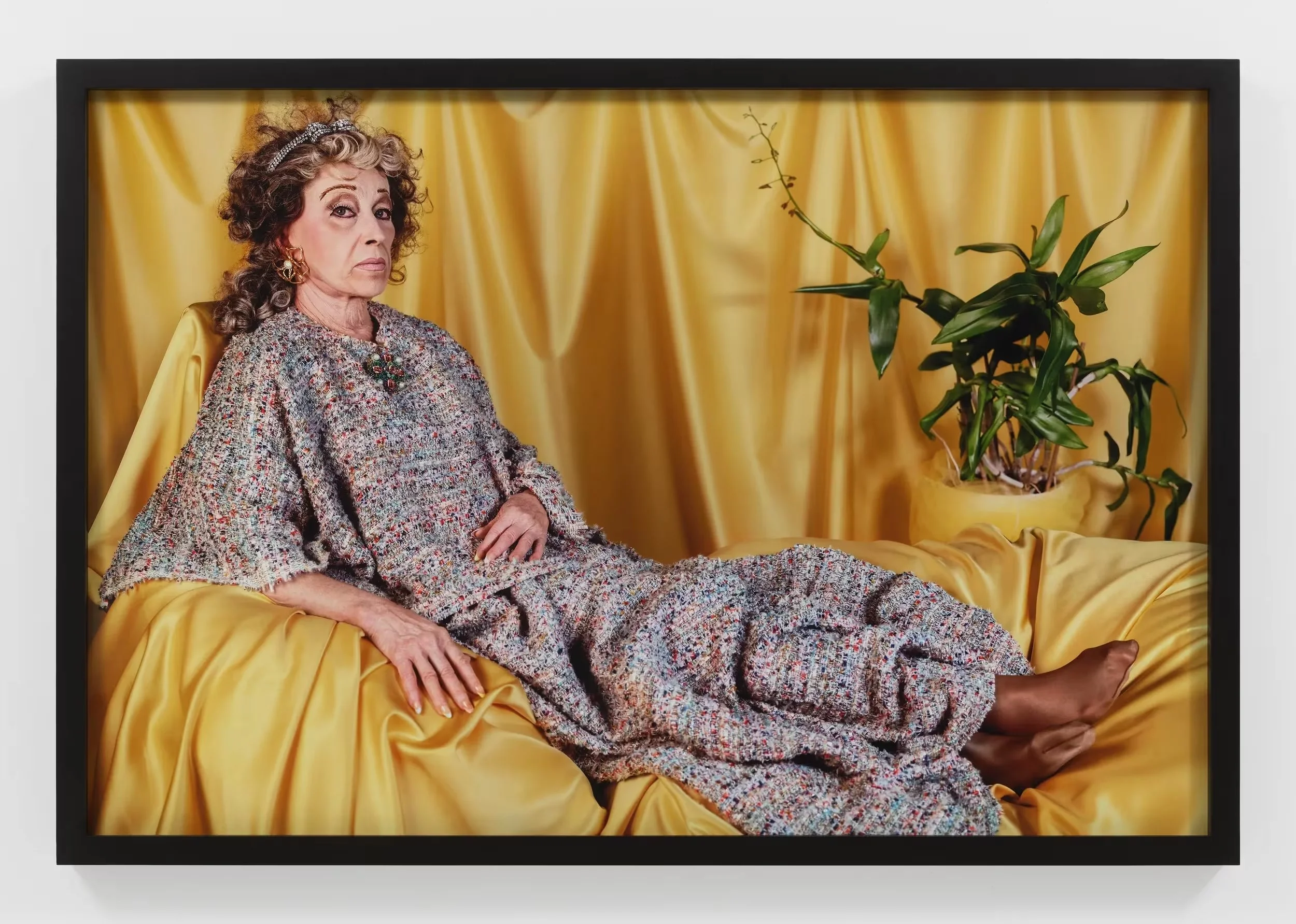
Working without a script, Sherman builds each protagonist intuitively, experimenting first w ith f abric a nd wigs until a personality emerges, then applying makeup to complete their character. Among the group of fabricated individuals is a muse wrapped in fabric that forms a floor-length red dress and a matron in tweed and pantyhose set against yellow drapery. One figure clutches a pearl-embellished bag, displaying an incongruous mix of peasant-style dress and a high-end accessory that reflects the layered, and sometimes contradictory, nature of identity.
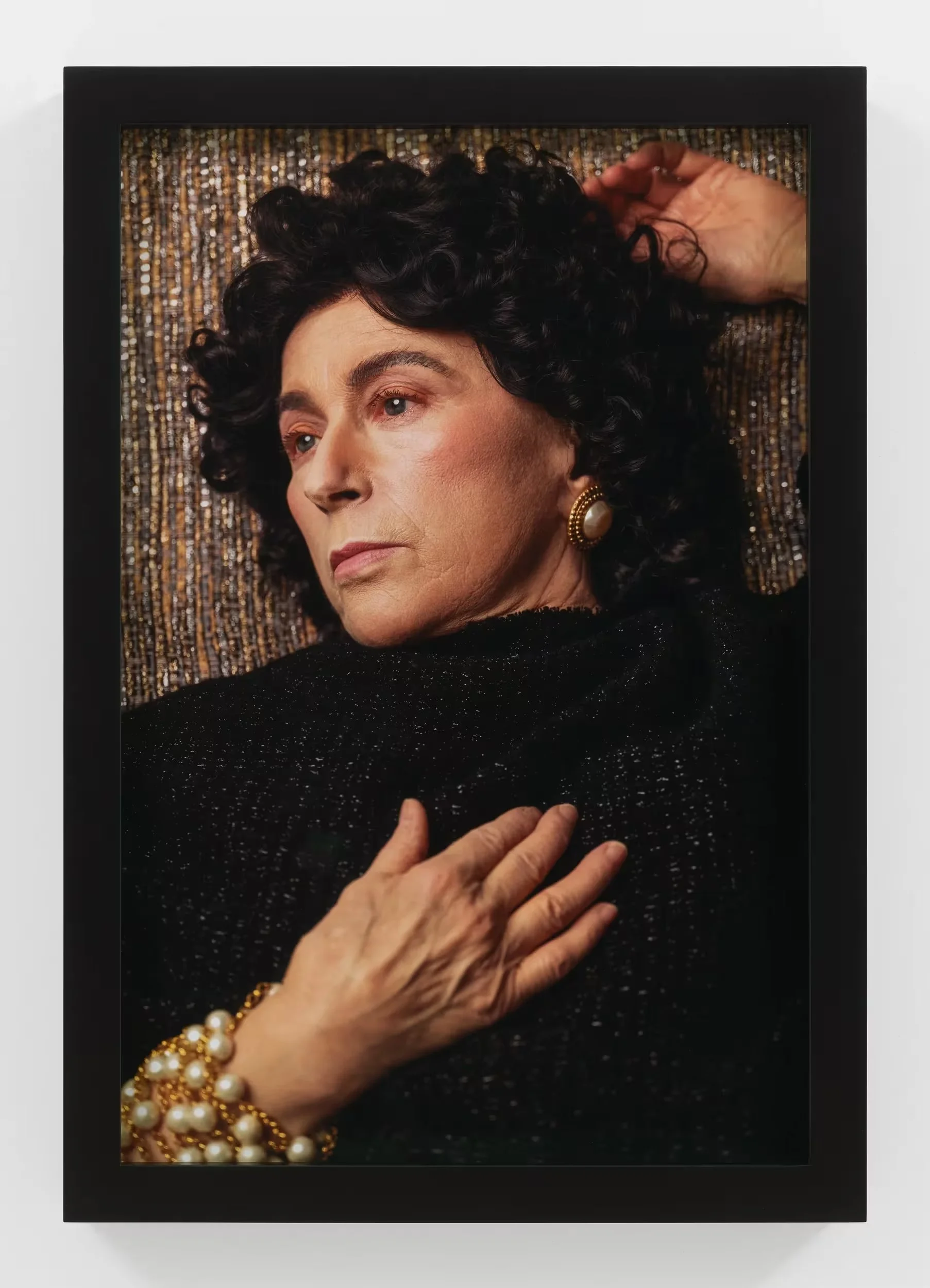
A master of transformation, Sherman has served as her own model for over five decades, producing and performing an array of invented roles that explore and subvert familiar tropes of female identity. Though the personas are fictional, the confrontation at the center of Fabric Matrons is, in part, with Sherman herself, stating: ‘It’s gone beyond beauty. I think it’s showing these characters’ neuroses—probably my own, and similar to many women my age.’ Working close to the camera, she found the process of aging startling to witness and links this to a double standard in which women are disproportionately measured against ideals of beauty and youth compared to men.
Sherman’s choices before the camera also point to the complex relationship between identity and visibility. In several photographs, the protagonists wear gloves that render their skin artificially flawless to hint at a tendency to hide one’s true self. Other characters are clothed in fabrics that blend into the backdrop, raising questions about who is afforded social recognition. Conceived as a group of distinct individuals rather than a narrative sequence, Sherman’s works invite viewers to recognize elements of themselves in her characters and, in doing so, to confront their own anxieties, choices and desires surrounding identity.