Gagosian is pleased to present Lee Krasner: Works from the 1960s, a solo exhibition by Lee Krasner, in Paris.
October 19 – December 18, 2026
The exhibition follows the landmark European retrospective Lee Krasner: Living Colour (2019–21) and coincides with Krasner and Pollock: Past Continuous at the Metropolitan Museum of Art, New York (October 4, 2026–January 31, 2027), the first major exhibition to examine Krasner and Jackson Pollock together in depth. The simultaneous presentations in Paris and New York underscore the renewed international consideration of Krasner’s work and her singular contribution to the history of postwar art.
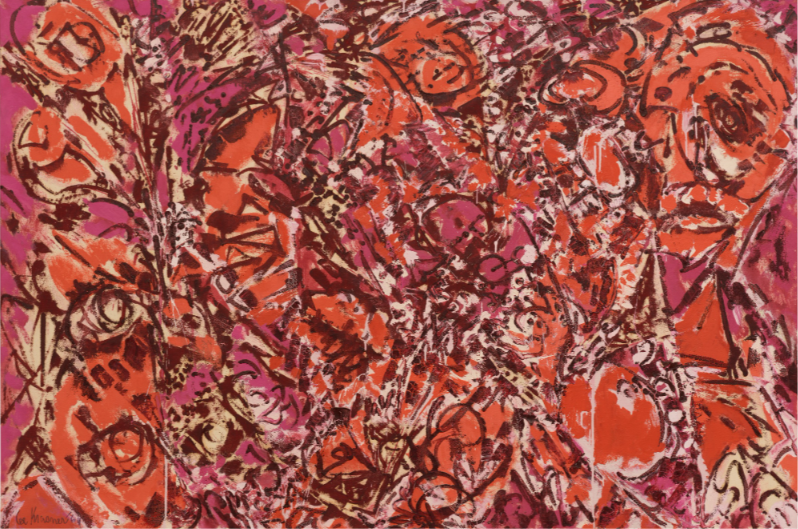
Throughout the 1960s, living between the hamlet of Springs in East Hampton and her apartment and studio in Manhattan, Krasner entered a period of intense experimentation and reinvention. Tackling canvases of unprecedented scale and increasingly lyrical compositions, she worked with newly restricted palettes and began to apply oil paint directly from the tube. These developments gave rise to the Umber Paintings (1959–62) and Primary Series (1960s), now among her most renowned painterly achievements. Her growing international recognition was affirmed by the 1965 retrospective Lee Krasner: Paintings, Drawings and Collages at London’s Whitechapel Gallery, curated by Bryan Robertson.
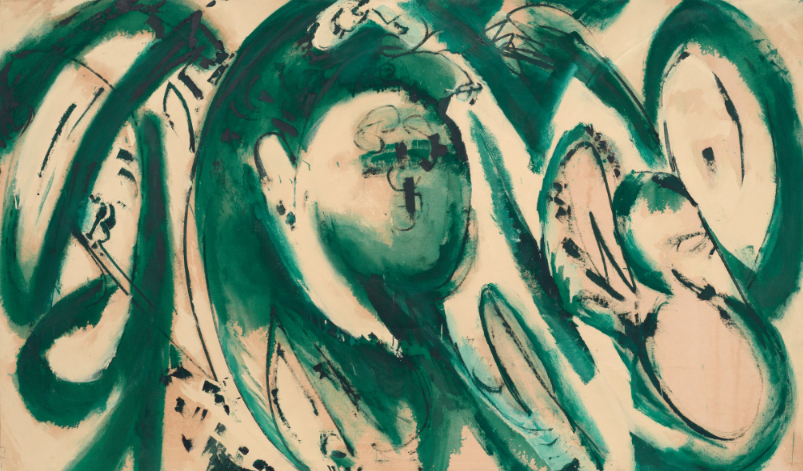
An untitled gouache from 1964 juxtaposes purple and yellow, while the oil painting Icarus (1964) suggests the heat and intensity of its mythological namesake approaching the sun. Portrait in Green (1969), Krasner’s only painting on canvas made that year, is composed of sweeping rhythmic gestures in viridian oil paint, accentuated by passages of off-white and linear forest green brushstrokes. The exhibition culminates in the majestic oil on canvas Comet (1966–70), in which vigorous forms of magenta and emerald green are overlaid with cream and white, creating an expansive interplay between figure and ground with an energy in keeping with the celestial associations of its title.
Krasner’s work has never before been the subject of a solo exhibition in France, despite her long-standing engagement with French modernism and nomination as Chevalier de l’Ordre des Arts et des Lettres in 1982. Nearly forty-five years after receiving that distinction, the exhibition brings a distilled selection of her work to Paris, situating this decisive period of her practice within the broader history of twentieth-century abstraction.