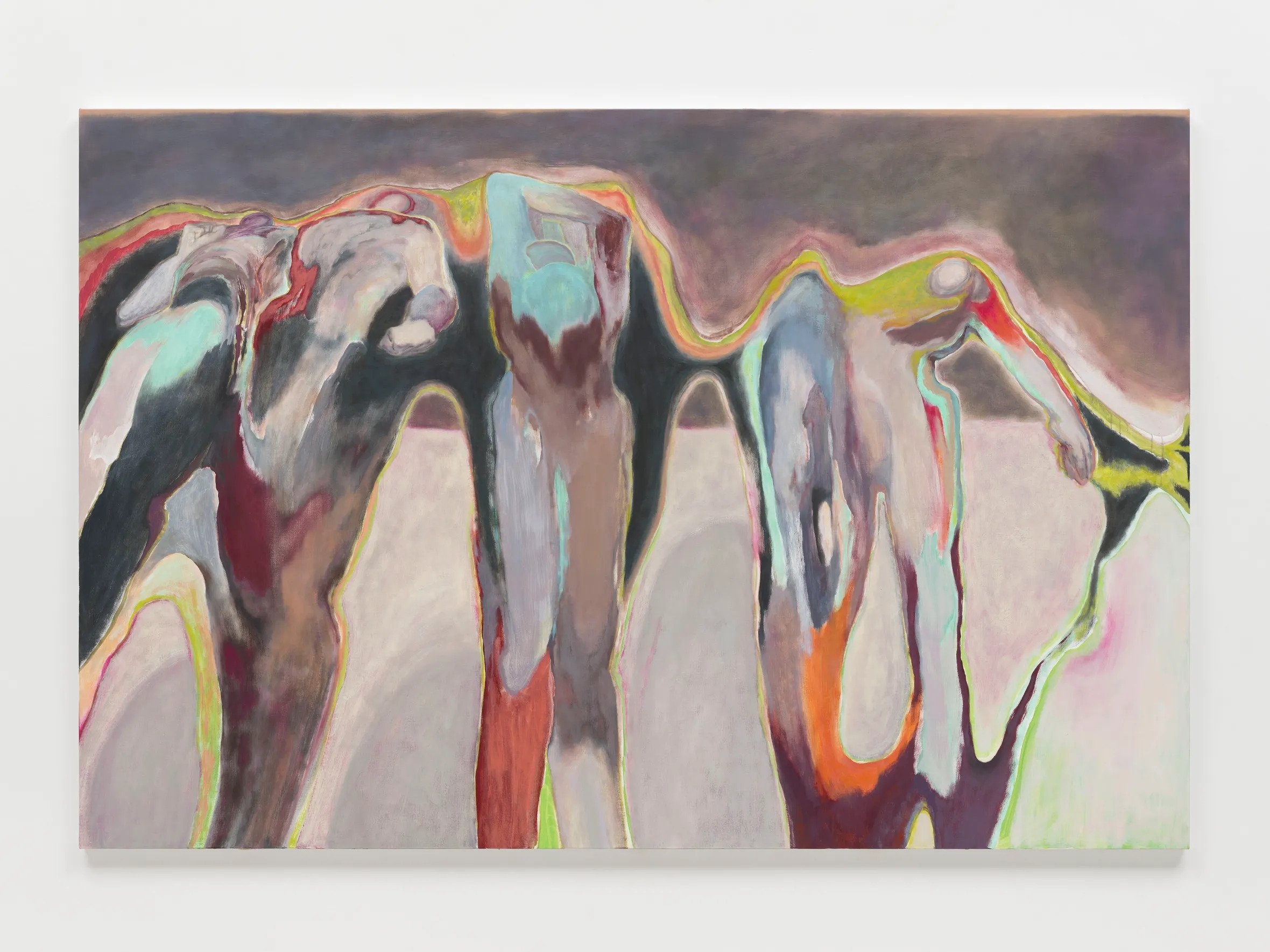
White Cube is pleased to present North and True North a solo exhibition by Firenze Lai, in London.
October 13 – November 14, 2026
The work of Firenze Lai (b. 1984, Hong Kong) explores the social, political and spatial subtexts that shape individual and collective psyches across both physical and virtual worlds. Bringing together a new series of paintings and works on paper made in her London studio, ‘North and True North’ is the artist’s first solo exhibition in the UK. The figures that populate Lai’s canvases are often anonymous – sometimes even faceless – and situated within indeterminate environments that speak to the formless expanses of online existence. These bodies appear to merge with themselves or one another, become absorbed into larger systems or circuits, fragment, duplicate and drift between realms.
Although Lai’s paintings often address the digital condition, she avoids depicting technology directly, turning instead to its impact on human emotion and behaviour. ‘In the physical world, a chair, a room or tunnel holds your body and defines your space, guiding you and helping to maintain your balance’, she has remarked. ‘In the virtual realm, there are also structures and infrastructures that serve similar purposes’.1 In The True North (2024) this is evident in the figure’s grotesquely enlarged hand, which it uses to try and swivel its own body, recalling the familiar touch control used to rotate a smartphone map.
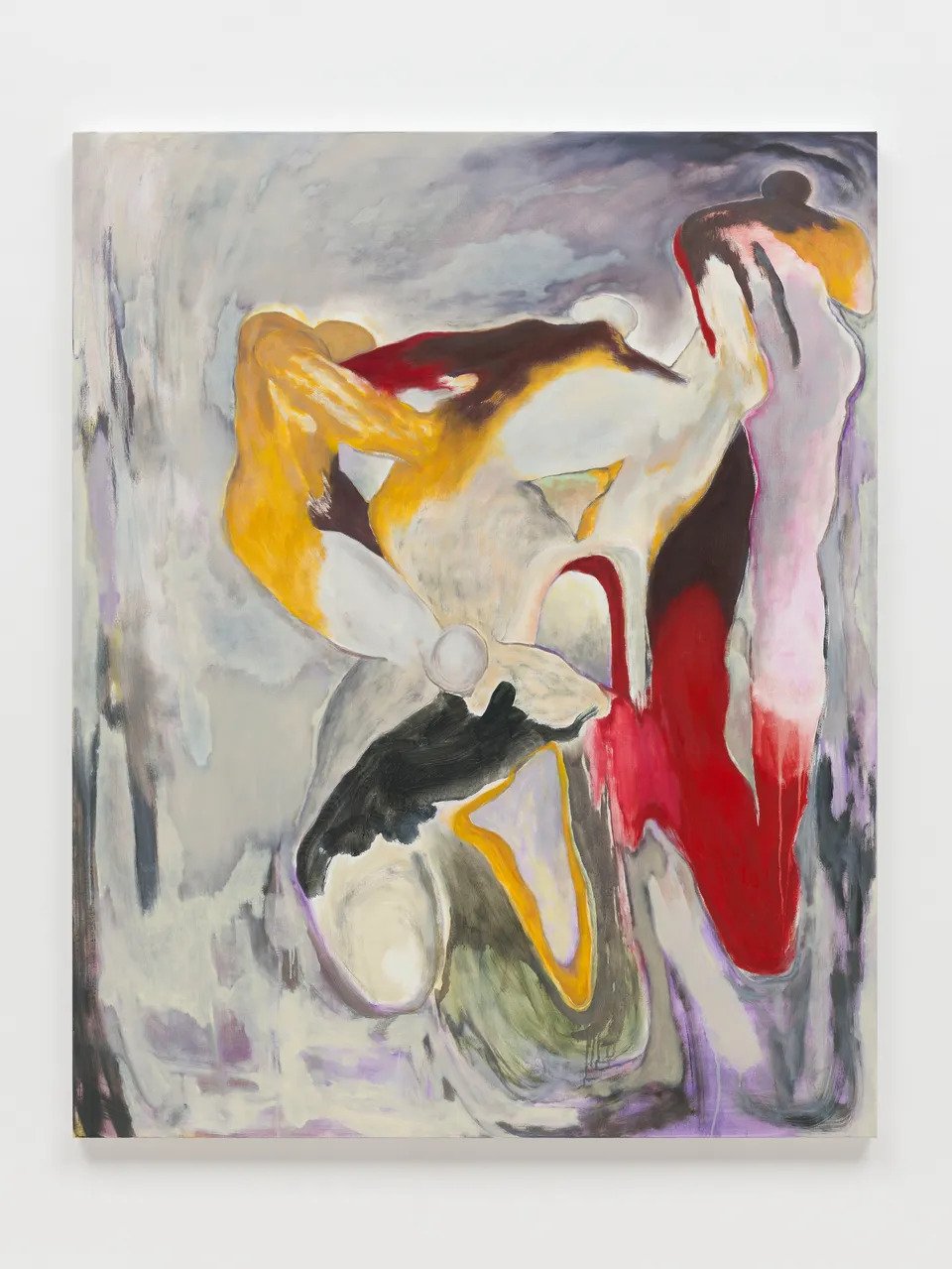
Lai’s figures serve as archetypes for collective psychological and physical states: ‘Each figure that I paint is the same person. It is you and I. A universal character taken at different moments’.5 Identity, she says, ‘is not a stable thing; I believe that it’s a trap most of the time’.6 This is most directly expressed in works on paper such as Vortex (2024), where a host of divergent, inchoate forms rise from the ground, distinct yet bound together, and in paintings such as Metamorphosis (2025) and Versions (2026). In the latter, a host of interlocking figures seem to converge around a circular void. Some heads and limbs overlap, while others conjoin or blur, as though a single figure were captured at successive moments in time.
Throughout her work, Lai explores how people switch between these systems, ‘how they live within them, and how sometimes they fall through the cracks’, examining sociopolitical and displacement-related concerns that long predate contemporary technologies.8 In The Match Man (2022), made in Hong Kong shortly before Lai’s move to London, a bent figure with oversized hands emerges from a bruised purple ground, accepting a gift or bowing to shield the body from an unseen benefactor, or foe. While her figures may at times appear lost, disoriented or threatened, the artist often identifies in them strategies for coping and self-protection.