
MYONG-HI KIM: DEEP TIME
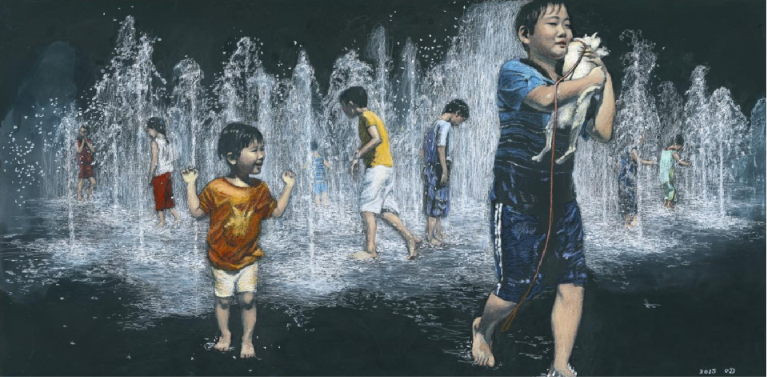
GALLERY HYUNDAI is pleased to present artist Myong-Hi Kim's solo exhibition Deep Time.
May 7 – June 14, 2026
The retrospective marks Kim's third solo exhibition with Gallery Hyundai, following presentations in 2003 and 2012, and highlights her unique practice spanning more than five decades that has interwoven human lives with history, individual experiences with collective memories. The title Deep Time references a key concept threading Kim's entire oeuvre, drawing on Seewon Hyun's observation that “Myong-Hi Kim's life stretches across an expanse of time and space. And she nourishes this deep time with her imagination as a universal medium and as her continuing interest.”
The exhibition features approximately 40 works, including charcoal drawings created in the 1980s in New York, Kim's iconic chalkboard painting series that integrated video since the 1990s, and recent works. The selection will reveal the trajectory of her artistic viewpoint between New York and Naepyeong-ri in Chuncheon, Korea, as well as the strata of time and experiences accrued within.
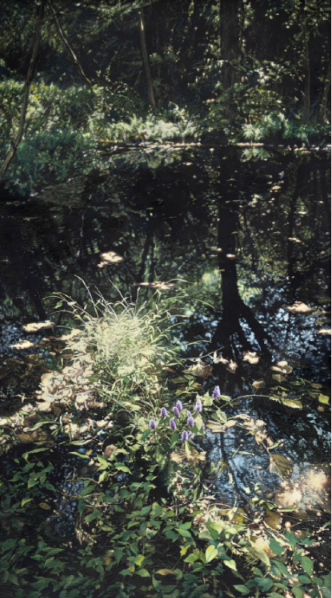
Sensing the world around her through the eyes of an “ambulant” being who extends her sight towards human history and individual existence alike, Myong-Hi Kim occupies a singular position within the narrative of women artists within Korean contemporary art. In the male-centered society of the 1970s, where Minjung art prevailed, she joined the Expressionist Group to foster environments that would support the sustained artistic pursuits of women. She eventually relocated to New York in hopes of creating art in relative independence from changing currents of the outside world. After meeting fellow artist Tchah-Sup Kim (1940–2022) through the mural project at Yu Gwan-sun Memorial Hall in 1973, they would get married in New York and become life companions. Building on her education at the Parsons School of Design, Kim operated a fashion boutique that allowed her to continue creative work with a stable financial footing. Having continually explored women's narratives and cultures in pursuit of a uniquely anthropological perspective, she traveled widely with companions, including Kim Hyang-an, to New Mexico, the Silk Road, Vladivostok, Tashkent, and Samarkand, where she interacted with a wide range of indigenous and diasporic cultures. These direct experiences played a key role in broadening her anthropological worldview. In 1990, she discovered blackboards in an abandoned school in Naepyeong-ri, Chuncheon, and has since adopted them as supports for her painting. She continues to work between New York and Chuncheon through today.
Myong-Hi Kim has remained removed from particular schools or currents of art. Describing herself as “ambulant” rather than a nomad or an individual of the diaspora, Kim has developed her work in close relationship with lived experiences in place of specific theories or histories. Refusing to limit herself to art historical concepts that have come to define each era, she has interconnected art and life into a single orbit. The “ambulant” experiences portrayed through her work contain multitudinous layers of time, as often discussed in anthropology, beyond the issues of representation or of individual points of view. Such is why her work freely traverses between structures and forms, theories and contexts, encouraging viewers to contemplate on the plurality of existence and the layers of time they inhabit—testament to the power of her unique subjectivity as a woman artist. The blackboard, a surface that is repeatedly inscribed and erased, readily reveals an accumulation of time and closely resonates with the idea of deep time that penetrates various parts of her practice.