ANDREW LORD: THOUGHT IN MATERIAL: SELECTED WORKS
GLADSTONE presents its first-ever retrospective of Andrew Lord’s sculptural works, spanning the artist’s output over the past 40 years.
January 15 - February 21, 2026
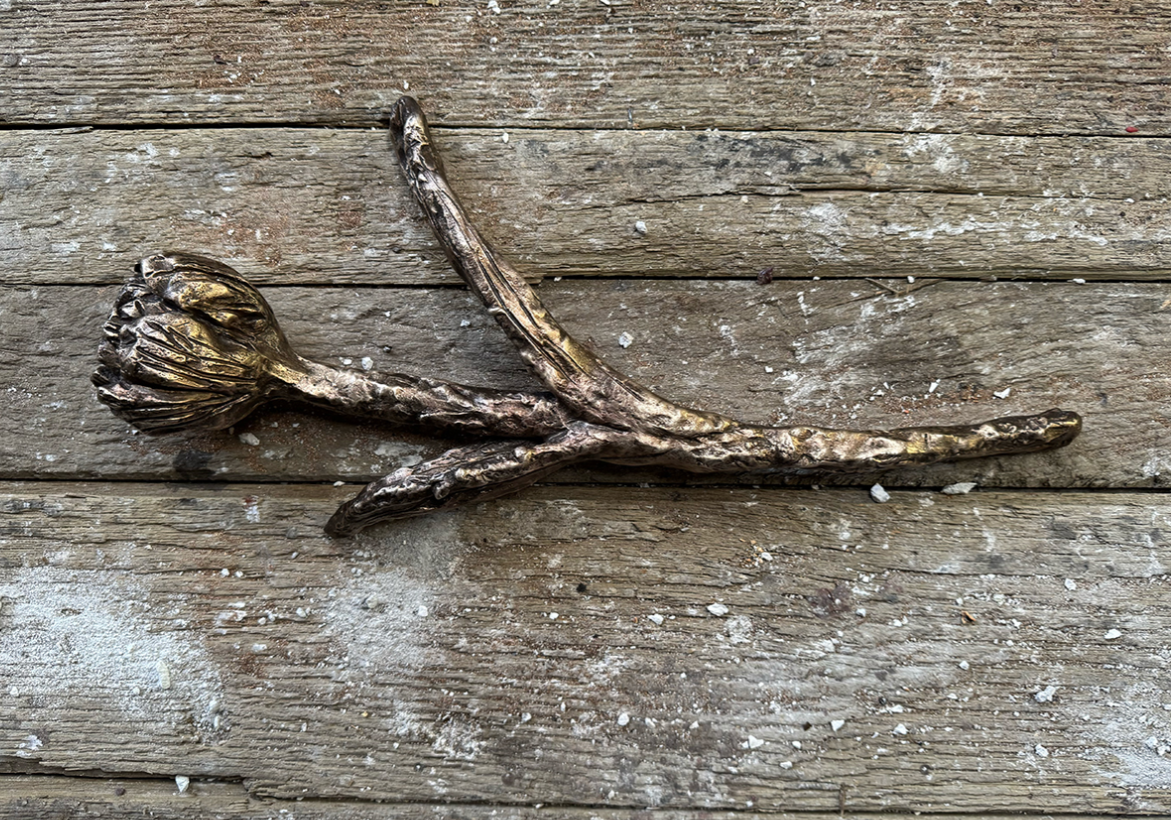
Comprising clay and bronze objects that illustrate his conceptual approach to ceramics, the exhibition highlights the remarkable breadth of Lord’s experimental and experiential work while revealing the harmony of his vision across decades. Eschewing function and decoration, Lord’s work explores themes ranging from the tactility of creation to light in Impressionist painting, from childhood memories of the landscapes of his native England to the atmospheric conditions of Carson Mesa, New Mexico.
The survey showcases several strands in Lord’s oeuvre, each of which evolved chronologically, but overlap and intertwine across their years of production. It highlights his protean approach to the medium, stylistically shifting from series to series, yet always recognizable as a product of his hand. In marks my hands make, begun in the early 1960, the artist has explored the different ways his body could interact with clay using a set of physical techniques he describes as: “round, modelling, touching and holding, pressing and squeezing, marking, fist and palm.”
The resulting works harbor the indexical traces of his contact with the material—each object revealing how it yielded to his touch. The shapes are familiar—urns, vases, pots, and pitchers—but they operate more as receptacles of his bodily imprint than as any utilitarian item. From his study of Mycenaean, Delft, Mexican, and Chinese pottery, among other civilizational artifacts, Lord adopted such archetypal forms and invested them with corporeal presence. They reflect the physicality of their own making, recording each gesture and mark that brought them into being.
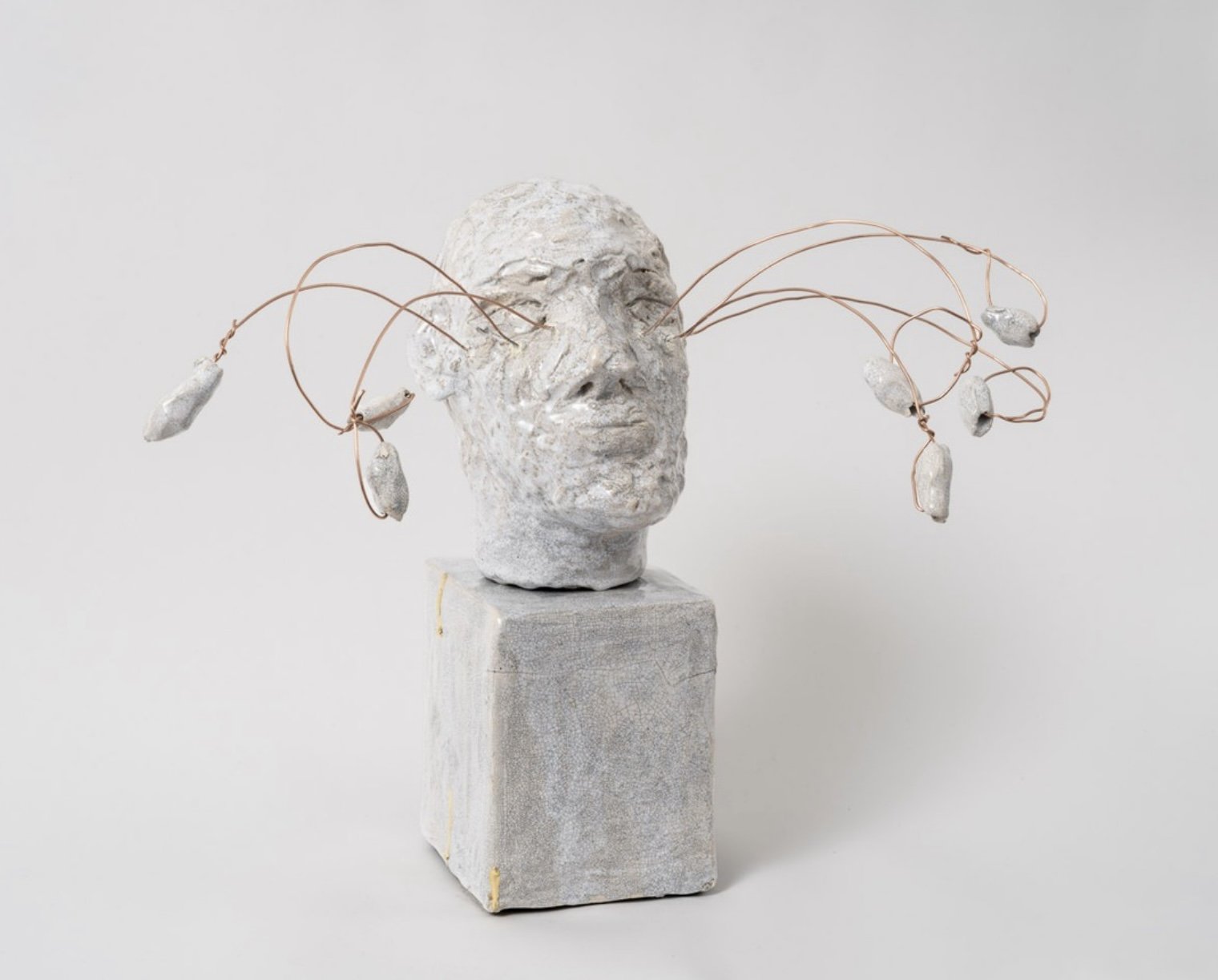
For Lord, the body is not only an instrument of creativity, but also a subject in and of itself. With parts and poems, the artist shifted his focus from the hollow vessel to anatomical fragments—a sleeping head, an arm and hand, shoulders, a left leg—each modeled to retain the pressure of his fingers.
Memory is another important touchstone in Lord’s work. With the series, Whitworth, he invokes what he has called a “catalogue of things lost,” culled largely from his experiences of growing up in Lancashire, England. Elements of the landscape are manifest in ceramic form as are almost forgotten figures and monuments associated with his past. The level of translation he employs, from place or person to sculpted object is, perhaps, most beautifully rendered in a circle of wall reliefs of birds flying in a ring, crafted from his memory of a great-uncle’s circular neck tattoo.