MOON KYUNGWON & JEON JOONHO: "NEWS FROM NOWHERE : LABORATORY OF SPRING AND AUTUMN COLLECTION"
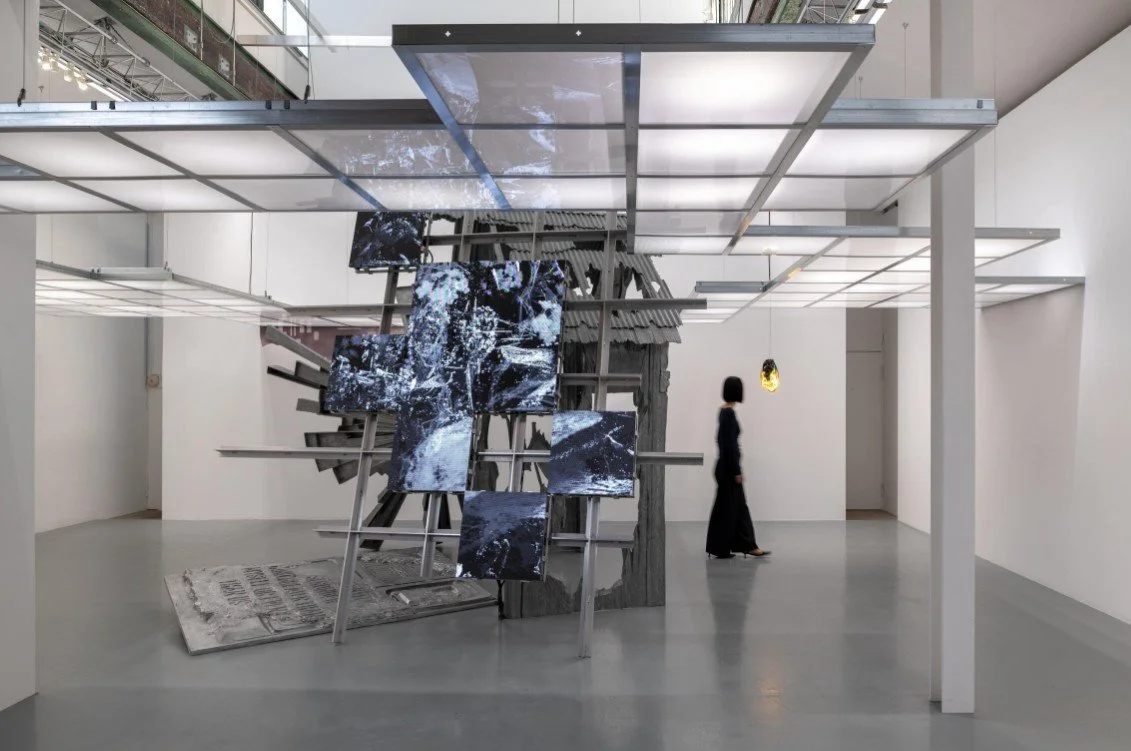
SCAI THE BATHHOUSE is pleased to present "News from Nowhere : Laboratory of Spring and Autumn Collection" by Moon Kyungwon & Jeon Joonho.
November 05, 2025 - January 31, 2026
Moon Kyungwon & Jeon Joonho, both born in 1969, are a Korean artist duo active since 2009. Back then, they had already established their artistic careers; Moon mainly with her paintings and experimental video works while Jeon with his sculptures and installations, which were partly introduced at the SCAI THE BATHHOUSE in 2009. In the center of their practices, there is a long-term multidisciplinary project News from Nowhere. The project aims to contemplate roles and meanings of contemporary art, functioning as a platform of their artistic practices in diverse forms of media, such as films, installations, photographs, workshops, books, websites, and newsletters. Their first collaborative work in the project was the two-channel film installation El Fin del Mundo (The End of the World, 2012) premiered at dOCUMENTA 13 and now in the collection of the 21st Century Museum of Contemporary Art, Kanazawa. More recently in 2022, as many of the Japanese audiences vividly remember, the duo’s large-scale solo exhibition named after their project “News from Nowhere” was held at the museum in Kanazawa.
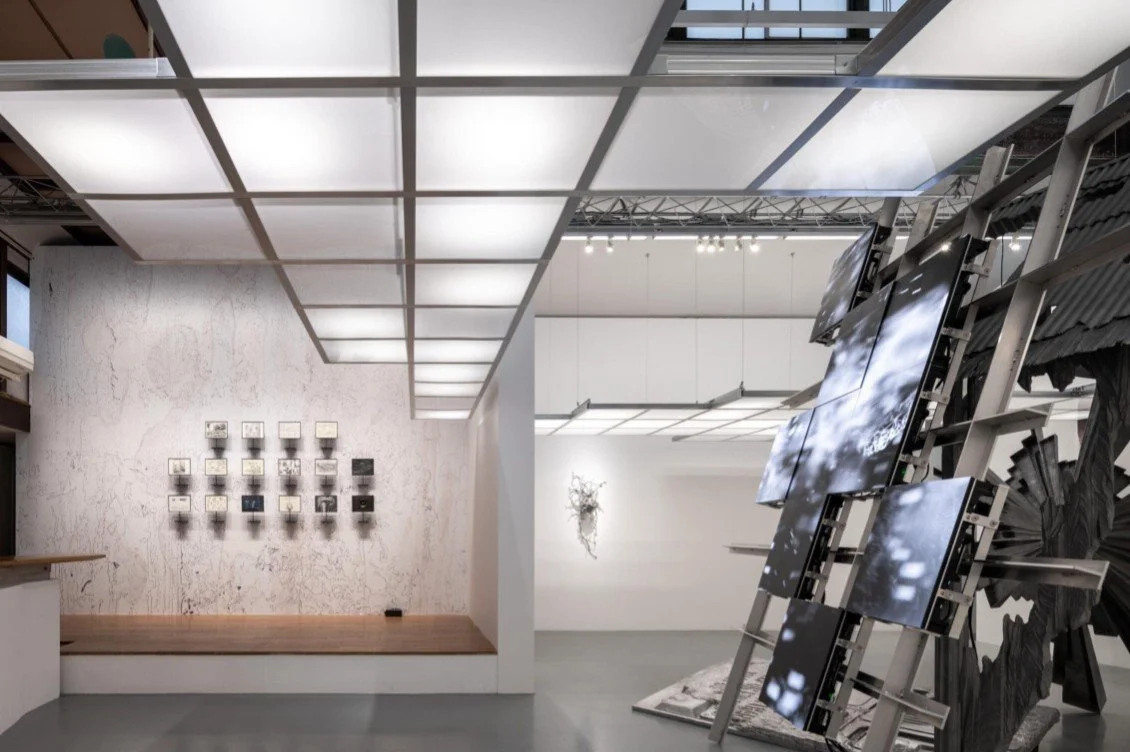
In the upcoming exhibitions titled “News from Nowhere: Laboratory of Spring and Autumn Collection” and “Dialogue Manual,” various works centering around the moving image installation Phantom Garden (2024-2025) are to be presented at SCAI THE BATHHOUSE, and Moon’s paintings exploring the sedimented layers of time and memories along with Jeon’s sculptures on his experience in the global art scene at SCAI PIRAMIDE. One show operates in conjunction with the other, providing an exceptional chance for the Japanese audience to see not only recent practices that herald the next interdisciplinary projects as a duo, but also her and his individual works at the same time.
The background of Phantom Garden is a future world without spring and autumn. Sadly, this sounds realistic rather than fictional for us living in Japan, 2025, when it is above 30 degrees centigrade in late September, which used to be categorized as autumn. Meteorologists warn that Japan (and other parts of the world) will soon have only two seasons, summer and winter, after the disappearance of spring and autumn [1]. Like many of their earlier works, the artists set a world view reminiscent of science fiction. Sook-Kyung Lee, the director of the Whitworth Gallery at Manchester University, analyzed the representation of the future in their works as a ‘critical dystopia’ that leads to a confrontation with the dystopian elements of our times [2]. Then the world view should be understood as their poetic methodology of defamiliarizing the present, seen from a different distance. This also resonates with Moon’s comment that the imperfection of the world is the possibility for the future [3]. And there is a solitary figure, a protagonist who can be described as ‘an accumulated presence of all previous knowledge’ [4]. In Phantom Garden, however, the protagonist is also that of all previous ‘ignorance’ who has never experienced spring and autumn. Why alone? Jeon once answered to this question by stating that solitude and isolation are effective means of reflecting on one’s own existence [5].
There will be a cast aluminum installation Prosperos Botanica (2025) at SCAI THE BATHHOUSE. As Koichi Nakata who curated Moon & Jeon’s exhibition at the 21st Century Museum of Contemporary Art, Kanazawa, pointed out, plants often appear in the artists’ previous works as important items bearing the role of ‘transporters’ that serve as a means of communication, conveying something indispensable to humanity across time to the next generation and civilization [6]. In this exhibition, aluminum seems to be chosen as another ‘transporter’, and as the remnants of a now-lost past in the work, namely the present, which reflects modern and contemporary society and suggests a vision for the future. In media archaeologist Jussi Parikka’s argument, aluminum is mentioned as one of the materials that characterize modernity and enabled so much of computer science. It is also a typical residue released from the process of manufacturing that defines media materiality, such as minuscule aluminum dust residue discharged from polishing Apple’s products to achieve desirable shine for the consumer market [7]. As one of the highlights of the upcoming exhibitions, it would be worth paying attention to how the artists employ this common metal as a critical symbol of our civilization in this age of rare metals war [8].
A couple of days ago, Moon & Jeon shared the concepts of the new works representing the Spring and Autumn Collections with us. One is a stalactiform sculpture that embodies the scent of spring. The other is about sonic lighthouses that guide ships across the silent sea with pulses and vibrations, after the extinction of the Earth’s marine ecosystems. It was beyond my expectations that the artists navigate their paths to the lost seasons with olfactory and auditory senses. Although I have not seen the exhibitions yet, I believe that they will be charged with Moon & Jeon’s critical imagination on our contemporary society. This is why I open and close this short essay with Roger Caillois’s words. “The vision the eye records is always impoverished and uncertain. Imagination fills it out with the treasures of memory and knowledge, with all that is put at its disposal by experience, culture, and history, not to mention what the imagination itself may if necessary invent or dream. So the imagination is never at a loss when it comes to making something rich and compelling out of a subject that might almost seem an absence of all life and significance[9].”
Every space is filled, every interstice occupied. Even metal has insinuated itself into the cells and channels from which life has long since disappeared. Compact and insensible matter has replaced the other kind in its last refuge, taking over its exact shapes, running in its finest channels, so that the first image is set down forever in the great album of the ages. The writer has disappeared, but each flourish — evidence of a different miracle — remains, an immortal signature.
Roger Caillois, The Writings of Stones,
Barbara Bray (trans.), University Press of Virginia, 1985, p.108.