MIMMO PALADINO
MASSIMODECARLO is pleased to announce Mimmo Paladino's first exhibition in the spaces of Casa Corbellini-Wassermann.
April 22 – May 30, 2026
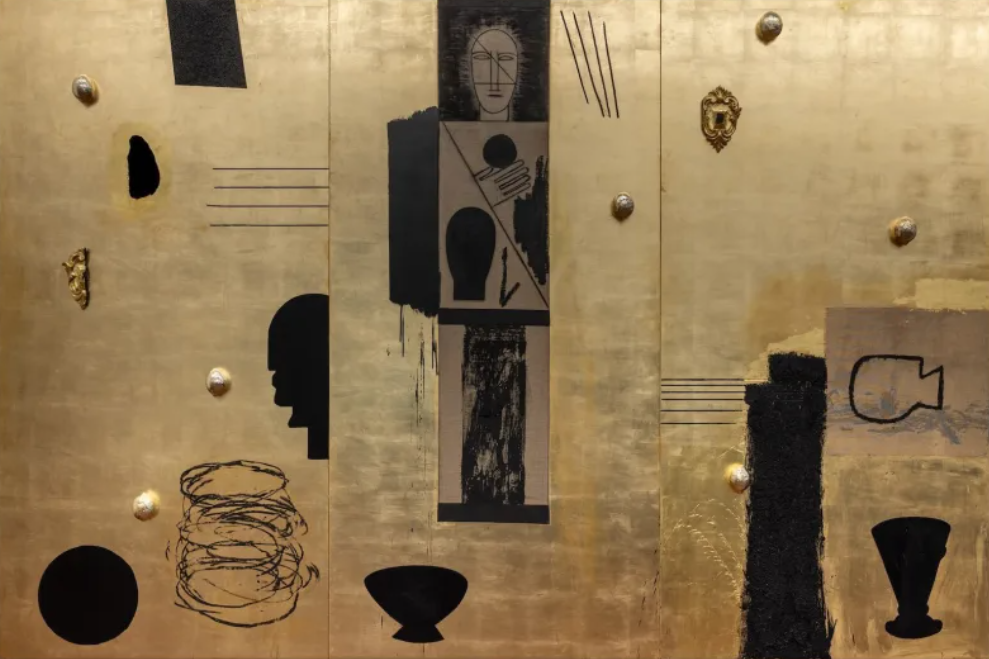
Dark figures against luminous grounds, symbols that come from far back - from Etruria, from Campanian folklore, from a Mediterranean imaginary that is at once personal and collective - and arrive, unmistakably, now. Paladino's language is not archaic in the nostalgic sense, but in the original one: ancient because primal, essential because necessary.
The exhibition unfolds like a visual score. Paladino thinks of his work as a composition of fragments - one moment passing into the next, intention giving way to the accident that transforms it. "The day after is always a surprise," he has said, and that is where the meaning lives: not in the original plan but in what happens along the way. The unforeseen is not a mistake to correct but a direction to follow. The exhibition moves with this logic, chromatically: from muted tones to full saturation, all the way up to the light of gold leaf - an orchestra bringing its instruments in one by one.
The gallery's spaces - their proportions, their tactile weight - become something more than a container. The exhibition is conceived room by room, in dialogue with the light and materiality of each environment: the idea is not to place works inside a space but to let something happen between the two. In 1995, Paladino occupied Piazza del Plebiscito in Naples with Montagna del sale - a cone of sea salt thirty metres in diameter, black wooden horses sunk into it like the remnants of a battle - turning one of the city's most lived-in squares into something ancient and estranging. Four years later, in the underground vaults of London's Roundhouse, he laid out the terracotta figures of his Dormienti in the half-light, wrapped in music Brian Eno had written for the occasion. In both cases, the architecture was as much a presence as the work itself.
This same sensibility runs through the current show, where the works seem to truly inhabit Casa Corbellini-Wassermann. A table set with sculptures - thirty-three small forms in bronze and iron, made between 1993 and 2009 - fills the room like a constellation of presences. Some older, some more recent, but together, chronology loses its importance. What matters is the density: each form carries its own history while belonging to a larger one.
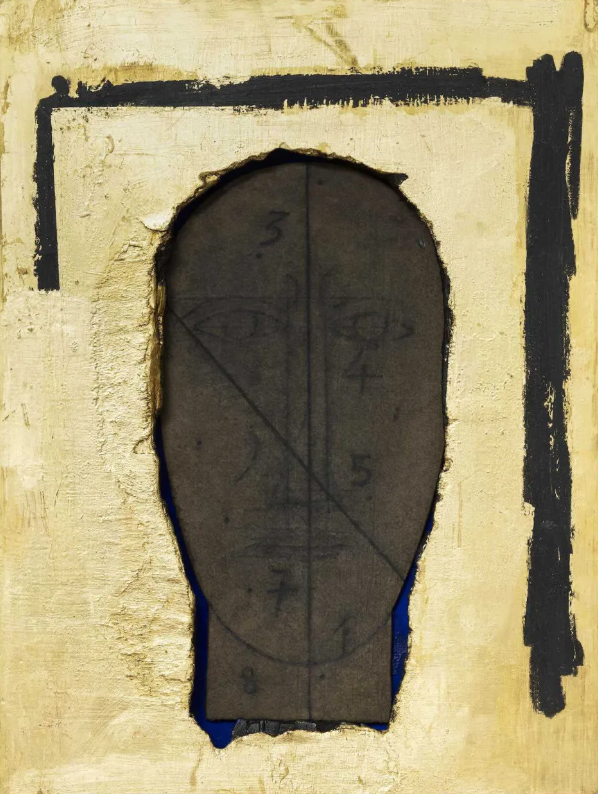
In the Studio, icons dedicated to great figures of literature - from Joyce to Céline, Borges to Calvino, Kafka and Svevo - stand alongside books by those same authors, into which Paladino has worked figures, drawings, and secret signs. Literature becomes a field where the image moves across sideways, without following the story - something the text inspired without anticipating, a visual thought that needs the written word to be born but not to survive.
Paladino takes something ancient - a symbol, a form, a material - and returns it to the present as though it had just come into being. The sculptures on the table, the solemn faces, the light moving toward gold: everything here lives in that suspended territory between what has already been and what does not yet exist. A territory Paladino has always inhabited, moving through painting, sculpture, printmaking, photography and cinema without ever settling in one, where the sacred and the everyday, memory and invention, sit side by side without resolution. In his hands, time does not pass. It transforms.