JUANITA MCNEELY
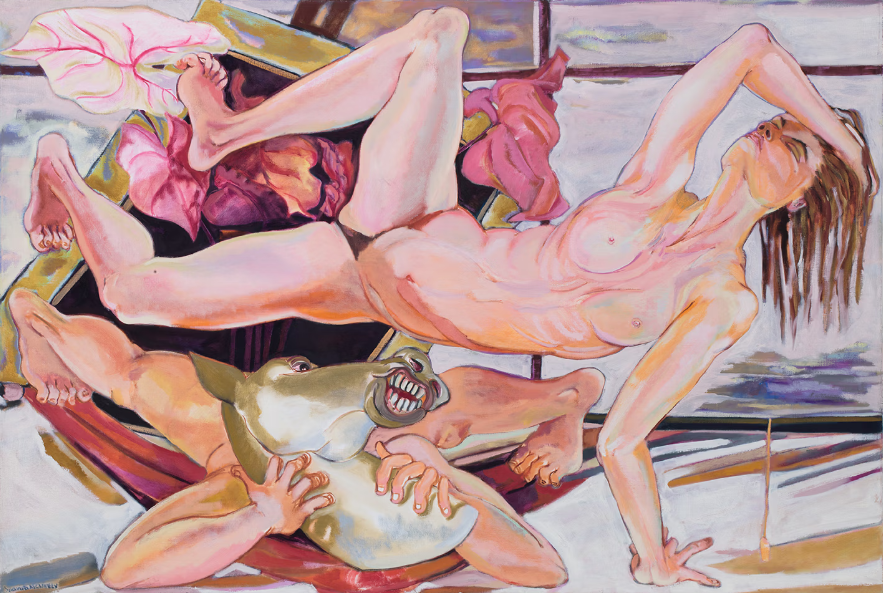
LÉVY GORVY DAYAN opens an exhibition of Juanita McNeely’s revolutionary oeuvre, marking the first solo presentation of the late New York painter in London.
January 20 - April 25, 2026
Spanning paintings and works on paper from the 1960s to the 2010s, the exhibition charts five decades of her uncompromising practice, defined by a fearless and provocative approach to the human body.
In her paintings, McNeely honed in on the female figure, tackling taboos regarding nudity, sexuality, and biological functions. Drawing on aspects of her own physiology, she imagined bodies radically deconstructed and contorted into near-impossible positions. Bold yet jarring, the artist’s reconfigurations of anatomy were indelibly shaped by personal experiences of life-threatening illnesses, sexism, abortion, and disability—conditions which informed her profound and unflinching understanding of the body as a site of struggle, learning, and wisdom.
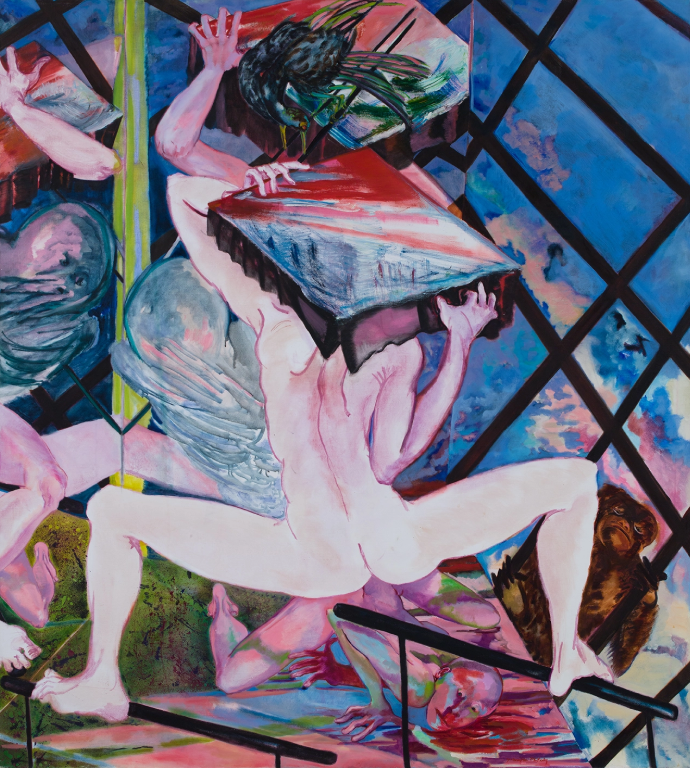
Painting through engaged observation and a deeply embodied knowledge, McNeely expressed pleasure and pain held in tension, merging the personal and political in new and challenging ways. The works on view in the exhibition reflect McNeely’s lifelong commitment to channeling emotional, physical, and social conditions. Paintings from the late ’60s reveal her confident command of color and line—as in The Yellow Womb (1969), where intensely saturated hues animate a composition of fragmenting body parts, infusing each element with a sense of expanding vibrancy.
Difficult subjects and provocative motifs are treated with seductive delicacy and care, balancing realistic detail with expressive and gestural brushwork. In later decades, McNeely developed the Windows series, represented here by Umbrella Inside (1980–2011). The series saw the artist establish her use of windows, metal bars, and spiked grills as framing devices, structures that simultaneously enclose the figure and destabilize the pictorial space. By the ’90s, such motifs were absorbed into scenes of sensuality and domesticity, signaling both an integration of earlier constraints and their transformation. At times, as in Balance (2012), the objects themselves dissolve, giving way to resonant and immersive fields of empty space. Throughout the works on display, the painted surface is revealed as an ambiguous yet exciting site of both confinement and resistance.