MARINA RHEINGANTZ: Míope
White cube is pleased to present Míope, an exhibition of Marina Rheingantz, in Seoul.
1 September – 24 October 2026
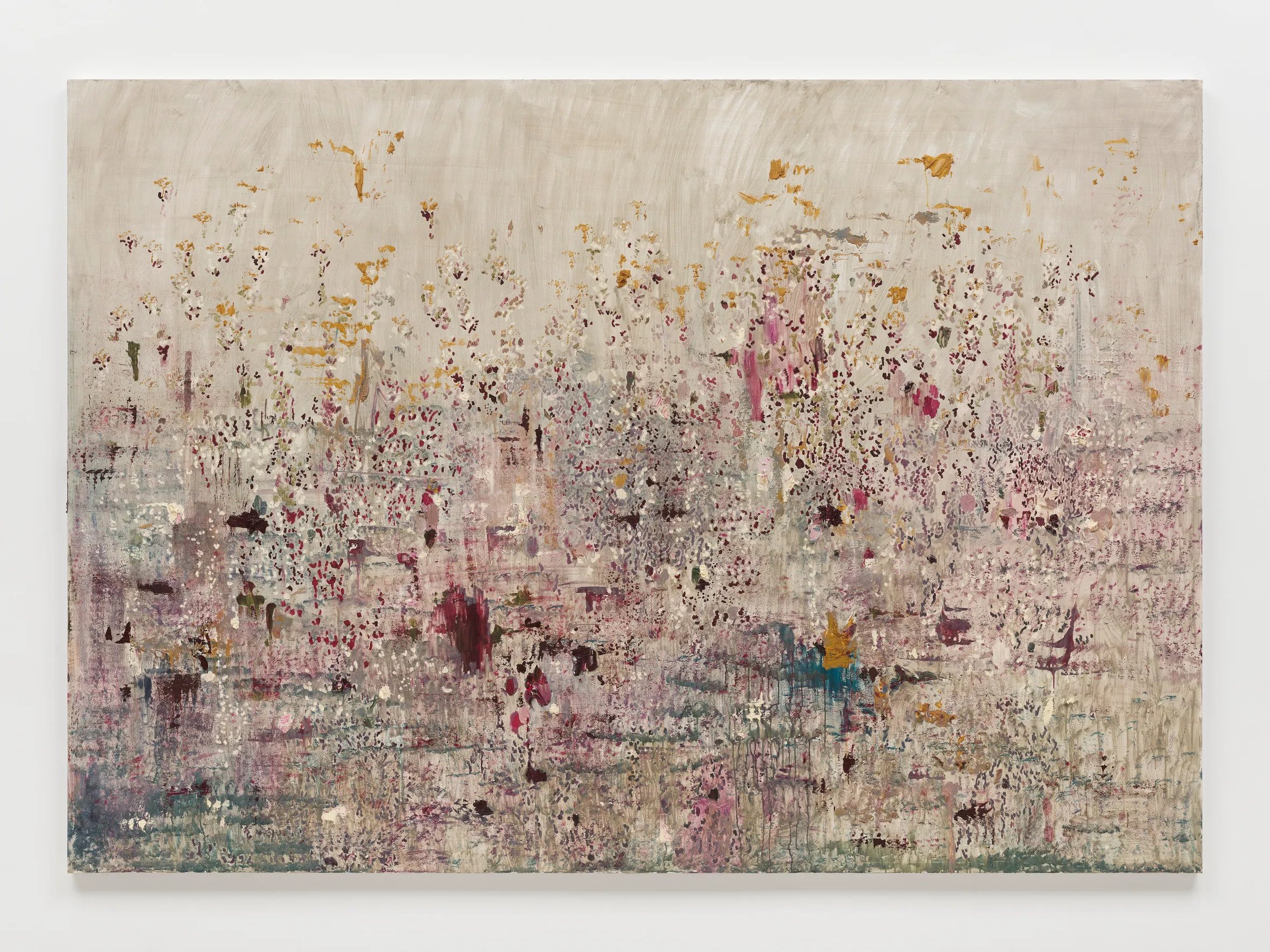
Lending its title to the exhibition at White Cube Seoul, Míope (2026) takes its name from the Portuguese word for ‘nearsighted’, a condition that could aptly describe Rheingantz’s landscapes more broadly, involving forms often caught at the edge of focus. Fragmented botanical motifs ripple across the surface in vivid sprays of mauve, lavender and ochre, rendered with a precision reminiscent of Pointillism. The delicacy of this brushwork sits at odds with the painting’s enveloping fog, engendering a tension between passages of haziness and hyper-focus.
In Rheingantz’s landscapes, perspective is rarely allowed to settle. Horizon lines and definitive spatial markers fall away, leaving the eye to move between uncertain registers of distance and scale. In this respect, Rheingantz departs from the organising logic of Western linear perspective, in which pictorial depth is organised around a fixed viewpoint, finding affinities instead with East Asian frameworks that ‘emphasise relational instead of hierarchical spatial structures’.1 Pictorial space emerges through the shifting relation of marks and intervals, without any single vantage presiding over the whole.
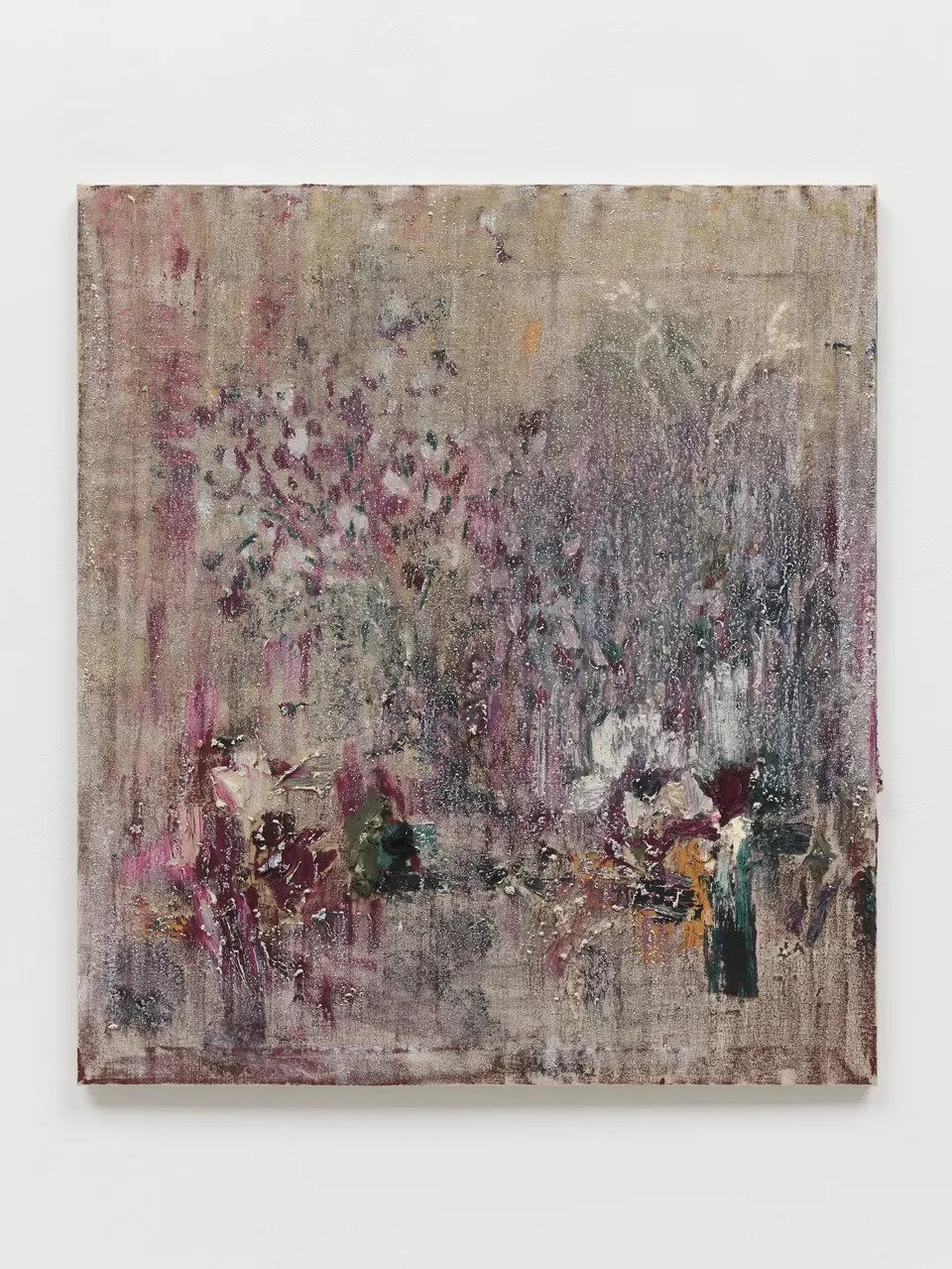
While pictorial depth remains elusive in Rheingantz’s works, the painted surface itself is always emphatically present, notably asserting itself in a number of smaller-scale paintings where methods of staining, oil stick and deposits of impasto give the canvases the appearance of having been weathered and worked over through time. The mottled surfaces of Periquita, Caracol and Taturana (all 2026) recall stripped-back wallpaper or the degraded surfaces of aged frescoes. Rheingantz’s process, by her own account, moves between layering and removal, using turpentine to dilute the pigment and allow it to bleed and run down the canvas, ceding a measure of agency to her materials.
Though Rheingantz’s paintings resist identification with any particular site, Brazil nevertheless remains a constant touchstone: embedded in references to wildlife native to the country, in recollections of the artist’s upbringing in rural Araraquara, and, more diffusely, in the material sensibility of the works themselves. Across them, Brazil’s shifting geography never quite resolves into a stable view, but is instead absorbed into the material processes through which each work takes shape. For Rheingantz, landscape exists in a state of transition; forms remain contingent, much as the land it draws from is subject to continual processes of alteration and remaking.