
BARKLEY L. HENDRICKS: ALL IS PORTRAITURE
MARIAN GOODMAN GALLERY Paris is pleased to present All is Portraiture, an exhibition devoted to the work of Barkley L. Hendricks (1944-2017), a painter and photographer renowned for revolutionizing the art of portraiture through his depictions of Black Americans.
February 06 - April 04, 2026
This exhibition, his first solo show in Europe, highlights the central role of portraiture in his practice while offering a more comprehensive overview of his multifaceted oeuvre. The paintings, photographs and works on paper in the exhibition shine a light on an artist who never stopped experimenting and never followed trends, whose attentive gaze on the world nourished his entire body of work.
Throughout his 50-year career, Hendricks has drawn inspiration from his immediate surroundings to create interdisciplinary works. From the late 1960s and throughout the following decade, he produced portraits of individuals from his personal circle or those encountered by chance on the streets giving unprecedented visibility to an otherwise anonymous demographic of Black Americans. These portraits are distinguished by a rigorous attention to the rendering of personality and style imbued in their subjects. The attention to detail, texture and clothing materials helps to reveal the uniqueness of each model. Their theatricality and technical virtuosity stem from studying the greatest European masters, such as Rembrandt, Van Dyck, Caravaggio, and Van Eyck, whom Hendricks discovered in the collections of the world's greatest museums during his first trip to Europe in 1966. The composition, which centers the subject against a monochrome background to set them apart, and its chromatic harmony are the emblematic elements of Hendricks' portraits that influenced several generations of Black American artists, as evidenced by the work John Wayne, 2015. At the center of a square painting, tilted at a 45° angle, appears not the famous American Western actor, but a young black man with an infectious smile, dressed in a basketball jersey, denim shorts and open-toed shoes.
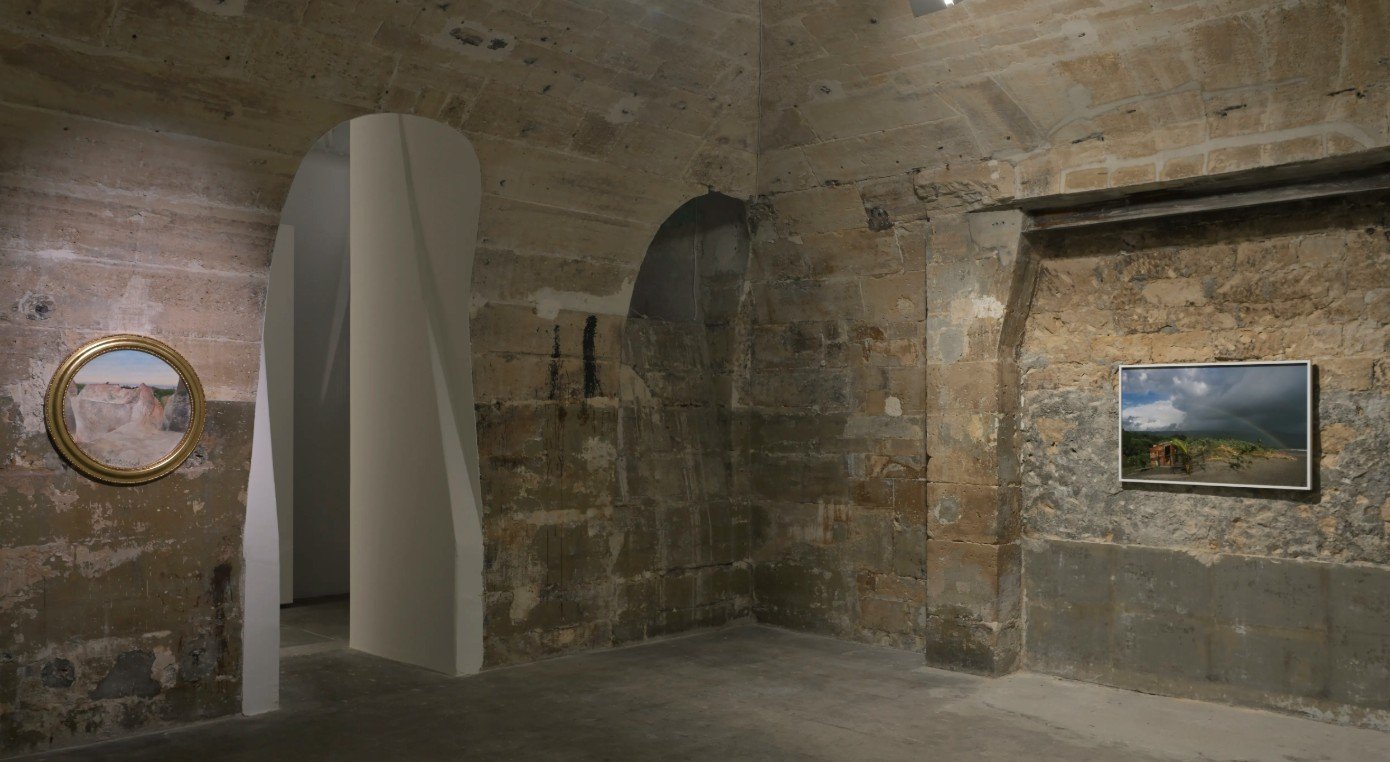
Even with his talents in portraiture, Hendricks refused to limit himself to a single genre and chose to explore other pictorial avenues. In the late 1960s and 1970s, he applied his research into color and geometry to paintings devoted to the theme of basketball, directly inspired by his assiduous practice of the sport since childhood. These minimalist canvases, neither fully abstract nor strictly figurative, convey various squares and circles inspired by the ball and the basketball court. In I Want to Take You Higher, 1970, Hendricks used the color red to stylize the bounce of a ball, while in Untitled, 1971, and The Virgin, 1969, he rendered the movements of a ball thrown at full speed against a bold colored background. Years later between 1997 and 2010, Hendricks developed an exceptional series of paintings inspired by the landscapes of Jamaica. Staying regularly on the Caribbean island from 1983 onwards, he depicted idyllic vistas of specific, identifiable places in nature with great acuity, devoid of any human presence: seashores in Crocodile Head at Fort Charles, 2000, or Hurricane Tree at Great Bay, 2008, or cliffs in The Last Sunday in Marlhole, 2008. While the palette, the half-moon, tondo or oval formats, and the gilding of the frames are borrowed from the Italian and Flemish Renaissance, these views crystallize as portholes providing a timeless space for contemplation. Modest in size and intimate in character, these landscapes, painted outdoors to capture the changing luminosity, are reminiscent of the instantaneous approach that is characteristic of photography.
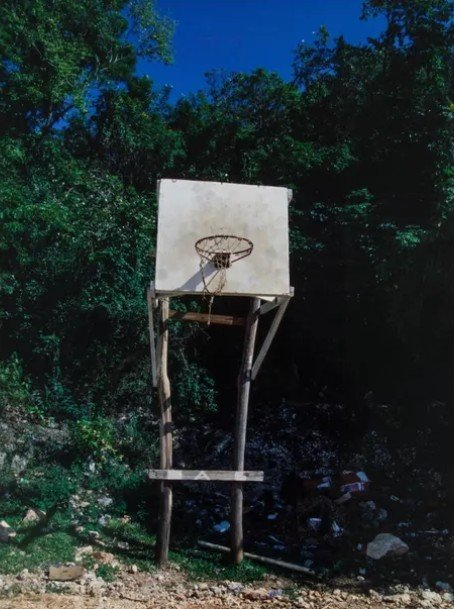
A photographer before he was a painter, Hendricks also left behind a large body of photographic work, a small part of which is presented at the gallery. Begun during his formative trip to Europe, photography allowed him to keenly capture what he observed on a daily basis and to nourish his approach to portraiture. A disciple of Walker Evans, whose student he was at the Yale University School of Art in the early 1970s, Hendricks developed a perspective that was both humanistic and documentarian, attentive to places as well as those who inhabit them. His camera, which he describes as a 'mechanical sketchbook,' accompanied him everywhere in his daily life and on his travels. His interest in street photography took flight in the late 1960s, visible in the exhibition through photographs taken in the 1980s of young city dwellers in New London, Connecticut, where he lived and taught for much of his life. In Jamaica, he took numerous photographs, including street scenes such as Untitled (Southfield, Jamaica), circa 1990 and landscapes such as Untitled (Alligator Pond, Jamaica), 1992.
For Hendricks, photography maintains a close dialogue with painting: his painted portraits are always based on one or more photographs that he combined, augmented with details invented by the artist. Some of the models photographed later became the subjects of his paintings, such as his dancer friend in Vendetta in Lotus Position, 1977-2013. The exhibition also features about ten self-portraits created in the privacy of his studio or home between 1968 and 1981. He often depicted himself alongside his paintings, as in Untitled (Self-Portrait, Philadelphia, PA), 1968, or Untitled (Self-Portrait, New Haven, CT), 1972, where he appears in front of his then unfinished Sir Charles, Alias Willie Harris, 1972, inspired by Van Dyck's Portrait of Cardinal Guido Bentivoglio. Self-representation is by no means anecdotal in Hendricks' photographic work; posing in front of his works is less about introspection and more about the conscious affirmation of himself as an artist.